Salad Bowl Christianity

Salad Bowl Christianity

Besides being the reason for men making coffee, Hebrews also has a health food connection that we need but frequently miss. Hebrews has sixteen uses for “let us.”  (The NIV  translation.)salad-clipart-clipart-saladroad-runner-wcgqf5d8

  • 4:1 let us be careful that none of you be found to have fallen short of it (entering His rest).
  • 4:11 Let us, therefore, make every effort to enter that rest (from his own works).
  • 4:14 let us hold firmly to the faith we profess
  • 4:16 Let us then approach the throne of grace with confidence
  • 6:1 let us leave the elementary teachings about Christ and go on to maturity
  • 10:22 let us draw near to God with a sincere heart in full assurance of faith
  • 10:23 Let us hold unswervingly to the hope we profess
  • 10:24 let us consider how we may spur one another on toward love and good deeds.
  • 10:25a Let us not give up meeting together, as some are in the habit of doing
  • 10:25b let us encourage one another
  • 12:1a let us throw off everything that hinders and the sin that so easily entangles us
  • 12:1b let us run with perseverance the race marked out for us
  • 12:2 Let us fix our eyes on Jesus
  • 12:28 let us be thankful, and so worship God
  • 13:13 Let us, then go to Him, outside the camp, bearing the disgrace he bore.
  • 13:15 let us continually offer to God a sacrifice of praise

So from the “rest of God” to offer “a sacrifice of praise” the “let us” of Hebrews covers a healthy Christian life. Eat up and enjoy it.

All of these are from the NIV and I am sure they may be different in other translations. Since I like to give credit where it is due, this was a sermon from R.W. Schambach that I heard many years ago.

salad pic from http://www.clipartpanda.com/clipart_images/tossed-salad-clip-art-free-41281227 

The Apple of the Eye

The Apple of the Eye” is a term for caring and protecting, it is usually reserved for a loved one but I have heard it used for objects and things. In the Bible it is used four times the first three is ison and the last time it is baba; it actually means “the little man or child of the eye.” The pupil or the dark circle of your eye can reflect the image of someone looking into the eye. We humans do really protect our eyes, it is automatic and that little bump called the cornea is very sensitive. We blink, have tear ducts and cry, shield our eyes from bright lights and things coming at those two little-indented light receptors.Schematic_of_the_human_eye_en

Deuteronomy 32:10 is part of a song Moses shared on the day that the Lord called him to Mt. Nebo to die. In this part of the song, Moses is talking about Jacob/Israel and how God found him and protected him. As the apple of God’s eye, Jacob is compared to a baby eagle that is being taught to fly. God says He will care for him, shield him, and spread His wings and catch Israel when they fall.

Psalm 17:8 – David is asking God to show him His love and answer his prays. David wants to be hidden under the wing of God (protected like the apple of the eye) and protected from mortal enemies.

Proverbs 7:2 – Here “the Father” is telling His son to guard the teachings and commands He has been taught as the “apple of your eye.”  This comes in the middle of a discourse about staying away from adultery and a wayward sexual lifestyle.

Zechariah 2:8 – This chapter is very interesting and may get its own study. Having read several translations and then the comments about verses 6 – 9 it is still a little cloudy as to who is speaking but it seems that the Godhead is referring to itself about the nations who have touched Jerusalem/Judah. The Lord is saying that since they touched the apple of His eye He will cause the downfall of Babylon.

In verse 12 the Lord says He will take Judah as His portion and choose Jerusalem again. This is very much like Deuteronomy 32:9 which was the first use of the apple of the eye. I need to note here that Zechariah and Haggai are written as the construction on the Temple in Jerusalem is about to begin again after being stopped in Ezra 4:24.

Translations read for Zechariah 2 – KJV, NIV, Living Bible, Knox, and Moffatt.

The Zondervan NIV Exhaustive Concordance was also used for definitions.

http://en.wikipedia.org/wiki/File:Schematic_diagram_of_the_human_eye_en.svg

Rehoboam/Jeroboam Legacy

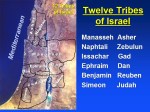
In looking at Rehoboam and Jeroboam and the mess they left there are some things I have wondered about and then there are some “shadows” of their behavior that really are just scary. One thing that I will not find an answer for just because it does not appear to be there is the tribe of Simeon (see Simeon – Where Did They Go?). In Genesis 49:5 Jacob “scattered them” in Israel. When the land was divided by Joshua Simeon’s portion was in the middle of Judah’s territory. What happened when the Ten Tribes went to Jeroboam? They are mentioned twice after the split but before the exile of Samaria – 2 Chronicles 15:9 and 34:6. In 15:9 some have settled with Judah after seeing that the Lord was with them; King Asa has a covenant renewing in the third month on the fifteenth day of his reign. The 34:6 reference is to Simeon’s towns that Josiah removes idols from. It would seem they may have left their allotted portion and then just settled wherever they could but the Genesis 49 prophecy did come to pass.

Another thing I noticed was in Ezra and Nehemiah only Levites and families from Judah and Benjamin are mentioned. Some of the lists are for people from a town but they were towns from those two portions. Most all of the tribes are mentioned in Ezekiel and Revelations when the land is again handed out or they are sealed in the last days. (See List of Tribes)

Musing on these two things will show you the love of God and that He does expect obedience to Him and the Word He gave us. His love for the Northern and Southern kingdoms was rooted in Abraham (2 Kings 13:23) and He kept having mercy on both kingdoms. 2 Kings 17: 7 – 23 summarizes it all and should be a warning for all who claim God.

In Matthew and Luke, we find two family trees that are for the tribe of Judah leading to Jesus. Matthew’s tree is for Joseph and Mary’s is found in Luke and the common factors are David and Zerubbabel. Bathsheba is in David’s line because of Solomon and by extension in Mary’s line because of Nathan (1 Chronicles 3:5); Solomon started Rehoboam’s problems but sin and the world certainly took its toll on the King’s of Judah.

The chroniclers of the two kingdoms judged the kings with very interesting phrases. Judah’s kings were judged against David and if they followed his ways OR did they do “right in the eyes of the Lord” or did they “walk in the ways of the kings of Israel.” Israel’s measure was “they did not turn from the sins of Jeroboam son of Nebat” and if they did “evil in the eyes of the Lord.”

The wars and battles between the kings of the two kingdoms are legacies that still shadows the people of God today. True peace between the two really was out of the question. Jeroboam made the separation a matter of religion, add in a lot of pride and top it off with the forbidden pagan deities and war had to follow. But in all of that, the North seemed to be used by God to bring Judah to repentance or punish her for disobedience. Jehoshaphat in 2 Chronicles 18 + 19 seemed to have a relationship with Israel but 19:2 clearly states what God thought about working with the enemy (people who did love Him). Having said that I also noticed that Father God sent two of the great prophets to Israel in order to get them to repent: Elisha and Elijah.

The Books of Kings and Chronicles are snapshots of the lives of the leaders of the people of God. Many of them are not real pretty. Closing the Temple, killing his children, ordaining anyone with the right price to be a leader of your church are just some of the sins they did. The people’s reaction to all of this is also recorded and is a lesson in its self. At times they were forced to follow God and at other times they rejoiced to see their leaders acting, as they should.   It would seem that the people followed their leader both in doing good and doing bad. But as you read the prophets it is easy to see that they just finally were going to do their own thing. Jeremiah and the women who made cakes to the “queen of heaven” show the degree that most of the people had sunk too. So where was the remnant? God always has a remnant! Did they have to go with the others or were they directed to flee and find safety? Were they the poor ones left in the Land? We know there were people in both Israel and Judah who still thought about God: they took care of prophets, wrote letters, wanted to hear about God and His plan for them and their families. We know these survived because there is still a Jewish nation/people!

Several of the kings of Judah did follow God and some of the kings of Israel at least showed an interest in the things of God. King Saul and kings Jeroboam and Jehu were offered a dynasty if only they would obey the Lord and follow His plan but these kings turned and did what they wanted to do. David had problems but the difference is he believed God AND acted on the promise by staying true to the Lord. So while Solomon’s kids were having varying success as king and Jeroboam’s family was eliminated quickly Nathan’s family was living in Bethlehem not knowing that the Christ would come through them.

A sad fact in our world today is that we still have leaders like Rehoboam and Jeroboam running things today. They may have a small church or a big one that really is not the question; do they have the heart to follow Jesus, a concern for people, and a plan to reach out to them with the Gospel?

Syncretism or the Love of Jesus

God is love.  Jesus is love.  Unfortunately, postmodernism has changed the very concept of love especially the love that Jesus offers.  His love is defined in the Bible.  You loving Jesus is not necessarily a list or set of rules but it is not the ignoring of the Bible. Redefining terms to meet your unwillingness to follow Jesus is not love.  Jesus laid His life down at the request of the Father, can you/we lay ours down at His request?

What picture is your idea of love?

A baby,                                    a crucified Savior,       whip-carrying corrector,

cropped-jesus-2.jpgCrucifix from Misson Espiritu in Goliad,TXThe_Moneychangers001

Jesus on the Donkey

Jesus on the Donkey


or


The one leperJesus_Curses_Fig_Tree_James


a victorious healer, a

curser of fig trees,     OR


preacher Sermon_on_the_Mount005Communion005woman healed

Jesus at the Tomb

hst_hourglass_nebula_small

worshipping the calf


a nice concept that lets you do what you want to do?

Solomon, Rehoboam, and Jeroboam left a legacy of confusion and syncretism of the worship of Jehovah that sentenced Israel/Judah to separation from God and the Land.

The truth is Jesus died on the cross and came out of the tomb in victory over SIN.  He did all He did to show us that He is the Way and that our way will not work.

I believe that 2015 will be a time to Clean-up So We Can Celebrate.  Jesus still stands at the door of your heart and is knocking but letting Him in means your way goes to the Cross so you can join Him outside of the empty TOMB!
jesus at door

I think I got all of the credits but if not let me know and I will find it. They should also be attached to the picture.  I did take several of these.


Top 20 Song or Musical Sunday School Lesson?

A look at Psalms 60 and 108

Previously, I wrote a blog entitled Where and When the Psalms Were Written. In that blog, I matched the verse in the Bible that may have been the inspiration for writing the Psalm. Psalm 60 and 108 were two of those psalms but I want to compare them because they have a large similar portion used in two very different psalms.

I believe Psalm 60 was one of the reasons I started doing the matching. Its timestamp was easy to find in 2 Samuel 8:13 and 1 Chronicles 18:12 which tells of the 12,000 Edomites and the Valley of Salt. The introduction and the verses don’t really match and if you do a “search” on the Valley of Salt there are several reasonable explanations as to why there may be differences. (The Valley of Salt is also a topic of disagreement because we are not sure where it is/was.)

Psalm 108 I originally put with 2 Samuel 6:5 when David was bringing the Ark to Jerusalem. David the Writer uses rhetorical devices in many psalms by repeating phrases but in these two Psalms, a large portion is used in apparently two different occasions much like Psalms 14 and 53. These “re-purposed” psalms are also in different “Books” within Psalms. I compared Psalms 135 to 136 because of similar content but they really are presented in very different styles.

Not all Bible translations have chapter “headings.” I like them because they can allow your imagination to soar as to the “when what, and why” they were written and used. Psalm 108’s heading is not a repeat, as most people will say all psalms were sung. “Song” and “psalm” here are two completely different words. I can imagine that it was a favorite that you might hear someone humming in the marketplace or while they were working.

Psalm 60, on the other hand, has all the markings of a formal arrangement that was used at special gatherings. Asaph may have been the “director” but we don’t know for sure. Miktam like maskil is thought to be a musical term whose exact meaning has been lost to us, what a shame. It also has a Selah in verse 4 which may signal a pause to give time to reflect. The fact that David set it to the tune of another well-liked song just shows that we have not changed all that much, my example is the hymn, “Amazing Grace” (it was set to a popular tune of the day). But the “for teaching” is what catches my eye. David knew the power of music to help with learning and remembering!

box 1

Psalm 60 shows great distress and turmoil and the unspoken “where are You, God.” The term “banner” in verse 4 is a very “visible signal” that pulls the learner back to the Father. The start of Psalm 108 could not be more different with phrases like “make music with my soul” and “your faithfulness reaches to the skies.” Well maybe not. Love and faithfulness reaching to the skies and a banner do sound like the same thing.

box 2

The shepherd, the ridiculed little brother, the youngest son, and the overachieving young man who feared little are all descriptions of David. As complex as David may be the last two lines in this shared portion would only come from the heart of someone who has been in God’s presence and has valued that experience – “human help is worthless” and “with God, we win.”  The box below – on the left is the shared portion, and the right side is my notes.

Reuben, Gad, Manasseh, Judah, Edom, Moab, Shechem, Genesis 49box 3New International Version (NIV) Holy Bible, New International Version®, NIV® Copyright © 1973, 1978, 1984, 2011 by Biblica, Inc.®  Used by permission. All rights reserved worldwide.