Easter 2015 – Reflections – Priesthood

Reflections on Jesus’ Priesthood and Melchizedek.

Several studies have come together this Easter to clear up and create more things to study: Salem or Sodom, Rehoboam, and Jeroboam, It Is Finished, and one of Hebrews. They deal with Jesus our High Priest, Melchizedek, and the things finished on the Cross combining the mysterious priesthood of Melchizedek, the natural priesthood of Aaron, and being settled in the supernatural priesthood of Jesus. Psalm 110 affirms the priesthood of Jesus but combines it with the victorious conqueror He will be in the Book of Revelations. Jesus finished the need for the work of Aaron and sacrifices while being added to the Meeting of Abraham and Melchizedekorder of Melchizedek. The link below has part of a Dead Sea Scroll which points to Melchizedek as a “leader of God’s armies.” In the study of Jeroboam and the rest of the kings of the Northern Tribes the “sin of Jeroboam” is mentioned frequently. I thought the main problem was the idols he had made but Hebrews 7:12 showed me the real sin. When Jeroboam changed the priesthood he changed the Law!

The list from Hebrews works through Jesus’ completion and right as Priest. The list from Genesis 14 and Psalm 110 are the different names and titles of God in those passages. Those names by extension show Melchizedek’s importance as God’s priest.

  • Hebrews 13:12 Jesus suffered outside of the city to make us holy through His blood.
  • Hebrews 7: 26 Jesus as a High Priest met our needs by being holy, pure, set apart, and exalted in the heavens.
  • Hebrews 7: 12 When the priesthood changes there is also a change in the Law!
  • Hebrews 8: 10 (Jeremiah 31: 31 – 34) God WILL put in our minds His laws and write His Laws on our hearts so we WILL be His people because He is our God.
  • Hebrews 5:6, 7:1 – 28 and other discussions of priest Chapter 8 and 13: 11

Genesis 14: 19, 20, 22

  • Elohim (God) a title used in combination with other names it is a title of majesty and power.
  • Elyon (Most High) is a title of God that focuses on supremacy in power.
  • Qana (Creator) to create or bring forth; the NIV footnote says it is Possessor.

Psalm 110

  • LORD or Jehovah – the Eternal
  • Lord or Adon – (vs. 1) supervisor or owner; Adonay – (vs. 5) a title of the one true God with a focus on majesty and authority or “Lord overall” and also carries the idea of Father or a Friend (see LORD vs. Lord)

http://ad2004.com/Biblecodes/Hebrewmatrix/melchizedek.html this has a translation of a Dead Sea Scroll that talks about Melchizedek. If you are interested it goes into Bible Codes which I have mixed feelings about.

Definitions are from Zondervan NIV Exhaustive Concordance and from Strong’s Expanded Exhaustive Concordance

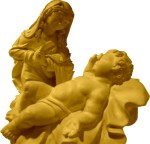
pic from http://www.heiligenlexikon.de/BiographienA/Abraham.htm. or Dieric Bouts (circa 1420-1475) [Public domain], via Wikimedia Commons  http://commons.wikimedia.org/wiki/File%3AMeeting_of_abraham_and_melchizadek.jpg 

Easter 2015 – Reflections – IT

It Is Finished.

John 19:30 has the last three words Jesus said on Good Friday, “It is finished.” The word finished is teleo meaning to complete, conclude, or discharge. It comes from telos which infers a point set as a limit; my Strong’s/Vine’s Concordance goes further and says in is the end, a termination, whether of time or purpose and says a secondary denotation is what is paid for public ends, tolls, or customs. Ok, how many sermons have and can come from just the word finished in this phrase.

The word “it” however is what grabbed my attention. I can remember people talking about exactly what was finished:

  • Redemptive Work
  • Aaron’s Priesthood
  • The Old Covenant – every jot and tittle
  • His Life (earthly)
  • Sacrifices and the Temple Worship

If I may I would like to add the ending of the judgment on the people before the Flood. 1 Peter 4: 6 says He had to preach the gospel to them also, that would have brought about the end of that Judgment.

Easter 2015 – Reflections

How Would You Rewrite the Resurrection Story?

This may seem like a strange question but as I read and reread the stories of Holy Week I noticed Easter Sunday did not get a lot of print from the Gospel Writers. I started counting from the story of the “Triumphal Entry” or Palm Sunday to the women going to the tomb and the events of THAT day and this is the count of the verses I came up with:

  • Matthew 369 vs. 15 and 5 of that is about the guards – 4%
  • Mark 233 vs. 8 then the add on of 6 – 6%
  • Luke 233 vs. 49 – 17%
  • John 275 vs. 23 – 8 %

Luke, the Gentile, wrote the most and he wasn’t even there.

Does this seem right? Resurrection Sunday, Easter, the most important day in Christianity and from the writers we get a total of 101 verses!

If we look at the narratives it is even more shocking. Most of the verses are talking about the women or the guards with Jesus just making cameo appearances. In Mark Jesus does not even show up until someone added it at a later time (argue with the editors of the NIV). The main message on Easter Sunday from the angels and Jesus was “Go to Galilee”; well at least in Mark and Matthew. Luke and John deal with the measures Jesus took to convince unbelieving disciples that He was alive. (SIDE NOTE: This, being one week later was when Jesus showed up to have a heart-to-heart with Thomas and restore him.)

How could this oversight have happened? Why so little about the most important day in Christianity?   John went on to write Revelations and three epistles. Luke wrote the Acts of the Apostles and Mark probably did the writing of 1 and 2 Peter for his uncle. Matthew preached to nations and got martyred.

0h, wait maybe they wrote about what was important! What do you do with the Resurrection? How has Jesus coming back to life changed everything?  Never mind they are fine just the way they are written.

Easter 2015 – Things Given to Jesus on Easter

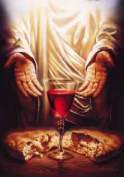
Communion005

During Holy Week Jesus borrowed and was given things all during the week. Saturday is different in that He took and gave; specifically, He took from the Satan and gave to man.

On the First Day (of the week) Jesus being a brand new creation and the new High Priest of God did not borrow anything but He was given things by people. Matthew 28: 9 the brave women who were determined to tend to a dead body, instead found a living Jesus and gave Him worship. This “new” Jesus who walked and talked to a desponded Cleopas was invited to dinner and disappeared after a prayer (Luke 24: 30). The final thing He was given, on this day, was something (fish) to eat from the disciples (He had to ask for it) because He had to prove He was actually real (Luke 28: 41). Worship and fellowship with food sounds like a PLAN.

Easter 2015 – Saturday

Saturday of Holy Week is often overlooked. Matthew is the only Gospel that records anything about it; Matthew 27: 62 – 66 tells of the posting of the guard at the tomb. Jesus, however, was busy doing things. Paul and Peter mention some of the important things He JESUS-35949400971did on this day. Many sermons have been wrapped around a reference by John in Revelations 1: 18 where Jesus has the “keys of death and the grave” and it has been stated that He took them on Saturday.

Paul in writing to the Ephesians (4: 8 -11) talks about when Jesus descended into the earthly regions; this is a quote of Psalm 68:18. While He in this region He took the captives that had been there, put them in His robe and ascended. He also, at that time, “gave gifts to men” so that we can be prepared for service.

Peter wrote to the “strangers in the world” (1 Peter 3:19 and 4:6) that after Jesus’ physical death the Spirit allowed Him to preach to those who disobeyed God before Noah’s Flood. This seems like it would have happened before Jesus led out captives.

http://www.sodahead.com/user/profile/1887475/conversation-1887475/?page=21