Since school has just finished and I end the year giving all kinds of “test” when I read  Psalm 66 I had to reopen the idea of being tested. This verse follows a section that refers to when Israel was in Egypt and came out of there.
Psalm 66
10 For You, God, tested us; You refined us like silver.
11 You brought us into prison and laid burdens on our backs.
12 You let people ride over our heads; we went through fire and water, but You brought us to a place of abundance.
Testing here is bahan (# 1043 Zondervan NIV Exhaustive Concordance, 2 Edition – all my definitions for this study will be taken from here), which means to try, probe or examine to learn the genuineness of an object like testing for the purity of the metal. And we think we get tested – prison, burdens, rode over (a sign of derision), fire and water. Some of you have endured these things but most of us are clueless about this level of testing. But look where it will bring you “a place of abundance.”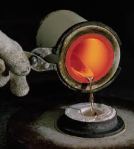
This passage led me to Deuteronomy and several passages where Moses is describing/reminding the children and grandchildren of the people who came out of Egypt what had happened for them.
Deuteronomy
4:34 Has any god ever tried to take for himself one nation out of another nation, by testings, by signs and wonders, by war, by a mighty hand and an outstretched arm, or by great and awesome deeds, like all the things the Lord your God did for you in Egypt before your very eyes?
Testings here is nasa (# 5814) (don’t you love Hebrew into English) and refers to proving character or faithfulness; if it is done toward God it implies lack of confidence in Him (a sin).
Signs– ot #253 sign, mark or symbol that communicates a supernatural. NIV translators changed it from signs to miraculous signs over the years.
Wonders– mopet #4603 wonder, sign, miracle, portent, symbol
War–milhama #4878 fighting, battle, war and many other words like soldiers, warrior, etc.
Mighty hand–mighty- hazaq #2617 powerful, strong, hard, physical and internal strength, (negative) hardness of heart; hand –yad #3338 hand, arm, finger, figuratively control, power, strength, direction, care. It is added to other words for many meanings. If you exchange words it takes on many great meanings. It is the same phrase for the rest of the verses.
Outstretched arm– outstretched –nata #5742 to spread out, be extended; arm – zeroa #2432 arm, forearm, shoulder, power, strength, force
Great and awesome deeds– awesome deeds- mora #4616 fear, terror, respect, reverence, awesome deeds; great- gadol #1524 large, much, more, this can refer to physical size, quantity, degree, and social status
I think the testings were for Israel (the first three plagues) then the others were for Egypt and showed how serious God was about letting them go. The Lord was educating His people and showing them His concern and intent toward them.
7:17 You may say to yourselves, “These nations are stronger than we are. How can we drive them out? ” 18 But do not be afraid of them; remember well what the Lord your God did to Pharaoh and to all Egypt. 19 You saw with your own eyes the great trials, the signs and wonders, the mighty hand and outstretched arm, with which the Lord your God brought you out. The Lord your God will do the same to all the peoples you now fear.
Remember this is to the children of the original group who actually saw these things. God is willing to repeat these test and signs to get them into the land. Look at the teaching – recall a lesson learned and project to a new situation.
11:1 Love the Lord your God and keep his requirements, his decrees, his laws, and his commands always. 2 Remember today that your children were not the ones who saw and experienced the discipline of the Lord your God: his majesty, his mighty hand, his outstretched arm; 3 the signs he performed and the things he did in the heart of Egypt, both to Pharaoh king of Egypt and to his whole country… 5 It was not your children who saw what he did for you in the wilderness until you arrived at this place, 6 and what he did to Dathan and Abiram… 7 But it was your own eyes that saw all these great things the Lord has done.
The reason for the testing is verse 1 so that they can take strength in what they saw and the previous lessons learned. But now it was their turn to teach this to their children.
27:7 Then we cried out to the Lord, the God of our ancestors, and the Lord heard our voice and saw our misery, toil and oppression. 8 So the Lord brought us out of Egypt with a mighty hand and an outstretched arm, with great terror and with signs and wonders. 9 He brought us to this place and gave us this land, a land flowing with milk and honey… 11 Then you and the Levites and the foreigners residing among you shall rejoice in all the good things the Lord your God has given to you and your household.
With the test came the promise in Psalm 66 and then a new lesson in vs.11. It is also a reteach time as all of these verses have been.
New International Version (NIV) Holy Bible, New International Version®, NIV® Copyright © 1973, 1978, 1984, 2011 by Biblica, Inc.® Used by permission. All rights reserved worldwide.
The images were found in Google Images.

 country. I have never read anything about what they did when the two kingdoms separated but there are Ten Tribes in the Northern Kingdom if you count the east and west tribes of Manasseh as separate tribes. There is the saying “from Dan to Beersheba” that may still be showing there was a separate tribe of Simeon; Dan was the Northern most tribe and Beersheba is in the middle of the land that was allotted to Simeon and was the most important city in southern Israel. Ziklag (where David had a base in 1 Samuel 29) was considered one of their thirteen towns in Joshua 19. In Joshua, Judges and 1 Chronicles Simeon is mentioned several times as doing things with the men of Judah and they appear again in the reforms of some of the kings in 2 Chronicles. So they do appear to have been dispersed in Israel according to the word of Jacob.
 Mark's Bible Study