Moses – You Returned!?

Moses the most humble man in the world, the friend of God who ate with Him and saw His back, the doer of miracles, and leader of the people of Israel. You would think with all of those credentials Moses must have been willing to be moldable clay in the hand of the Master Potter. Wrong! He had issues and the big one was he had some serious history with Egypt and did not want to go back. He had made a mess of things when he left and did not want to face the court of Pharaoh or the people of Israel. This story starts in Exodus 3 and 4.

This concept of going back somewhere you left is on my mind because for the first time in my career I am returning to a school district that I left thirteen years ago. I had not left a mess like Moses, but I never thought I would be returning either. To say that I am not questioning why would be an understatement. Like Moses, it means leaving a comfort zone and going back to something that has changed while you were gone. His wife Zipporah and his sons had to leave family and friends for an uncertain future.

Father God had given him some glimpses of the road ahead but not the mistreating of the people by the Egyptians, the plagues, or being chased by a determined army. God had given him some pretty convincing signs to do but there was no mention of the people being stubborn and rebelling.

In looking at the big picture (that is all I can do for now) this is what I see happening:

  • Moses was retrained
  • Moses knew he was to go and he went
  • God sent him help, in the form of Aaron
  • Moses had command of supernatural powers to do the job
  • Not everyone was excited by his return or his mission
  • God walked with Moses through his mission

Hero and Horror – Making of a King

It took nine pages in my Bible. Six chapters, 1 Samuel 18 to 23, tell the story of David’s David052rise from being a hero to the Most Wanted List then to acting like a King.
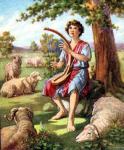
Drama

This journey is marked with great drama and powerful emotions. Here are some of the action words or ideas that can be found in these six chapters: joy, galled, anger, betrayal, fear, bold rescues, grief, love, friendship, daring escapes, fiend insanity, ruthless pursuit, murder, and jealousy.   Michal, Saul’s youngest daughter, is a big part of this drama. She “loved” David but Saul knew he could use her as a snare to kill him. She helped David make a daring escape but I find it interesting that she never tried to flee Saul and go to David’s side. I believe that since David was a songwriter he used the things in his life to be the inspiration for his songs. I could attribute fifteen psalms to this time of drama.

Keilah

The story of Keilah is the story of David starting to act like a king. In the time it is set with the Feast because a harvest was happening, which is what the Philistines were after – the grain. Keilah must have been an important city because it had “bars and gates” and a population big enough to “hand David over” to Saul. On most maps, David’s hideout is only a few miles from the city. To compare Saul and David here is appropriate; David went to the city and liberated it from the enemy but the Bible never mentions Saul going there to check on the population.

David

In Chapter 23 we see David growing as a leader and David’s men learning to trust him as a leader. There is a difference between saying someone is your leader and then actually following him into battle. David’s habit of asking God for directions is mentioned at least five times in this story. It would seem that David had a prophet named Gad and after the victory in Keilah the priest of God named Abiathar and Aaron’s Breastplate (the ephod) to give Heaven sent answers.

David gained much knowledge and help from his willingness to free Keilah.

  • He found out that just because God had you do something it does not mean the people will be thankful, the citizens of Keilah would have turned him over to Saul.
  • David learned that you follow God just because He says to do it. This will lead to God’s bragging on you and not praise from men.
  • David learned to keep his options open and to ask more than one time for directions.
  • On the practical side, he picked up 200 more men, the Philistine’s supplies, and a new enemy.

Ziphities

David’s new enemy was the Ziphities. They were descendants of Caleb and a leading clan in Judah. They were going to turn David over to Saul even though David rescued Keilah. The reason could have been many but jealousy and fear of losing prominence within the Tribe of Judah possible were factors. David penned Psalm 54 over this incident and with phrases like, “Let evil recoil on those who slander me” verse 6 (NIV); it is clear there was no love loss. The word Ziph deals with flowing asphalt. This was found around the Dead Sea and brings to memory its trapping ability when Bera’s men fled in Genesis 14:10 and fell into tar pits.

Abiathar

He is a priest (Aaron’s family) and a member of the house of Eli (1 Samuel 2:30). He was faithful to David during his life but did not agree with Solomon as king. He sided with Adonijah so Solomon removed him and his family from being a priest (1 Kings 2:22). It is possible that his family being killed was going on at the same time as David rescuing Keilah; compare 1 Samuel 22:20 with 23:6.

Take Away

For me, the BIG thing in this story is that David, acting independent of Saul, showed compassion and concern for the people of Israel. This is the first recorded time that he did what a king would have done, save a city.

http://clipart.christiansunite.com/1379673661/Bible_Characters_Clipart/David_Clipart

The Bible and Science – Wounds

(Note to the reader – This may be my first true “think out loud” post. But given the topic, I don’t think it is a problem.)

I will restore you to health and heal your wounds, declares the Lord. Jeremiah 30:17a (NIV)

The different names and types of wounds.

There are many words that our Biblical translators call “wounds” so use a concordance if you are going into a deeper study of a verse. Here are other phrases/words that are associated with wound: stabs, racked with hungry, bruises, welts, dead, slain, casualties, plague, affliction, calamity, blows, slaughter, pain, sorrow, grief.

Causes of wounds.

  • Accidents
  • Disease
  • Enemies
  • Friends
  • Self-inflected – careless or intentionally
  • God allowed

Functions of wounds in the Bible.

  • To hurt
  • To get your attention
  • To heal you
  • To heal someone else

Medical plans for wound care.

  • Primary intention (intention is a planned thing and in medicine, it is the healing process) – This is when a wound is closed by “sewing” it together
  • Secondary intention – The wound is allowed to stay open so infection can drain.
  • Tertiary intention (tertiary is the third plan) – The wound is cleaned and purposely left opened for a time before closing it.

Facts about “natural” healing.

  • Your body has a complicated process for healing that is marked by certain stages. This process can be interrupted by outside causes or other personal issues such as disease in your body.
  • Depth and size of the wound can control the healing process.
  • Wound care can influence the healing process. Cleaning and ointments can speed the process, or at least keep it on course.
  • Wounds can cause visible scars at the point of injury.

∞ Jesus, thank you for the promise in Jeremiah 30: 17. Heal my wounds so that I can be a benefit to the body of Christ. Amen.

See the post – Jesus as Master Healer

Bends in the Road vs. A Straight Path

curves in the roadA “bend” in a road is often a literary signal for a change, either good or bad. Adventure is waiting, danger and destruction are lurking, or a golden opportunity awaits the noble wayfarer who is on the journey of a lifetime. Contrast this to the “straight” road where things are peaceful and the future is visible, if only you will lift your head and look.

David in Psalm 4: 8 is asking for just such a straight road because of his enemies. It is interesting that we want a straight road from God but we always want the bend if means adventure and excitement. A contrast here is Isaiah 40:3 where WE are to make straight paths for God. Part of this “preparing” is to knock down hills and fill in valleys.

Hills, valleys, bends in the road, and straight paths so many paradigms and graphic straight roadimages. All the words preached and ink spilled on paper using these icons can they be combined? Maybe! I tend to think horizontally and probably need to think more vertically (ah, more graphic images). If Jesus is in control and I do not purposely choose to bend off of His path why should our paths be anything but straight to God? WELL, what about all the tough times we encounter?

Join me now in a vertical look at a straight road that goes through hilly country. Do you rollercoasterbend down to go into a valley and then bend up to go to a hilltop? But I can’t see everything in front of me on that road! No, God never promised that you could always see everything in front of you He just said, “Follow Me.”

What about Isaiah 40: 3? Since the command there is that we make level paths so that God’s glory will be revealed; may I suggest that as we knock off high spots and fill in the low spots on the path for people behind us, it will be smoother and a little more level for them.


https://openclipart.org/detail/177913/on-the-road

https://openclipart.org/detail/25003/curves-ahead-sign

https://openclipart.org/detail/153769/roller-coaster

Psalm 103 – Musings

David starting and ending Psalm 103 with “Barak the Lord, O my soul” shows what was important to David and where his heart was. But I have grown to appreciate all the topics he covered between his praising and blessing.

He captures (hooks) the reader/singers with why you should praise the Lord. I think the idea of “benefits” is a great attention grabber. In our age, we worry about benefits and want them as part of our compensation for doing something we are expected to do (our jobs). So in just doing what we should (praise God), we get some serious compensation – forgiveness, healing, satisfaction, etc.

I used The New Layman’s Parallel Bible to compare phrases and check on words that I looked up in my KJV concordance. I noticed how the different translations separated the various sections of Psalm 103. KJV and the Living Bible had no separations but the NIV and Revised Standard did arrange the verses into sections. The Revised Standard divided 1-5, 6-14, 15-18, and 19 -22 the NIV divided almost the same except verses 6 and 19 are by themselves and form breaks between the sections. That is always a minor thing but it is interesting to see how the various translators interpret and arrange Scripture.

My biggest take away maybe that leaders (Moses) need to ask to see God’s highway. His “Ways and Deeds” form quite a road for the people to be lead on.