Syncretism or the Love of Jesus

God is love.  Jesus is love.  Unfortunately, postmodernism has changed the very concept of love especially the love that Jesus offers.  His love is defined in the Bible.  You loving Jesus is not necessarily a list or set of rules but it is not the ignoring of the Bible. Redefining terms to meet your unwillingness to follow Jesus is not love.  Jesus laid His life down at the request of the Father, can you/we lay ours down at His request?

What picture is your idea of love?

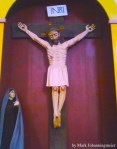
A baby,                                    a crucified Savior,       whip-carrying corrector,
cropped-jesus-2.jpgCrucifix from Misson Espiritu in Goliad,TXThe_Moneychangers001

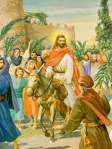
Jesus on the Donkey

Jesus on the Donkey


or


The one leperJesus_Curses_Fig_Tree_James


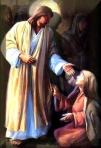
a victorious healer, a

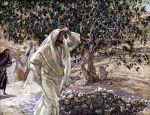
curser of fig trees,     OR
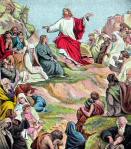
 

preacher Sermon_on_the_Mount005Communion005woman healed

Jesus at the Tomb

hst_hourglass_nebula_small

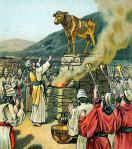
worshipping the calf


a nice concept that lets you do what you want to do?

Solomon, Rehoboam, and Jeroboam left a legacy of confusion and syncretism of the worship of Jehovah that sentenced Israel/Judah to separation from God and the Land.

The truth is Jesus died on the cross and came out of the tomb in victory over SIN.  He did all He did to show us that He is the Way and that our way will not work.

I believe that 2015 will be a time to Clean-up So We Can Celebrate.  Jesus still stands at the door of your heart and is knocking but letting Him in means your way goes to the Cross so you can join Him outside of the empty TOMB!
jesus at door

I think I got all of the credits but if not let me know and I will find it. They should also be attached to the picture.  I did take several of these.


Top 20 Song or Musical Sunday School Lesson?

A look at Psalms 60 and 108

Previously, I wrote a blog entitled Where and When the Psalms Were Written. In that blog, I matched the verse in the Bible that may have been the inspiration for writing the Psalm. Psalm 60 and 108 were two of those psalms but I want to compare them because they have a large similar portion used in two very different psalms.

I believe Psalm 60 was one of the reasons I started doing the matching. Its timestamp was easy to find in 2 Samuel 8:13 and 1 Chronicles 18:12 which tells of the 12,000 Edomites and the Valley of Salt. The introduction and the verses don’t really match and if you do a “search” on the Valley of Salt there are several reasonable explanations as to why there may be differences. (The Valley of Salt is also a topic of disagreement because we are not sure where it is/was.)

Psalm 108 I originally put with 2 Samuel 6:5 when David was bringing the Ark to Jerusalem. David the Writer uses rhetorical devices in many psalms by repeating phrases but in these two Psalms, a large portion is used in apparently two different occasions much like Psalms 14 and 53. These “re-purposed” psalms are also in different “Books” within Psalms. I compared Psalms 135 to 136 because of similar content but they really are presented in very different styles.

Not all Bible translations have chapter “headings.” I like them because they can allow your imagination to soar as to the “when what, and why” they were written and used. Psalm 108’s heading is not a repeat, as most people will say all psalms were sung. “Song” and “psalm” here are two completely different words. I can imagine that it was a favorite that you might hear someone humming in the marketplace or while they were working.

Psalm 60, on the other hand, has all the markings of a formal arrangement that was used at special gatherings. Asaph may have been the “director” but we don’t know for sure. Miktam like maskil is thought to be a musical term whose exact meaning has been lost to us, what a shame. It also has a Selah in verse 4 which may signal a pause to give time to reflect. The fact that David set it to the tune of another well-liked song just shows that we have not changed all that much, my example is the hymn, “Amazing Grace” (it was set to a popular tune of the day). But the “for teaching” is what catches my eye. David knew the power of music to help with learning and remembering!

box 1

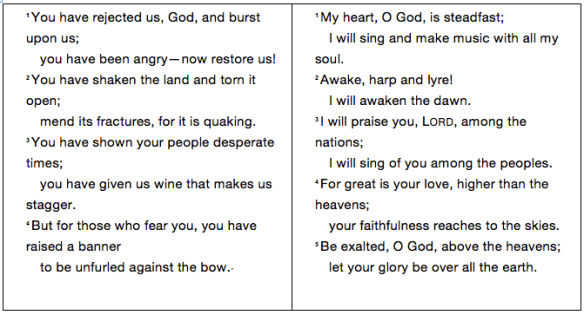
Psalm 60 shows great distress and turmoil and the unspoken “where are You, God.” The term “banner” in verse 4 is a very “visible signal” that pulls the learner back to the Father. The start of Psalm 108 could not be more different with phrases like “make music with my soul” and “your faithfulness reaches to the skies.” Well maybe not. Love and faithfulness reaching to the skies and a banner do sound like the same thing.

box 2

The shepherd, the ridiculed little brother, the youngest son, and the overachieving young man who feared little are all descriptions of David. As complex as David may be the last two lines in this shared portion would only come from the heart of someone who has been in God’s presence and has valued that experience – “human help is worthless” and “with God, we win.”  The box below – on the left is the shared portion, and the right side is my notes.

Reuben, Gad, Manasseh, Judah, Edom, Moab, Shechem, Genesis 49box 3New International Version (NIV) Holy Bible, New International Version®, NIV® Copyright © 1973, 1978, 1984, 2011 by Biblica, Inc.®  Used by permission. All rights reserved worldwide.

Rehoboam/Jeroboam – Reflections

Rehoboam/Jeroboam

Historical figures, types and shadows of the Church, part of the Story, or two kings who Start of King's Timelinehad problems; these and more could apply to the men found in 1 Kings 11:26 – 1 Kings 15:10. The story of Rehoboam as David’s descendant and king of Judah is found in 2 Chronicles 9:29 – 2 Chronicles 14:1. The reason these two are worded the same in many places is because they were taken from a common source (what ever it was) but written for different audiences. Possible sources may be from the pens of people involved in the story such as Iddo the Seer or even the chronicles of the kingdom.

As a writer it was fun to image the conflicts and possible twist that could make this story a bestseller. The probability that they knew and worked together during Solomon’s lifetime may have set the stage for a lot of what happened in the story. When Rehoboam saw the fugitive, Jeroboam, at his inauguration it might have tipped the scale to his bad decision and been some of the fuel for the continual warfare.

Their names are very similar in meaning: Rehoboam is “the people will/have enlarge or expand”; Jeroboam “the people will contend or increase.” In the Book of Kings there are two Jeroboams, both are bad and not related. (see Bethel in The Places of Rehoboam and Jeroboam) Both of these men have a son named Abijah or worshipper of Jah. Jeroboam’s died and had a decent burial because God found something good in him; Rehoboam’s son became king of Judah and confronted Jeroboam in battle. (That may have fed the warfare also.)

Getting advice on something is normally good but these two clearly are in their own league. Rehoboam sought counsel on how to answer the people and did what he wanted to do while Jeroboam apparently never listened to the prophet about doing the right thing in the eyes of the Lord.

Josephus in his writings The Antiquities of the Jews in Book Eight chapters 8, 9, and 10 tell the story of these two men. Most of it is just a retelling of what is found in the Bible but Chapter Nine was about the “man of God from Judah.” Josephus identifies him as Jadon The Prophet and adds some interesting plot twist to the Biblical story. The “old prophet” is portrayed as a very wicked man who may have helped Jeroboam in the evil he did by “killing/lying to” Jadon and then discrediting what he had said to Jeroboam. If you are studying this time period it maybe worth the effort to read it; if nothing else it would liven up the story.

These are links to the blogs in the series.

The Places of Rehoboam and Jeroboam

The Places of Rehoboam and Jeroboam

Israel and Judah

Shechem – (see the post The Tribes of Israel and Shechem) Why or if Rehoboam choose this place for his coronation is not mentioned in Scriptures but its history links it to Jacob (Genesis 34). It is also important in the start of the nation with Joshua because this is where the “Blessings and Curses” were recited (Deuteronomy 27:12 and Joshua 8:30). Shechem was also a city of refuge where people could find sanctuary if they were accused of murder and had not yet been tried (Numbers 35:9). It was also in Manasseh so for Rehoboam to pick this city would have had major unifying step to start his reign. But his poor judgment in accepting bad advice divided the kingdom. This is where Judah was elevated over his three older brothers and where his descendent split the nation of Israel.

Peniel or Penuel– This is the second city that Jeroboam “built up” or fortified in 1 Kings 12:25. The name means “face of God” and it is first mentioned with Jacob and his wrestling matching with the angel (Genesis 32: 30). This is when he was renamed Israel and met his brother the next day. The landmark that is mentioned is the Jabbok River on the east side of the Jordan in the Land of Gad. The area is also part of the story of Gideon and the city was punished for not helping him in a time of need. The Reader’s Digest Atlas of the Bible adds a twist to the why this city question. It is near the King’s Highway trade route and they hypothesize it was to control the trade (money). It is also in the Valley of Succoth and is more or less in a line with Shechem so it would form the southern boundary of the new nation. I can’t help but think that Jeroboam son of Nebat was still making a connection to Israel’s past and identifying with Jacob thus furthering his gods of gold as legitimate.

Shiloh – The name means tranquil. It was the first meeting place for the Israelites (Joshua 18) and is where the Ark of the Covenant was housed before the Temple was built so it was the major place of worship (Judges 18 and 1 Samuel 1). The prophet Ahijah lived there and this is where the wife of Jeroboam came to seek answers about her sick son (1 Kings 14). But this place was rejected by God because of Israel’s unfaithfulness and was desolate by the time of Jeremiah (chapter 26).

Bethel – The name means House of God and this is the place where Jacob saw the staircase to Heaven and God spoke with him (Genesis 12). It was part of the circuit that Samuel traveled when he judged Israel (1 Samuel 7). Jeroboam probably picked this because of how close it was to Jerusalem, was in the land belonging to Benjamin, and the connection to Jacob. The sin was so bad that in the prophet Amos’ day Bethel was condemned. FYI – The problem started with the first Jeroboam and Amos’ prophecies came during the second Jeroboam’s reign, Jeroboam son of Jehoash (2 Kings 14: 21).

Dan – (see the post Dan) The city and the tribe was considered the northern most part of Israel. So the saying from Dan to Beersheba meant from the north to the south. This area started wrong and never stopped. From Joshua 19:47 we see that they did not take control of their inheritance but instead went to Laish or Leshem. They killed everyone and set up their own priest and ignored God’s order of priest (Judges18: 30). Their priests were from Moses’ family not from Aaron’s. Note – this really is what Jeroboam son of Nebat did maybe that is why Dan is “lost” on so many of the Family List, they simply rejected what God had for them and did things their own way.

Egypt – The land of false gods and slavery, an enemy that did not quit until Babylon destroyed them. Yet almost without exception (Jonah is the only one I can think of) Israelites run back to Egypt. I know it is a spiritual picture of what not to do and of the sin we are to leave behind us. Jeroboam is a good example; Shishak gave him a place to hide but history indicates that when he invade Judah he kept going and subjected the Northern Kingdom also. The lesson here is RUN TO GOD NOT YOUR PAST.

Jerusalem/City of David – This is a name-dropper situation. Saying the City of David just made everything “look” better.

Built-up towns -2 Chronicles 11:6 -10.   Reader’s Digest Atlas of the Bible helps make sense of why these towns were picked by Rehoboam. This blocked the mountain passes from the south (Egypt) and set a defensive perimeter to the east and west of Judah. Looking at these marked off on a map this was a well thought out course of action the only place really not defended was to the north.

Map from:  http://www.bible-history.com/maps/israel_judah_kings.html 

The Bible and Science – Glucose

Matthew 28:19b In the name of the Father and of the Son and of the Holy Spirit

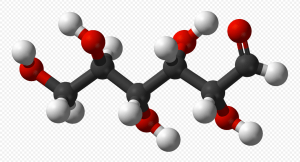
It is always fun to see a picture of the Trinity in Creation this one is in glucose the primary energy source for our bodies. Its chemical formula is C6H12O6 glucose

Carbon is the “backbone” of glucose and most other molecules that we need for living. It forms bonds by sharing electrons with other atoms. In its pure form it can be something common like graphite (pencil lead), lampblack, or something valuable like diamond. It has an atomic number of six (which is the number of man). Carbon would the model of the Father: stable, all about man, and holds things together.

Hydrogen is a very explosive gas and is the smallest of any atom. We are just starting to realize its potential as an energy source. Hydrogen would be a picture of the Holy Spirit; very powerful and a source of energy we need to use.

Oxygen is the gas in the air we need to live. It has an atomic number of eight (number of new beginning). Could anything be a better picture of Jesus? In Him we have a new beginning and is our very life if you are a believer.

As glucose these three elements form the molecule that we need to live. It is a quick energy source that we can use immediately.

∞ Father, Jesus, and Holy Spirit thank you for working together for our good and being the source of our life.

Pic from : http://commons.wikimedia.org/wiki/File:D-glucose-chain-3D-balls.png#mediaviewer/File:D-glucose-chain-3D-balls.png