Tribes of Israel – Manasseh

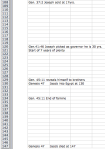
Manasseh was the first-born child of Joseph who was put as a “second son” by Jacob. Joseph in naming Manasseh and Ephraim demonstrates that he was perfectly happy with his new life and had no intention of going back. (Genesis 41:51+52) He had the power to send a message back to his family but he did not.

I wonder how these two acted around the rest of the family? They were children of the ruler of the country they lived in and because of being Egyptian possibly had more privileges. From Genesis 48:1 I would wonder if Joseph even allowed them to live around his brothers? Joseph may have had them marry within the family but Manasseh definitely owned slaves and even had a foreign concubine.

1 Chronicles 7:14+15 talks about Manasseh’s two notable descendents: Gilead and Zelophehad.  In Numbers 36 Zelophehad dies in the exodus and leaves only daughters, these girls stand up for themselves and their father’s lineage. The daughters go to Moses and plead their case before God; this leads to a new decree to acknowledge women as heirs. It may not sound like much but that was groundbreaking territory when women were viewed much of the time as second-class people or property.   The other descendent was Gilead who was to lend his name to the area of the east bank of the Jordan River that wasTwelveTribesofIsraelebible the inheritance of the tribes of Manasseh, Rueben and Gad. This is a contrast to Zelophehad’s daughters; Gilead comes from an Aramean concubine and a group of people who were not Israelites (Huppites and Shuppites). Just like Bilhah and Zilpah this concubine was a slave that Manasseh used and was so elevated to a slightly better status in the household. You get the feeling that the children were valued but not the mother (Sarah and Hagar).

In 1 Chronicles 5: 18 -26 it gives two contrasting stories; one of faith and trust in God and the other of unfaithfulness to Him. In verse 20 the East Bank tribes cry out to God for help in the middle of a battle and are helped and overcome their enemies. In verse 25 it tells of the unfaithfulness that gets them taken away by Tiglath-Pileser.habor_river

Actually, Manasseh’s descendents were on par with the other tribes; they did their part in taking the Promise Land and showed up at all the right times and were active during the life time of Saul and David. Lo Debar is in the allotment of land given to Manasseh and it was this area that David went to when he ran from Absalom.

Map from http://www.biblestudytools.com/resources/maps/twelve-tribes-of-israel-map.html and eBibleTeacher.com.

http://bibleatlas.org/full/habor_river.htm  large map,
Tribes of Israel – Ephraim

Ephraim

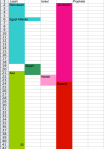
The second son of Joseph or after being claimed by Jacob and elevated in status he was Jacob’s thirteenth son. Born and raised in Egypt from the daughter of an Egyptian priest we know very little about his life.  He and Manasseh were probably in their early twenties when they received the blessing from Jacob; they were born before the famine started and Jacob lived in Egypt 17 years before he died. The only story about Ephraim outside of Genesis is in 1 Chronicles 7:20-24 where it recounts a raid gone bad in Gath where two of his children were killed. That changes my idea that the children of Jacob lived quite lives in Egypt tending flocks and growing crops.

Now being the “first-born” of the beloved son of the favored wife Ephraim received the double-portion blessing of Jacob. The blessing is in Genesis 48: 15 Then he (Jacob) blessed Joseph and said, “May the God before whom my fathers Abraham and Isaac walked faithfully, the God who has been my shepherd all my life to this day 16 the Angel who has delivered me from all harm —may he bless these boys. May they be called by my name and the names of my fathers Abraham and Isaac, and may they increase greatly on the earth.”(NIV) This made them equal to the eleven and combined with Joseph’s blessing in Genesis 49 did truly set them above the others.

top of timeline

I want to mention two of Ephraim’s children Joshua and Jeroboam. Joshua, Moses’ military leader and a faithful spy really set a high standard for anyone to follow. He truly is the picture of a “double blessing” person and worked hard for all the tribes he led into the Promise Land. Jeroboam was a man that had a truly great blessing put in front of him and ignored it. His story starts in 1 Kings 11:26; he had a prophetic call to rule Israel because of Solomon’s unfaithfulness. All he had to do was walk after the ways of David and he would have had an “enduring dynasty.” I feel that this opportunity was extended to him because he was an Ephraimite and had the right to the double blessing from Jacob. Instead, he took the ten tribes given to him by the Lord and led them astray. He got a second chance in 1 Kings 13:6 but he could not trust God to fulfill the promise, so his linage died out rather quickly. His son Nadab only ruled for a short time and was killed. (see my King’s Timeline)

Tribes of Israel – Predications of Genesis 49

I have been writing about the boys and referencing Genesis 49 but it is interesting to look at the inspiration for Jacob’s words.

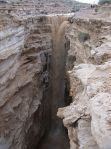
  • 1. Reuben – turbulent water   The water that Jacob would have know was a swollen Jordan River or the flooded, rushing gullies in the wilderness after a thunderstorm. He understood the violence and power of moving water; so he recognizes Reuben’s strength, power and abilities.
  • 4. Judah – lion    Lions were common in Palestine usually living near the Jordan River. In Africa the male lion’s roars can be heard up to five miles away. Their stately appearance and raw strength has apparently inspired respect for thousands of years. A modern moniker for Jesus is the “Lion of Judah” directing our thoughts to the strength and power of a risen, glorified Jesus.
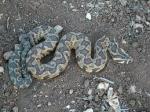
  • 5. Dan – snake/viper     Eerdman’s sites that there are harmless snakes in that region but that all biblical references refer to venomous snakes. They site the Carpet or Saw-scaled viper (Palestine viper) as a possible candidate and the Arkive Organization attest to its quick strike and the amount of human attacks.  The tribe of Dan in Judges 18 where they stole “gods” and then killed off a quiet people and took a northern most position in Israel show their violent nature and is a good picture of what Jacob must have seen in his son.
  • 6. Naphtali – a doe    According to Eerdman’s the possible animals may have been the Fallow Deer, Gazelle or the Nubian Ibex. I am not sure that the specific animal is important but the symbolism; a doe and its fawns are such a tranquil picture. So I would assume that Naphtali did not have the temper of Simeon or Levi.
  • 9. Issachar – a strong donkey   A strong donkey shows his usefulness and his tendency to be like Jacob, a “home-body.” Interestingly he was not called a wild-donkey because they are the exact opposite; they are free roaming and very hard to get along with.
  • 12. Joseph – a fruitful vine   The only choice of plants here is the grape and the picture would be like the cluster of grapes the spies brought back in the Exodus story. Besides the words for Judah this is the only one that I could call a blessing; Jacob here gives it all to Joseph and calls for the supplying of all his needs and ask special favor of God to take notice of Joseph.
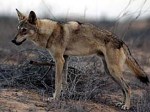
  • 13. Benjamin – a wolf    They are a social yet fierce predator that takes care of family.  So I still think that Jacob was recognizing a loyal yet mean side to his youngest son. There were other predators that could have been chosen like foxes, bears or jackals so him picking the wolf is interesting.
  • 2. Simeon and 3. Levi  – still after all the years that lapsed Jacob had nothing good to say about these two.
  • 10. Zebulun – he will live by a seashore
  • 7. Gad – he would be attacked and then fights back
  • 8. Asher – that he would have and make awesome food

The last three are hard to track down in the Bible so I wonder if they may not have been words about their life in Egypt.

references: Eerdman’s Handbook to the Bible,                                                              about the viper http://www.arkive.org/palestine-saw-scaled-viper/echis-coloratus/                             picture of viper http://www.flickriver.com/photos/aviadbar/2616597272/                   picture of wolf http://www.cosmosmith.com/arabian_wolves.html                               picture of the flood http://commons.wikimedia.org/wiki/File:Ein_Avdat_Flood_1.JPG

Tribes of Israel – A timeline

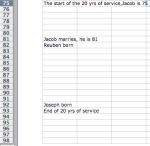
This is a new timeline of Jacob and Joseph. I now understand how hard it is to make an accurate line from a verbal description. To do this I started at the end (Jacob’s life) and moved to Joseph’s birth and the twenty years of service; transition/travel times also add error into my dates. The numbers surprised me, I have always thought that Jacob left around forty years of age because Esau’s age is mentioned when he married (Genesis 26: 34) and the text moves right to Isaac being tricked and Jacob leaving. My first timeline is wrong, especially when it comes to Isaac and Jacob and Isaac’s death. So please accept my “close” and use it that way. I used Excel and took screenshots to get my graphics so you will need to double click on them to view them.

Tribes of Israel – Family List

This is by no means all of the “Tribes” list; I choose these because they are at important junctions in the family’s story. I always assume that things in the Bible are there for a reason even if it is not readily apparent why. Notice how the positions of the brothers change especially Benjamin and the children of Leah, who are in italics. I really don’t have any great reason why some families are left out at various times. And though Reuben lost his birthright he still was held in a position of honor as viewed by his location on the listed.

The one thing I have noticed about the lists is there are always 12 names; you may have to not count Joseph like in Numbers 1 or Deuteronomy 33 or leave Levi out if he is surrounding the Ark or Temple as in Camp Order or Ezekiel 48.