Samuel – Saul’s Servant

The unsung hero in the story of Samuel and Saul is the servant.  I am pretty sure I have never heard a sermon about his role in the crowning of Saul as king.  He is never named and only referred to as a servant (na ar).  He had a “God part” to do and did it well.  He is easily compared to Ananias (Acts 9) in the story of Saul the Apostle.  He did the job that needed to be done and was never heard of again.  Na ar is mentioned nine times before Saul’s signs and only once after them.

In the Strong’s/Vines Concordance the first definition listed is probably not the description of this servant.  I think he would have been younger than Saul but not a boy.  He was certainly trusted and displayed knowledge of his physical surroundings.  He was also spiritually aware because he encouraged Saul to “see the prophet” when he was ready to go home.  He had brought his own money, and was willing to use it to resolve the “donkey problem.”  He was obedient and loyal to Saul and followed Saul’s leading when the uncle asked about Samuel.

He was honored at the sacrifice because he got to eat with Saul in the main room.  But he was not allowed to witness the actual pouring of the oil.  He would have seen the results of the anointing because the oil would have been all over Saul’s head.  He observed/witnessed the three signs and I cannot believe Saul was not talking about them as they went.

God used an unnamed servant to affect the history of Israel; sometimes we have to do things “just because.”  It turned out well for him.  Who knows maybe he was Ziba the servant in 2 Samuel 9 who did play a part in the life of lead and the story of Lo Debar.
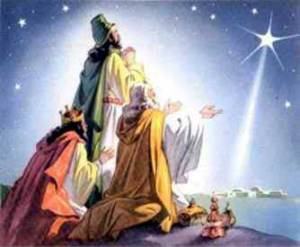
Christmas – The Wise Men

Christmas – The Wise Men

Epiphany, the day the Wise Men show up to worship Jesus. It marks the end of the Twelve Days of Christmas (See Epiphany or Three Kings Day) and in some countries, it is celebrated with as much enthusiasm as December 25th. Matthew 2: 1-18 records the story in the New Testament (See Magi and Herod for OT verses). Matthew, who starts with Joseph’s family line, continues telling the story from “Joseph’s viewpoint.” (The angelic dreams and his reactions.) Even if you combine Matthew and Luke’s narratives there are a lot of unanswered questions. I guess there should be but we can look at what we know.

Mary and Joseph being good Jewish parents fulfill the requirements of the Law with the trip to the Temple. There they receive blessings and prophecies to settle both Joseph’s and Mary’s fears and doubts. For us, facts are added like Luke stating, “they went to Nazareth and Jesus grew” while Matthew tells the story of the Magi and the trip to Egypt all starting from a “house.” But I have a feeling that times and locations are not what is important here.

The Magi or Wise Men were the scholars and learned men of the day. They counseled kings and influenced decisions. They are found in Daniel and other books of the Bible like Ezekiel 21: 21 checking the “liver” for the king so he knows which way to go. What they represent in the Christmas story is huge. These are Gentiles/heathen (us) acknowledging Jesus and his kingship. They are the college professors of the day following their studies and observations looking for a baby that was talked about in Jewish scriptures. It was no little trip for them to show up in Judea looking for a king, several months of travel were required and the supplies and then the gifts. I would guess it was not just three guys on camels it may have well been a caravan(s) with guards and servants. Were they sent as a diplomatic envoy?

Plus them showing up, sets Herod off so that the prophecies in Jeremiah 31:15 and Hosea 11:1 would be fulfilled – Herod killing the babies and Jesus coming out of Egypt.

Pic is from http://clipart.christiansunite.com

Salad Bowl Christianity

Salad Bowl Christianity

Besides being the reason for men making coffee, Hebrews also has a health food connection that we need but frequently miss. Hebrews has sixteen uses for “let us.”  (The NIV  translation.)salad-clipart-clipart-saladroad-runner-wcgqf5d8

  • 4:1 let us be careful that none of you be found to have fallen short of it (entering His rest).
  • 4:11 Let us, therefore, make every effort to enter that rest (from his own works).
  • 4:14 let us hold firmly to the faith we profess
  • 4:16 Let us then approach the throne of grace with confidence
  • 6:1 let us leave the elementary teachings about Christ and go on to maturity
  • 10:22 let us draw near to God with a sincere heart in full assurance of faith
  • 10:23 Let us hold unswervingly to the hope we profess
  • 10:24 let us consider how we may spur one another on toward love and good deeds.
  • 10:25a Let us not give up meeting together, as some are in the habit of doing
  • 10:25b let us encourage one another
  • 12:1a let us throw off everything that hinders and the sin that so easily entangles us
  • 12:1b let us run with perseverance the race marked out for us
  • 12:2 Let us fix our eyes on Jesus
  • 12:28 let us be thankful, and so worship God
  • 13:13 Let us, then go to Him, outside the camp, bearing the disgrace he bore.
  • 13:15 let us continually offer to God a sacrifice of praise

So from the “rest of God” to offer “a sacrifice of praise” the “let us” of Hebrews covers a healthy Christian life. Eat up and enjoy it.

All of these are from the NIV and I am sure they may be different in other translations. Since I like to give credit where it is due, this was a sermon from R.W. Schambach that I heard many years ago.

salad pic from http://www.clipartpanda.com/clipart_images/tossed-salad-clip-art-free-41281227 

Syncretism or the Love of Jesus

God is love.  Jesus is love.  Unfortunately, postmodernism has changed the very concept of love especially the love that Jesus offers.  His love is defined in the Bible.  You loving Jesus is not necessarily a list or set of rules but it is not the ignoring of the Bible. Redefining terms to meet your unwillingness to follow Jesus is not love.  Jesus laid His life down at the request of the Father, can you/we lay ours down at His request?

What picture is your idea of love?

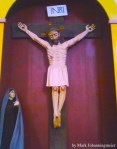
A baby,                                    a crucified Savior,       whip-carrying corrector,

cropped-jesus-2.jpgCrucifix from Misson Espiritu in Goliad,TXThe_Moneychangers001

Jesus on the Donkey

Jesus on the Donkey


or


The one leperJesus_Curses_Fig_Tree_James


a victorious healer, a

curser of fig trees,     OR


preacher Sermon_on_the_Mount005Communion005woman healed

Jesus at the Tomb

hst_hourglass_nebula_small

worshipping the calf


a nice concept that lets you do what you want to do?

Solomon, Rehoboam, and Jeroboam left a legacy of confusion and syncretism of the worship of Jehovah that sentenced Israel/Judah to separation from God and the Land.

The truth is Jesus died on the cross and came out of the tomb in victory over SIN.  He did all He did to show us that He is the Way and that our way will not work.

I believe that 2015 will be a time to Clean-up So We Can Celebrate.  Jesus still stands at the door of your heart and is knocking but letting Him in means your way goes to the Cross so you can join Him outside of the empty TOMB!
jesus at door

I think I got all of the credits but if not let me know and I will find it. They should also be attached to the picture.  I did take several of these.


Faith, Hope, Love

Faith, Hope, Love

1 Corinthians 13:13 And now these three remain faithhope, and love. But the greatest of these is love.

Colossians 1:5 the faith and love that spring from the hope stored up for you in heaven and about which you have already heard in the true message of the gospel

1 Thessalonians 1:3 We remember before our God and Father your work produced by faith, your labor prompted by love, and your endurance inspired by hope in our Lord Jesus Christ.

1 Thessalonians 5:8 But since we belong to the day, let us be sober, putting on faith and love as a breastplate, and the hope of salvation as a helmet.

  • Faith has its definition and examples in Hebrews 11.
  • Love has its descriptors in 1 Corinthians 13.
  • Does Hope have a chapter or verse?
  • Hope as defined in the 1828 Webster’s Dictionary is:

HOPEnoun [Latin cupio.]

  1.  A desire of some good, accompanied with at least a slight expectation of obtaining it, or a belief that it is obtainable. hope differs from wish and desire in this, that it implies some expectation of obtaining the good desired or the possibility of possessing it. hope therefore always gives pleasure or joy; whereas wish and desire may produce or be accompanied with pain and anxiety.
  2.  Confidence in a future event; the highest degree of well-founded expectation of good; as a hope founded on God’s gracious promises; a scriptural sense.

HOPEverb intransitive  To place confidence in; to trust in with the confident expectation of good.

A chapter or verse just for Hope – no.  It’s not even a fruit of the Spirit (Galatians 5:22).  Well, maybe there is one place but it is a stretch – 2 Peter 1:5-7(NIV) For this very reason, make every effort to add to your

  • faith
  • goodness; and to goodness,
  • knowledge;and to knowledge,
  • self-control; and to self-control,
  • perseverance; and to perseverance,
  • godliness;and to godliness,
  • mutual affection; and to mutual affection, (early editions have brotherly kindness)
  • love.

 In defense of my thinking.  No, those six things are not really in the definition of hope but you are not going to have hope if you do not have those qualities.

For more on the word HOPE (Just click, it is a previous post.)

http://webstersdictionary1828.com/Home?word=Hope

Verses were retrieved from https://www.biblegateway.com/quicksearch/?quicksearch=faith+hope+love&qs_version=NIV

All verses used are New International Version (NIV) Holy Bible, New International Version®, NIV® Copyright © 1973, 1978, 1984, 2011 by Biblica, Inc.®