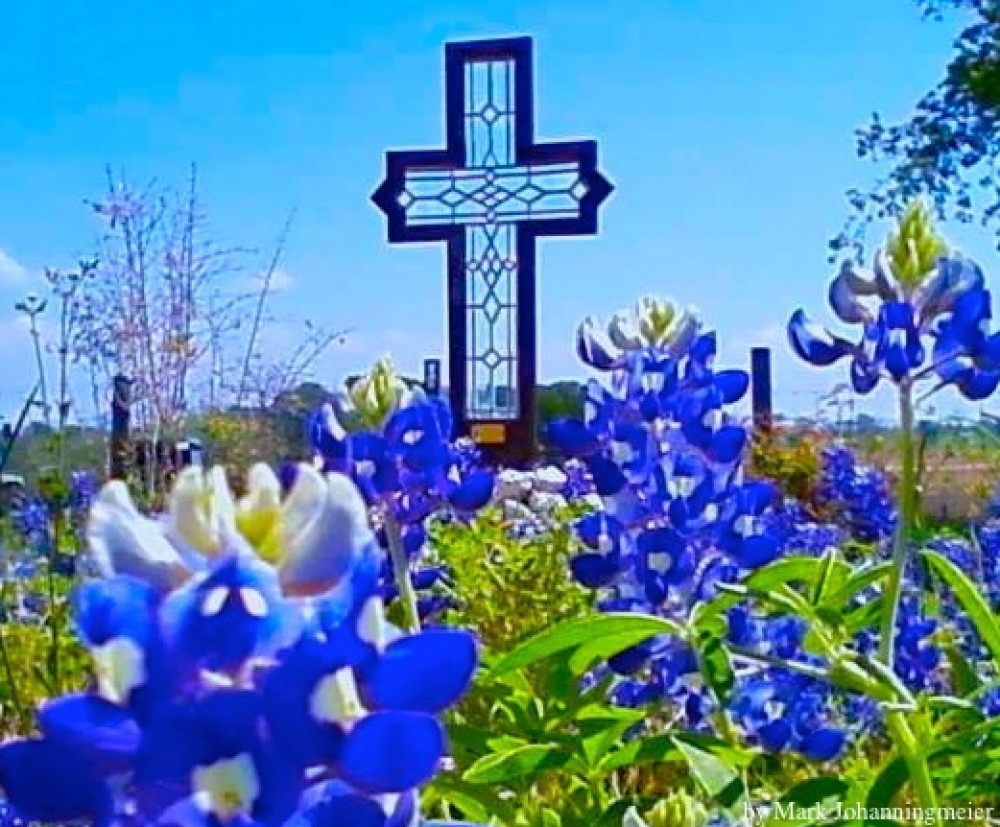
The Sermons on Two Mounts-This Mountain

It is time in this series of sermons on the mounts to look at the mountains Jesus was teaching on. Jesus in Matthew 21:21 repeated a phrase He used in Matthew 17:20-this mountain. The Greek phrase is houtos oros. In Strong’s, (this) houtos is 3778 and (mountain) oros is 3735. This surprised me because I did not expect “this” to have its own specific word. I expected it to be an added word so we could understand the translation. 

My simple conclusion about the phrase is that Jesus stood on the mountain and was specifically talking about that mountain. (In my early days of being a Christian, I thought it said “a or any” mountain.) John 16:25 has Jesus commenting about how He has spoken figuratively to His disciples. This was on Thursday of Holy Week. So, we can conclude that there is a second level of meanings to the fig tree and the mountain. More on this thought later.

To set the narrative for this, I will use Mark 11:12-14 and 20-26. My belief is Mark not only used his uncle Peter as a reference source, but he was an eyewitness observer to these days from the Jordan to Pentecost. Mark gives the details that Jesus cursed the fig tree on Monday morning going into the city, so He could clear the Temple, and then Tuesday morning, Peter noticed the tree dead. This ushered in the first half of the sermon about the actual mountains of this story-the Mount of Olives and the Temple Mount/Jerusalem. The path from Bethany to Jerusalem would have taken the disciples through Bethphage (the house of unripe or new figs) down into the Kidron Valley and then into the city. In other words, the path Jesus took during His foretold ride on the donkey. To add to the history lesson, I need to include that David also followed this path from the Jordan to Jerusalem. He fled Absalom in 2 Samuel 15:30 to the east bank of the Jordan, but in 2 Samuel 20:2, it is the same path that the returning king took back to the city. David also had a parade that would have looked a lot like what Jesus had during his trip. 

So, it is possible that the first teaching of the day occurs in Bethphage on the Mount of Olives, the place of unripe figs. From my studies on the Tree of Knowledge in Genesis, I still believe that tree was a fig tree and that the Tree of Life was some type of “grape tree/wood”. Okay, back to the mounts.

The end part of this sermon occurs when Jesus is leaving the Temple and announces that Jerusalem, The Temple Mount, will be destroyed. He then teaches more about the end times once He is back on the Mount of Olives.

The Mount of Olives

I gave the fact that David would have fled and returned across this mount; it not named in that story in 2 Samuel. The Mount is clearly identified seven times in our Christian Bible. (The website is a travel company for Israel.)

https://www.seetheholyland.net/mount-of-olives/

1 Kings 11:7-8    Solomon built pagan altars for his wives on the mount.

Ezekiel 11:23      Part of a vision, God’s glory leaves Jerusalem and settles over/on its ridge.

Zechariah 14:3-4 The Messiah returns, stands on the mount and it splits; the valley carries water (dirt/mountain) to two different seas. The Messiah returning here is why many Jews want to be buried on its slopes. So, it is/was covered in whitewashed tombs.

Luke 19:29-44             Jesus enters Jerusalem on Palm Sunday. The Gospels allude to the fact that Jesus left Jerusalem every day and went to Bethany for the night (Martha and Mary’s house, possibly).

Matthew 24:27-31 Jesus gave a sermon about His return (part of this series).

Matthew 26: 30-57    After the last meal, they came here to pray.

Acts 1: 1-12                 Jesus ascended from here to return to the Father.

The Temple Mount/Jerusalem

Okay, to separate the Temple Mount and Jerusalem maybe splitting hairs but they were not always one thing. From Melchizedek to David, the city did not include the Temple Mount. David bought the Mount in order to sacrifice on it to stop a plague that he chose as punishment. Abraham took Isaac to Moriah, which we think is the Temple Mount. Joshua defeats a king and takes him to Jerusalem to die, and David defeated the city by using the city’s underground water system.

There are two Jerusalems, the earthly one and the heavenly one. Which one does God love the most? I will go with the heavenly city. The earthly one has been a problem for Him. Please read through the prophets before you condemn me. May I reserve comment on the fact that twice the city and the Temple have been leveled by foreign armies. There are also a couple of times when the place was looted but not destroyed. To be fair, on His ride into the city, Jesus cried for/over the city. His end-time teaching on the Mount of Olives may have come from the same spot He had cried at several days earlier.

Solomon built the Temple Mount up to have a level spot to build David’s dream. (The Wailing Wall is a retaining wall for the Second Temple; Herod’s building that Jesus taught in.) Zerubbabel (an ancestor of Jesus) actually built the Second Temple and Herod added to that building. 

Well, one thing is certain; Jerusalem and the mountains still have a role to play in the future of God’s plan.

A Second Meaning

To keep with the idea of sermons on the mounts, we must start with the fig tree. Normally, I say that figs represent the works of man trying to please God. If we follow that idea through Tuesday and Jesus teaching we see the fig cursed, the Temple cleared, corrupt leaders called out, a prediction that the Temple of Herod (an earthly work) will be destroyed, and a set of parables on what the Kingdom looks like.

Mountains and the sea have grown to more than I expected. To call a mountain just a problem or trial in your life just does not seem to fit. Mountains and their metaphors are so much more than obstacles and something to walk around or climb over. Seas and water are also deep in double meaning. These two topics will just have to be explored this year.

New

Happy New! With a new year upon (epi) us I thought about new things, face it 2021 and the covid makes you want to look ahead. This is a quick look into “new”, mainly because I got this bright idea yesterday (12/30). If you use a Bible search tool, know you will put up with the word news. So, I used an old tool, my “brick and mortar” concordance, it has been awhile. Two “verses” stood out in my quick study-Matthew 9:16+17/Mark 2:21+22 and Hebrews 10:20. 

Matthew 9:16+17/Mark 2:21+22 In this story, which starts off talking about fasting, three words carry the idea of new (In the Strong’s KJV). Those words are (agnaphos) Strong: G46, (neos) Strong: G3501, and (kainos)Strong: G2537. We use these metaphors for being born again and filled with the Holy Spirit. Can’t/won’t argue those points, but do they have more to offer? The reason I ask this is it preserved both wines and skins because of the action taken.  

  • Agnaphos is associated with the unshrunk cloth. It is only used 2x in the NT, here in this story.
  • Neos is the new wine. Neos is used many times in the NT.
  • Kainos is the new wineskin. It is used many times in the NT.

Hebrews 10:20 The “new” word here is (prosphatosStrong: G4372. It is used only in the NT. The context of the passage is the curtain/the Lord’s body is a new and living way into forgiveness of sin. Remember the old way required shedding blood and sprinkling it on the altar.  

Strong’s has one other “new” word-(gleukos) Strong: G1098. It is in Acts 2:13 and refers to the new wine that the crowd was convinced the disciples were drunk on. It amazes me that this new wine can make people drunk when many claim it is unfermented. This is an interesting contrast with neos and the new wine in Matthew, which appears to ferment and might ruin an old skin.

I used the Mounce Bible as a reference in this study.

Joshua of Nazareth or the Root of the Lord’s Salvation

Joshua of Nazareth (His Hebrew name) and its very loose translation-the root of the Lord’s salvation is setting the tone for this post and my feeble attempt at translating His names. 

This post is a look at who Jesus is by some of His names, titles, and attributes. (I used the Complete Jewish Bible, the Orthodox Jewish Bible, the Mounce Reverse Interlinear, and the NIV for the verses and the names.) 

Isaiah 7:14 This is the prophecy that says Jesus is Immanuel or God with us.

Matthew 1:23 Matthew repeats Isaiah in his introduction of the Christmas story.    

Exodus 34:6-7 is a good place to find out more about God the Father and Son. Moses wanted to know more, so God introduced Himself as He hid Moses in the rock’s cleft. His introduction was this: Hashem, Hashem El Rachum v’Channun or The Lord, the Lord the compassionate and gracious God. 

Isaiah 9:6 is a list of names or titles the Messiah was given as a present. They are:

  • Peleh (Wonderful) 
  • Yoetz (Counsellor)
  • El Gibbor (Mighty G-d) 
  • Avi Ad (Possessor of Eternity) or (Father of Eternity)-I really this one!
  • Sar Shalom (Prince of Peace)

Depending on what Hebrew source you use, the spellings may vary slightly. (Translators are amazing.) 

At first, I did not include this part of the verse. BUT. After watching several sermons about Christmas, I knew I had to add the first part of the verse. For a child is born to us, a son is given to us; dominion will rest on his shoulders, and he will be given the name. (CJB) This just has so much in it! I will focus on the two “given”. We were given a gift, and so did Jesus, for becoming human. What you do with any gift is always your choice. Choose well and keep Him close throughout the year.   

Matthew 2:23 states that there is a prophecy that says Jesus will be called a Nazarene. Okay, don’t drive yourself crazy looking for that, because it hides in the roots of the word netzer, which means branch. (See The Root, The Branch, The Fruit – The Christmas Stor).  

The Father confirms His words by giving them to two or three witnesses. He did this with what He wanted His Son called. Both Mary and Joseph were told by Gabriel what to call the Baby-Jesus. Mary was told in Luke 1:31 and Joseph’s witness came in his dream in Matthew 2: 21. The third witness is when the Father told Gabriel. The footnote in my NIV in Matthew states, Jesus is the Greek form of Joshua, which means the Lord saves.

Joshua of Nazareth or the Root of the Lord’s salvation, enough said.

The last verse for this post is Revelation 19:11. Jesus is not a helpless baby, or a hard-working carpenter, or a meek rabbi teaching and healing thousands. In this verse, He is called Faithful (pistos) and True (alethinos) while sitting on a white horse leading His armies into battle. His eyes are blazing, a sword is coming out of His mouth, and His robes are dipped in blood.

The mystery and aura of God’s love are easy to hold as a baby in a manger, but the Rider on the white horse is also God’s love for those who choose to believe in HIM.   

Christmas Connection 2021-Charitoo

Mary has the angel Gabriel appeared before her and he says she is charitoo. Oh, your version of Luke 1:28 does not use that word, neither does mine. Most will say something like highly favored. Charitoo is a Greek word that is only used twice in the New Testament. Since it was used to describe Mary, it is our Christmas connection. The other time it is used is Ephesians 1:6, where Paul says that we are highly favored or surrounded with grace because we are in Jesus.

Our word shares the same root, in Greek, as charis and charisma. These words refer to grace and gifts throughout the New Testament, especially in Paul’s letters.

But the Father surrounding us with His favor is not just a New Testament idea. Moses in Psalm 91 uses that thought all the way through his praise to God. (I believe Moses wrote Psalm 90 to 100 as he chronicled the journey from Egypt to Jordan River.) Picture this Psalm being sung as the Israelites are watching Egypt and their gods get wrecked.

David wrote Psalm 5:12 and uses the idea of surrounding us with His favor as with a shield. He received that favor when he was anointed to be king in his early teens.

Mary was given charitoo. She traveled to and from Elizabeth’s house by herself. Joseph and a very pregnant Mary bounced to Bethlehem and then ran for their lives after being given a fortune by the Wise Men and told to flee from Herod. Jesus even gave her a protector in her old age as He hung on the cross.

Whatever grace Mary was surrounded with, you have it as well. She got it to deliver Jesus into the world. We have it because we are in Jesus in this world. That is a really great connection this Christmas.

Christmas Characters 2021-Simeon and Anna

Simeon and Anna are my last two named characters in and around the first coming of Jesus (Christmas). Their story would have been forty days after the birth when Mary and Joseph were dedicating Jesus (Exodus 13: 2-15). This post will also review the other named human characters-good and bad. 

Anna– Her story starts in Luke 2:36. She is an old woman who is 84 years old or older (translation here maybe unclear), who never left the Temple. (Where did she stay, who fed her, etc.? I have never seen a diagram of the Temple that had living quarters on the grounds.) Since she was there so much she must have heard or known of Zachariah’s encounter behind the curtain. As a descendent of Asher, her people were part of the Northern kingdom who were carried away by the Assyrians. There are many ways to explain why her family had returned, the important thing is she was there. 

Second Coming Shadow. Anna is someone who is focused on the Lord and is waiting for His return. This daughter of Abraham felt and followed the leading of the Spirit.  

Simeon-His story starts in Luke 2:25. As I read and reread 25-35 I realized how awesome Simeon is and how little he is talked about. This Old Testament believer in Yahweh has three references to the Holy Spirit working directly in his life. The Holy Spirit lead him to the Temple, He had revealed things to him, Simeon praised and prophesied. So, this righteous (tzaddik) and devout man should have many accolades attributed to him. He easily could be put with the 7,000 who never bowed a knee to Baal, he is qualified to have been in one of the schools of the prophets, and I would even put him into the order of Melchizedek as a non-Aaron priest of God, and a definite pattern for believers after the Day of Pentecost. He was waiting for “the consolation of Israel”, which is the term the rabbis used for the Messiah. The root word for consolation is also used by Jesus in John 15:26 when He said he would send the parakletos to us. Jesus was talking about the Holy Spirit. It is also translated as advocate or comforter.

            Second Coming Shadow. Simeon is a faith-filled son of Abraham and an example of what a born-again Jewish believer would be. Luke says the Spirit was “upon him” or epi, which puts him with some serious Old Testament figures. He knew the Word and believed that Yahweh could and did work in his day.

Zechariah-His story is in Luke 1. The father of John the Baptist makes his entrance into Scripture because he is offering incense behind the Curtain in the Holy of Holies on the Day of Atonement, he is a priest. (This is a firm date or time in the Jewish calendar.) This would have no doubt been an honor to be selected, even though it did carry a fearful consequence-if he messed up they assumed he would be struck dead. That same curtain would be torn until Jesus died.

Gabriel, the angel, tells him great personal news about his family, which Zachariah doubts. Gabriel rebukes and levees a “wakeup call” to this son of Aaron-not being able to speak until the child is born. Gabriel is named, but not human, please see his post. 

            Second Coming Shadow. Zechariah, the priest, represents the doubting child of Abraham. He knew and lived the Torah, but a visit from an angel was not enough for him to not doubt. It took a miracle to move him into believing. 

Elizabeth-This daughter of Sarah (Luke 1) is amazing. She is a member of a cadre of strong women who had faith and became part of a miracle-Sarah (Genesis 21), Samson’s mother (Judges 13+14), Hannah (1 Samuel 1-2), the Shunammite (2 Kings 4:8 and 8:1), Rachel (Genesis 30), Tamar (Genesis 38), and Ruth. Their stories vary but all of them had babies after being barren or denied children. Many of these women belong to the family tree of Jesus (Matthew 1). 

In the Christmas story, Elizabeth is special because she finds out about her blessing (probably) in writing. Zachariah could not talk so I will guess writing was how he communicated for nine months. All of the other Christmas characters were spoken to or led by the Spirit into their role in the story. 

            Second Coming Shadow. No children were a very negative thing for the Hebrew woman and the nation of Israel. “Elizabeths” endure ridicule and shame, yet become a sign of God’s mercy because of the miracle they give birth to. The Father sets a table for them in front of their enemies (Psalm 23:5)   

Mary-For years I have tried to connect Mary, the tribe of Judah, with Aaron the priest, it did not really work. There is at least one verse that may reference this connection so Jesus could be king and priest. This year I did a study on David as a priest and Melchizedek. Jesus’ priesthood did not depend on Aaron because Jesus is in the order of Melchizedek.

Having studied Zachary’s story, it is possible that Mary was visited at Passover. That would make Jesus’ birth in the Christmas/Epiphany season.

Mary, however, does deserve to be recognized, she was handpicked by the Father. The woman in Luke 11:27 was corrected by Jesus in verse 28-blessed are those who hear and do the word. It is easy for me to believe Mary was a reference for Luke, Matthew, Mark, and John when they finally started writing the Gospels. Her life was filled with many good things but Simeon’s prophecy was good and she did have her heart pierced because of her firstborn son.     

            Second Coming Shadow. Mary represents the “yes Lord” group of believers. She was surrounded by charitoo. The word is also used in Ephesians 1:6 for grace being given to believers. 

Joseph– After learning about Jewish weddings when I did the post of the Ten Woke Virgins, this story looks a little different. In Jewish tradition, Joseph and Mary were legally bound because Joseph/his father would have already paid the bride’s price for Mary. They were in the yearlong waiting period when Joseph had his dream and Mary her visitation. Mary’s announcement would have affected her family also, the money became her father’s not to her. They usually gave it to the bride once the couple was together; remember how Leah and Rachel were upset at their father for spending their bride price. So, when Joseph thought about not marrying Mary, that meant a loss of money for him.

With all of that said, Father God not only picked Mary, He hand-picked Joseph as well. God knew Joseph would listen to the dreams for direction and guidance. In one respect Joseph had had more heavenly messages than Mary. I will always celebrate Mary because she knew the ridicule she would endure, but none of that was easy on Joseph either. 

            Second Coming Shadow. Joseph had “eyes to see and ears to hear” even when the message came in a dream. He knew and followed the Law but had an open heart and received the miraculous. There are testimonies of Muslims having dreams and knowing they must follow Jesus.

King Herod-Okay, the crazy, evil bad guy was named so he makes this post. His evil rage actually fulfilled the prophecy in Jeremiah. It is surprising that he only stopped with the little boys and not the whole village

Off-topic slightly-I will bet he knew about Zachariah and that something happened in the Temple. His non-Jewish heritage came through when he had to ask where the Messiah would be born, the common guy on the street could have answered that question. 

Second Coming Shadow. His list of bad things would be very long. So, just because they say they are for you does not mean a thing, what kind of fruit of the Spirit are they producing?

This is where the idea came from for this post.