Christmas – The Wise Men

Christmas – The Wise Men

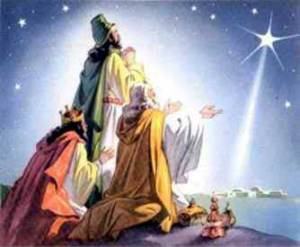
Epiphany, the day the Wise Men show up to worship Jesus. It marks the end of the Twelve Days of Christmas (See Epiphany or Three Kings Day) and in some countries, it is celebrated with as much enthusiasm as December 25th. Matthew 2: 1-18 records the story in the New Testament (See Magi and Herod for OT verses). Matthew, who starts with Joseph’s family line, continues telling the story from “Joseph’s viewpoint.” (The angelic dreams and his reactions.) Even if you combine Matthew and Luke’s narratives there are a lot of unanswered questions. I guess there should be but we can look at what we know.

Mary and Joseph being good Jewish parents fulfill the requirements of the Law with the trip to the Temple. There they receive blessings and prophecies to settle both Joseph’s and Mary’s fears and doubts. For us, facts are added like Luke stating, “they went to Nazareth and Jesus grew” while Matthew tells the story of the Magi and the trip to Egypt all starting from a “house.” But I have a feeling that times and locations are not what is important here.

The Magi or Wise Men were the scholars and learned men of the day. They counseled kings and influenced decisions. They are found in Daniel and other books of the Bible like Ezekiel 21: 21 checking the “liver” for the king so he knows which way to go. What they represent in the Christmas story is huge. These are Gentiles/heathen (us) acknowledging Jesus and his kingship. They are the college professors of the day following their studies and observations looking for a baby that was talked about in Jewish scriptures. It was no little trip for them to show up in Judea looking for a king, several months of travel were required and the supplies and then the gifts. I would guess it was not just three guys on camels it may have well been a caravan(s) with guards and servants. Were they sent as a diplomatic envoy?

Plus them showing up, sets Herod off so that the prophecies in Jeremiah 31:15 and Hosea 11:1 would be fulfilled – Herod killing the babies and Jesus coming out of Egypt.

Pic is from http://clipart.christiansunite.com

Christmas – Isaiah 9

Christmas – Isaiah 9

Isaiah 9 contains three very important prophecies about Jesus: where he would live (vs. 1), a list of His titles, and what His kingdom would be like (vs. 6, 7). Nazareth is by the Sea of Galilee in the land of Naphtali and foreshadows Matthew 2: 23 in that He would be called a Nazarene. Handel immortalized verse 6 and 7 but these names/titles are important: christmas angelsWonderful Counselor, Mighty God, Everlasting Father, and Prince of Peace. Verse seven clearly puts this ruler in David’s family and places justice and righteousness as keystones in His government. The last line is often overlooked but it too is important – The zeal of the Lord Almighty will accomplish this.

These promises came to Judah and Israel not in a “great time” period but at a very low one. Just like Father to encourage His people when things look bleak. Ahaz, the fifteenth ruler of Judah, was actively rebelling against God (2 Chronicles 28 and 2 Kings 16). So God used Pekah son of Remaliah king of Israel Christmas 1to do some cleaning up of Judah (see Fifteen – Cleaning Up to Celebrate). Idolatry and oppression by foreign kings, and bloodshed was the life of the people of God when Isaiah spoke this prophecy. Hezekiah, the son of Ahaz, certainly stepped up and turned things around for Judah but only Jesus could fulfill the names in verse six.

Pic of angels: http://www.squidoo.com/vintagechristmasimages 

Nativity scene by Mark Johanningmeier

Rehoboam/Jeroboam Legacy

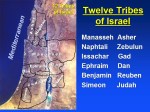
In looking at Rehoboam and Jeroboam and the mess they left there are some things I have wondered about and then there are some “shadows” of their behavior that really are just scary. One thing that I will not find an answer for just because it does not appear to be there is the tribe of Simeon (see Simeon – Where Did They Go?). In Genesis 49:5 Jacob “scattered them” in Israel. When the land was divided by Joshua Simeon’s portion was in the middle of Judah’s territory. What happened when the Ten Tribes went to Jeroboam? They are mentioned twice after the split but before the exile of Samaria – 2 Chronicles 15:9 and 34:6. In 15:9 some have settled with Judah after seeing that the Lord was with them; King Asa has a covenant renewing in the third month on the fifteenth day of his reign. The 34:6 reference is to Simeon’s towns that Josiah removes idols from. It would seem they may have left their allotted portion and then just settled wherever they could but the Genesis 49 prophecy did come to pass.

Another thing I noticed was in Ezra and Nehemiah only Levites and families from Judah and Benjamin are mentioned. Some of the lists are for people from a town but they were towns from those two portions. Most all of the tribes are mentioned in Ezekiel and Revelations when the land is again handed out or they are sealed in the last days. (See List of Tribes)

Musing on these two things will show you the love of God and that He does expect obedience to Him and the Word He gave us. His love for the Northern and Southern kingdoms was rooted in Abraham (2 Kings 13:23) and He kept having mercy on both kingdoms. 2 Kings 17: 7 – 23 summarizes it all and should be a warning for all who claim God.

In Matthew and Luke, we find two family trees that are for the tribe of Judah leading to Jesus. Matthew’s tree is for Joseph and Mary’s is found in Luke and the common factors are David and Zerubbabel. Bathsheba is in David’s line because of Solomon and by extension in Mary’s line because of Nathan (1 Chronicles 3:5); Solomon started Rehoboam’s problems but sin and the world certainly took its toll on the King’s of Judah.

The chroniclers of the two kingdoms judged the kings with very interesting phrases. Judah’s kings were judged against David and if they followed his ways OR did they do “right in the eyes of the Lord” or did they “walk in the ways of the kings of Israel.” Israel’s measure was “they did not turn from the sins of Jeroboam son of Nebat” and if they did “evil in the eyes of the Lord.”

The wars and battles between the kings of the two kingdoms are legacies that still shadows the people of God today. True peace between the two really was out of the question. Jeroboam made the separation a matter of religion, add in a lot of pride and top it off with the forbidden pagan deities and war had to follow. But in all of that, the North seemed to be used by God to bring Judah to repentance or punish her for disobedience. Jehoshaphat in 2 Chronicles 18 + 19 seemed to have a relationship with Israel but 19:2 clearly states what God thought about working with the enemy (people who did love Him). Having said that I also noticed that Father God sent two of the great prophets to Israel in order to get them to repent: Elisha and Elijah.

The Books of Kings and Chronicles are snapshots of the lives of the leaders of the people of God. Many of them are not real pretty. Closing the Temple, killing his children, ordaining anyone with the right price to be a leader of your church are just some of the sins they did. The people’s reaction to all of this is also recorded and is a lesson in its self. At times they were forced to follow God and at other times they rejoiced to see their leaders acting, as they should.   It would seem that the people followed their leader both in doing good and doing bad. But as you read the prophets it is easy to see that they just finally were going to do their own thing. Jeremiah and the women who made cakes to the “queen of heaven” show the degree that most of the people had sunk too. So where was the remnant? God always has a remnant! Did they have to go with the others or were they directed to flee and find safety? Were they the poor ones left in the Land? We know there were people in both Israel and Judah who still thought about God: they took care of prophets, wrote letters, wanted to hear about God and His plan for them and their families. We know these survived because there is still a Jewish nation/people!

Several of the kings of Judah did follow God and some of the kings of Israel at least showed an interest in the things of God. King Saul and kings Jeroboam and Jehu were offered a dynasty if only they would obey the Lord and follow His plan but these kings turned and did what they wanted to do. David had problems but the difference is he believed God AND acted on the promise by staying true to the Lord. So while Solomon’s kids were having varying success as king and Jeroboam’s family was eliminated quickly Nathan’s family was living in Bethlehem not knowing that the Christ would come through them.

A sad fact in our world today is that we still have leaders like Rehoboam and Jeroboam running things today. They may have a small church or a big one that really is not the question; do they have the heart to follow Jesus, a concern for people, and a plan to reach out to them with the Gospel?

Top 20 Song or Musical Sunday School Lesson?

A look at Psalms 60 and 108

Previously, I wrote a blog entitled Where and When the Psalms Were Written. In that blog, I matched the verse in the Bible that may have been the inspiration for writing the Psalm. Psalm 60 and 108 were two of those psalms but I want to compare them because they have a large similar portion used in two very different psalms.

I believe Psalm 60 was one of the reasons I started doing the matching. Its timestamp was easy to find in 2 Samuel 8:13 and 1 Chronicles 18:12 which tells of the 12,000 Edomites and the Valley of Salt. The introduction and the verses don’t really match and if you do a “search” on the Valley of Salt there are several reasonable explanations as to why there may be differences. (The Valley of Salt is also a topic of disagreement because we are not sure where it is/was.)

Psalm 108 I originally put with 2 Samuel 6:5 when David was bringing the Ark to Jerusalem. David the Writer uses rhetorical devices in many psalms by repeating phrases but in these two Psalms, a large portion is used in apparently two different occasions much like Psalms 14 and 53. These “re-purposed” psalms are also in different “Books” within Psalms. I compared Psalms 135 to 136 because of similar content but they really are presented in very different styles.

Not all Bible translations have chapter “headings.” I like them because they can allow your imagination to soar as to the “when what, and why” they were written and used. Psalm 108’s heading is not a repeat, as most people will say all psalms were sung. “Song” and “psalm” here are two completely different words. I can imagine that it was a favorite that you might hear someone humming in the marketplace or while they were working.

Psalm 60, on the other hand, has all the markings of a formal arrangement that was used at special gatherings. Asaph may have been the “director” but we don’t know for sure. Miktam like maskil is thought to be a musical term whose exact meaning has been lost to us, what a shame. It also has a Selah in verse 4 which may signal a pause to give time to reflect. The fact that David set it to the tune of another well-liked song just shows that we have not changed all that much, my example is the hymn, “Amazing Grace” (it was set to a popular tune of the day). But the “for teaching” is what catches my eye. David knew the power of music to help with learning and remembering!

box 1

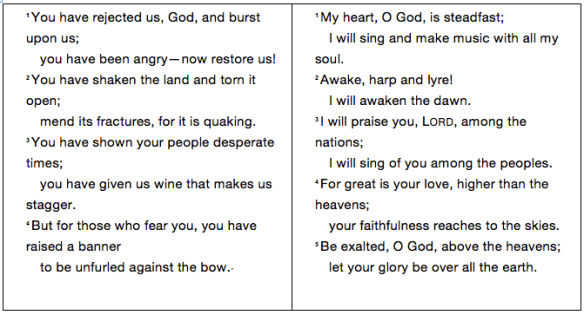
Psalm 60 shows great distress and turmoil and the unspoken “where are You, God.” The term “banner” in verse 4 is a very “visible signal” that pulls the learner back to the Father. The start of Psalm 108 could not be more different with phrases like “make music with my soul” and “your faithfulness reaches to the skies.” Well maybe not. Love and faithfulness reaching to the skies and a banner do sound like the same thing.
box 2

The shepherd, the ridiculed little brother, the youngest son, and the overachieving young man who feared little are all descriptions of David. As complex as David may be the last two lines in this shared portion would only come from the heart of someone who has been in God’s presence and has valued that experience – “human help is worthless” and “with God, we win.”  The box below – on the left is the shared portion, and the right side is my notes.

Reuben, Gad, Manasseh, Judah, Edom, Moab, Shechem, Genesis 49box 3New International Version (NIV) Holy Bible, New International Version®, NIV® Copyright © 1973, 1978, 1984, 2011 by Biblica, Inc.®  Used by permission. All rights reserved worldwide.

Rehoboam/Jeroboam – Reflections

Rehoboam/Jeroboam

Historical figures, types and shadows of the Church, part of the Story, or two kings who Start of King's Timelinehad problems; these and more could apply to the men found in 1 Kings 11:26 – 1 Kings 15:10. The story of Rehoboam as David’s descendant and king of Judah is found in 2 Chronicles 9:29 – 2 Chronicles 14:1. The reason these two are worded the same in many places is because they were taken from a common source (what ever it was) but written for different audiences. Possible sources may be from the pens of people involved in the story such as Iddo the Seer or even the chronicles of the kingdom.

As a writer it was fun to image the conflicts and possible twist that could make this story a bestseller. The probability that they knew and worked together during Solomon’s lifetime may have set the stage for a lot of what happened in the story. When Rehoboam saw the fugitive, Jeroboam, at his inauguration it might have tipped the scale to his bad decision and been some of the fuel for the continual warfare.

Their names are very similar in meaning: Rehoboam is “the people will/have enlarge or expand”; Jeroboam “the people will contend or increase.” In the Book of Kings there are two Jeroboams, both are bad and not related. (see Bethel in The Places of Rehoboam and Jeroboam) Both of these men have a son named Abijah or worshipper of Jah. Jeroboam’s died and had a decent burial because God found something good in him; Rehoboam’s son became king of Judah and confronted Jeroboam in battle. (That may have fed the warfare also.)

Getting advice on something is normally good but these two clearly are in their own league. Rehoboam sought counsel on how to answer the people and did what he wanted to do while Jeroboam apparently never listened to the prophet about doing the right thing in the eyes of the Lord.

Josephus in his writings The Antiquities of the Jews in Book Eight chapters 8, 9, and 10 tell the story of these two men. Most of it is just a retelling of what is found in the Bible but Chapter Nine was about the “man of God from Judah.” Josephus identifies him as Jadon The Prophet and adds some interesting plot twist to the Biblical story. The “old prophet” is portrayed as a very wicked man who may have helped Jeroboam in the evil he did by “killing/lying to” Jadon and then discrediting what he had said to Jeroboam. If you are studying this time period it maybe worth the effort to read it; if nothing else it would liven up the story.

These are links to the blogs in the series.