Moses – You Returned!?

Moses the most humble man in the world, the friend of God who ate with Him and saw His back, the doer of miracles, and leader of the people of Israel. You would think with all of those credentials Moses must have been willing to be moldable clay in the hand of the Master Potter. Wrong! He had issues and the big one was he had some serious history with Egypt and did not want to go back. He had made a mess of things when he left and did not want to face the court of Pharaoh or the people of Israel. This story starts in Exodus 3 and 4.

This concept of going back somewhere you left is on my mind because for the first time in my career I am returning to a school district that I left thirteen years ago. I had not left a mess like Moses, but I never thought I would be returning either. To say that I am not questioning why would be an understatement. Like Moses, it means leaving a comfort zone and going back to something that has changed while you were gone. His wife Zipporah and his sons had to leave family and friends for an uncertain future.

Father God had given him some glimpses of the road ahead but not the mistreating of the people by the Egyptians, the plagues, or being chased by a determined army. God had given him some pretty convincing signs to do but there was no mention of the people being stubborn and rebelling.

In looking at the big picture (that is all I can do for now) this is what I see happening:

  • Moses was retrained
  • Moses knew he was to go and he went
  • God sent him help, in the form of Aaron
  • Moses had command of supernatural powers to do the job
  • Not everyone was excited by his return or his mission
  • God walked with Moses through his mission

Wonders, Miracles, and Sign

Charles Swindoll used this statement in his book The Tale of the Tardy Oxcart – If miracles happened every day they would be called REGULARS. I think it is fair to say that Abraham had miracles, signs, and wonders working in his life. Look at his narrative from Genesis 12 to 25 and realize that it covers 100 years of life you start to understand they were not “regulars.”

The other side of this topic is John 14: 12 where doing “greater miracles” is promised. The “greater” carries the idea of more not better. I have always thought that the person doing these “more” miracles are doing them for other people and not for themselves. In Acts, the Apostles did a lot of miracles “among the people”.

Acts 2:22 says Jesus was accredited by doing miracles, signs, and wonders and Paul says that these also marked his apostolic ministry. So miracles being done for God’s people are part of our heritage. Of all the times wonders and signs are mentioned in the New Testament most are in a positive light. Three times they refer to counterfeits or false prophets doing them: Mark 13:22, Matthew 24: 24, and 2 Thessalonians 2: 9. The Spirit of God will show you the difference and keep you from being deceived.  The key is who is being given the glory!

It does seem possible that you can see miracles, signs, and wonders done by God for His glory and still not understand. The children of Israel did this as they left Egypt and treated those signs and wonders lightly.

Other posts on the miraculous: The Seven Miracles in John, Miracles, and Storms, The Problem With the Miraculous.

Joel 2: 30/Acts 2: 17

Today is Pentecost Sunday, 2015 and I have been studying the term – Wonder. Ok, Pentecostthese connect because the Holy Spirit is causing the Church to speak in tongues, prophesy, see visions, and has promised to show wonders and signs. The Old Testament word is mopheth and the New Testament word is teras. In my Strong’s Concordance, teras is something “strange that causes wonder and causes you to marvel, it is always in the plural. Wonders appeal to the imagination.”

These things have been given to the Church so that mopheth pronounced “mo faith” can rise in us!

pic:  http://clipart.christiansunite.com/1402137661/Pentecost_Clipart/Pentecost004.jpg

Christmas – The Wise Men

Christmas – The Wise Men

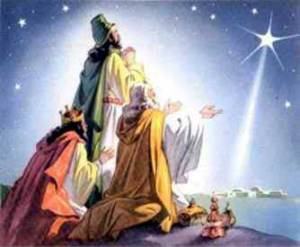
Epiphany, the day the Wise Men show up to worship Jesus. It marks the end of the Twelve Days of Christmas (See Epiphany or Three Kings Day) and in some countries, it is celebrated with as much enthusiasm as December 25th. Matthew 2: 1-18 records the story in the New Testament (See Magi and Herod for OT verses). Matthew, who starts with Joseph’s family line, continues telling the story from “Joseph’s viewpoint.” (The angelic dreams and his reactions.) Even if you combine Matthew and Luke’s narratives there are a lot of unanswered questions. I guess there should be but we can look at what we know.

Mary and Joseph being good Jewish parents fulfill the requirements of the Law with the trip to the Temple. There they receive blessings and prophecies to settle both Joseph’s and Mary’s fears and doubts. For us, facts are added like Luke stating, “they went to Nazareth and Jesus grew” while Matthew tells the story of the Magi and the trip to Egypt all starting from a “house.” But I have a feeling that times and locations are not what is important here.

The Magi or Wise Men were the scholars and learned men of the day. They counseled kings and influenced decisions. They are found in Daniel and other books of the Bible like Ezekiel 21: 21 checking the “liver” for the king so he knows which way to go. What they represent in the Christmas story is huge. These are Gentiles/heathen (us) acknowledging Jesus and his kingship. They are the college professors of the day following their studies and observations looking for a baby that was talked about in Jewish scriptures. It was no little trip for them to show up in Judea looking for a king, several months of travel were required and the supplies and then the gifts. I would guess it was not just three guys on camels it may have well been a caravan(s) with guards and servants. Were they sent as a diplomatic envoy?

Plus them showing up, sets Herod off so that the prophecies in Jeremiah 31:15 and Hosea 11:1 would be fulfilled – Herod killing the babies and Jesus coming out of Egypt.

Pic is from http://clipart.christiansunite.com

The Places of Rehoboam and Jeroboam

The Places of Rehoboam and Jeroboam

Israel and Judah

Shechem – (see the post The Tribes of Israel and Shechem) Why or if Rehoboam choose this place for his coronation is not mentioned in Scriptures but its history links it to Jacob (Genesis 34). It is also important in the start of the nation with Joshua because this is where the “Blessings and Curses” were recited (Deuteronomy 27:12 and Joshua 8:30). Shechem was also a city of refuge where people could find sanctuary if they were accused of murder and had not yet been tried (Numbers 35:9). It was also in Manasseh so for Rehoboam to pick this city would have had major unifying step to start his reign. But his poor judgment in accepting bad advice divided the kingdom. This is where Judah was elevated over his three older brothers and where his descendent split the nation of Israel.

Peniel or Penuel– This is the second city that Jeroboam “built up” or fortified in 1 Kings 12:25. The name means “face of God” and it is first mentioned with Jacob and his wrestling matching with the angel (Genesis 32: 30). This is when he was renamed Israel and met his brother the next day. The landmark that is mentioned is the Jabbok River on the east side of the Jordan in the Land of Gad. The area is also part of the story of Gideon and the city was punished for not helping him in a time of need. The Reader’s Digest Atlas of the Bible adds a twist to the why this city question. It is near the King’s Highway trade route and they hypothesize it was to control the trade (money). It is also in the Valley of Succoth and is more or less in a line with Shechem so it would form the southern boundary of the new nation. I can’t help but think that Jeroboam son of Nebat was still making a connection to Israel’s past and identifying with Jacob thus furthering his gods of gold as legitimate.

Shiloh – The name means tranquil. It was the first meeting place for the Israelites (Joshua 18) and is where the Ark of the Covenant was housed before the Temple was built so it was the major place of worship (Judges 18 and 1 Samuel 1). The prophet Ahijah lived there and this is where the wife of Jeroboam came to seek answers about her sick son (1 Kings 14). But this place was rejected by God because of Israel’s unfaithfulness and was desolate by the time of Jeremiah (chapter 26).

Bethel – The name means House of God and this is the place where Jacob saw the staircase to Heaven and God spoke with him (Genesis 12). It was part of the circuit that Samuel traveled when he judged Israel (1 Samuel 7). Jeroboam probably picked this because of how close it was to Jerusalem, was in the land belonging to Benjamin, and the connection to Jacob. The sin was so bad that in the prophet Amos’ day Bethel was condemned. FYI – The problem started with the first Jeroboam and Amos’ prophecies came during the second Jeroboam’s reign, Jeroboam son of Jehoash (2 Kings 14: 21).

Dan – (see the post Dan) The city and the tribe was considered the northern most part of Israel. So the saying from Dan to Beersheba meant from the north to the south. This area started wrong and never stopped. From Joshua 19:47 we see that they did not take control of their inheritance but instead went to Laish or Leshem. They killed everyone and set up their own priest and ignored God’s order of priest (Judges18: 30). Their priests were from Moses’ family not from Aaron’s. Note – this really is what Jeroboam son of Nebat did maybe that is why Dan is “lost” on so many of the Family List, they simply rejected what God had for them and did things their own way.

Egypt – The land of false gods and slavery, an enemy that did not quit until Babylon destroyed them. Yet almost without exception (Jonah is the only one I can think of) Israelites run back to Egypt. I know it is a spiritual picture of what not to do and of the sin we are to leave behind us. Jeroboam is a good example; Shishak gave him a place to hide but history indicates that when he invade Judah he kept going and subjected the Northern Kingdom also. The lesson here is RUN TO GOD NOT YOUR PAST.

Jerusalem/City of David – This is a name-dropper situation. Saying the City of David just made everything “look” better.

Built-up towns -2 Chronicles 11:6 -10.   Reader’s Digest Atlas of the Bible helps make sense of why these towns were picked by Rehoboam. This blocked the mountain passes from the south (Egypt) and set a defensive perimeter to the east and west of Judah. Looking at these marked off on a map this was a well thought out course of action the only place really not defended was to the north.

Map from:  http://www.bible-history.com/maps/israel_judah_kings.html