Tribes of Israel – Birth Order

Birth order is important and is mentioned many times in the Bible. The firstborn got a double portion of the inheritance but that double blessing was transferable. God seems to have fond affections for the “second born” son and several times they are put ahead of the firstborn. Ex.  Seth, Ephraim, Jacob/Israel, and of course Jesus*(see the answer to James) (see Timeline).

Leah

  • 1 Reuben*                                                                 
  • 2 Simeon
  • 3 Levi
  • 4 Judah

Bilhah

  • 5 Dan*
  • 6 Naphtali

Zilpah

  • 7 Gad*
  • 8 Asher

Leah

  • 9 Issachar
  • 10 Zebulun
  • 11 Dinah – the only daughter, see Genesis 34

Rachel

  • 12 Joseph*  – (a)Manassah*, (b)Ephraim but Jacob reversed the blessing and put Ephraim first
  • 13 Benjamin

Simeon and Levi lose their birth order rights in Genesis 34:30 and Reuben loses his in Genesis 35:22. Judah is now heir apparent until Genesis 37:3 where it seems that Jacob may be making Joseph (he was the firstborn of the favored wife) the leader of the family. Some experts believe the “coat of many colors” may have been a visible sign that Joseph was going to be given the “double portion blessing” and be made the family leader.  Not only did the brothers not like his dreams but when their father gave Joseph the “coat” that was just too much. So in Genesis 37 when they sell him to the Ishmaelites Judah is the ringleader (preserve his blessing) and Reuben is trying to rescue him (get back in favor with Jacob and hopefully he learned something).

The picture is Leah with Rachel from: http://www.google.com/imgres?imgurl=http://bibleencyclopedia.com/picturesjpeg/Leah_w_Rachel_67-63.jpg&imgrefurl=http://bibleencyclopedia.com/pictures/Genesis_29_Leah_with_Rachel.htm&h=614&w=400&sz=110&tbnid=Vci4cXEClxoKoM:&tbnh=99&tbnw=64&prev=/search%3Fq%3Dpictures%2Bof%2BLeah%2Band%2BRachel%26tbm%3Disch%26tbo%3Du&zoom=1&q=pictures+of+Leah+and+Rachel&usg=__KbmFiyhA-FIhWlDZFpBEJ8kzp40=&docid=d0RrbP5CPUreIM&hl=en&sa=X&ei=qUJyUNnONJKDqgGvwoG4Bw&sqi=2&ved=0CDIQ9QEwBQ&dur=673 

Fruit and Nuts – Olives and Pistachios

Olives, wow what an iconic plant that represents not only the Church but also God the Holy Spirit.

The tree was very important to the daily life of people throughout the Bible. But unlike some of the other fruits I have looked at it was the oil made from the olive berries that held the most importance to daily life. In my studies I found that the olive berries were eaten, usually preserved in saltwater, but that the oil was used for many things – light, medicine and anointing. There were other oils (sesame and walnut) in use during Bible times but at least in the Bible it seems that when you see oil it was olive oil. I had to check but I could not find one reference to olive berries being eaten in the Bible.

The first mention of olives, in Genesis, is the leaves found in the dove’s mouth that Noah sent out after the flood. The last mention of olive trees is found in Revelation and they represent the two prophets in chapter 11. Either olives or oil is mentioned in most, but not all, of the books of the Bible.

Paul in Romans 11:17 – 24 represents spiritual Israel as a olive tree that we were grafted on to in the place of unbelieving Israel. That scripture tells me two things: first, heed Paul’s warning about arrogance toward Israel and that they knew how to graft fruit trees two thousand years ago!

The olive oil is a picture of the Holy Spirit’s anointing and gifts. Getting the oil required that the olives be crushed in an olive press the same technique is used today and the grades of oil come from the milling and collection process. It paints an interesting picture for us Christians who want God’s anointing. Are you ready to be crushed in order to be useful to the Church?
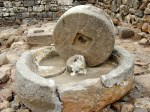
Another interesting fact I learned in my study was that olive trees have no growth rings so you cannot accurately tell the age of the tree.  Just like the Church, it is an “ageless” growing organism that is to be producing fruit.
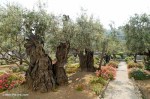
Mount of Olives http://www.bibleplaces.com/mtolives.htm

a good article http://www.hort.purdue.edu/newcrop/janick-papers/fruits-bible.pdf

Picture of olive tree http://www.freepik.com/index.phpgoto=2&k=olive&isCat=1&isKeyword=1&order=2&vars=2

olive press 

http://handsonjewishholidays.com/wpcontent/uploads/2011/11/chorazinolivepress.jpg

Pistachio Nuts

There is only one reference to pistachio nuts in the Bible (they did make it) and that is in Genesis 43:11.  They are part of the “gift” the brothers are to take back with them when they return to Egypt. I got the feeling Jacob was not only trying to bribe the “Man” but maybe open up a trading business. If you look at this story in Genesis chapters 42 and 43 the big thing I find interesting is the name shift, in chapter 42 it is Jacob in 43 it is Israel. (see What Was His Name) Maybe the shift here is because in chapter 42 Jacob is focused on himself while in 43 he is focused on the “family.”
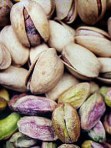
The links below are interesting; check them out if you have the time.

pistachio nuts blog http://nutgourmet.wordpress.com/2009/02/08/nuts-in-the-bible/#comments

fun facts http://www.foodreference.com/html/f-pistachios.html

pictures of pistachio tree and nuts http://en.wikipedia.org/wiki/Pistachio

nice website about Israel, its food and land http://judaism.about.com/od/conservativejudaismfaq/a/dov_tubshvat_3.htm
Psalm 80

I have been looking at the names that describe God so as I read Psalm 80 its three repeating verses caught my eye. The verses are #3,7 and 19; the verses add a name of God each time it repeats, and part of my study was to look at body parts and it talks about the face of God.

The three names that are added are:

1. God – Elohim means great or mighty one

2. Almighty – Saba focuses on power to conquer or means commander of the army (host)

3. Lord – Yahweh implies a personal covenant relationship with the true God

Different translations handle these verses differently so checking several will be a good study. (I used the NIV.) I did a definition study of the other words in the verse and a loose translation without the names would be:  Physical bring us back O (different names) establish favorable circumstances as a sign of favor so that we can be rescued from earthly enemies.

If you now read the verse adding the definitions for the names, it really adds a new depth to the verse.

I like how Asaph added another name as the Psalm proceeded. Now there are three other sets of names in Psalm 80 the first is “Shepherd of Israel” and then in verses 4 and 14 and these are combinations of Lord, God, and Almighty; if numerology interests you that is six times the names of God are used and a total of twelve individual uses.

Asaph starts the Psalm by calling on the Shepherd of Israel who led Joseph.  I like that title – Shepherd of Israel.  I read several ideas about why he would start off with Joseph and then mention Ephraim, Benjamin and Manasseh so know that you will find many ideas. So here is mine; Joseph is actually the “firstborn heir” which was an important position in a Hebrew family.  Benjamin was his brother by the same mother and Ephraim and Manasseh are his children; that would make them Rachel’s (the “loved wife”) children. Jacob was making Joseph the “ruler” of the family when the brothers got rid of him. One sign of this was the coat of many colors. He actually was the first-born son just not the first-born son, but Reuben lost the birthright of the first-born (Genesis 35:22).

Here are a few other “nuggets” that I found in doing this study.

  1. “Restore” carries the idea of return or repent; it is different from the New Testament “repent” or metanoia. Metanoia is a mental change while shoob or restore usually refers to a physical return.
  2. The word for face is paneh which comes from panah; it means to turn or look. Another word is paniym and it refers to the “face bread” or shewbread that was put into the Tabernacle.  They did not have a physical image of God, but they had the bread. I am not an etymologist, so I do not know if they are related but the Spanish word for bread is pan.
  3. I read in my Bible Glow app; that the psalms in Book 1 (#1-41) more often use Yahweh (the Lord) and Book 2 (#42-72) uses Elohim (God) more often, there is no apparent reason for this grouping.
  4. A little background – this is in the Third Book of Psalms and most of these are attributed to Asaph (means gather or collector). He was a Levite and part of King David’s praise team.

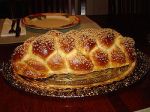
I used my Strong’s Concordance with Vines Dictionary as a reference book. pic of bread from http://en.wikipedia.org/wiki/Challah

Amalekites: An enemy from Moses to Mordecai to_______! Part 1

We are not finished with Esau and his descendants and the trouble they are going to be to Jacob’s side of the family. Esau had Eliphaz, by Adah his first wife, who had a concubine named Timna who had Amalek (Gen. 36:12). She is attributed to Adah (a true wife in the genealogy) but is listed last. For Timna see 1 Chronicles 1:36-39.

The Amalekites are cursed, and the Israelites are to be fighting them from generation to generation because they attacked the Israel column (Exodus 17:8-15) as they headed to the Promised Land. Deuteronomy 25:17 – 19 is a serious statement to the Israelites about that incident; it is that commission that King Saul is trying to accomplish in I Samuel 14 and 15.

Josephus 2.1.2 assigns Amalek to the country of Idumea; this is where King Herod came from. Davis Dictionary of the Bible says the Idumeans had circumcision forced on them after being conquered by John Hyrcanus a Maccabean ruler. This is why the Jews hated Herod so much, he was not a Jew and very possibly an Edomite and he could have even been an Amalekite.

A side thought on this – there was always some kind of contention within Abraham’s family; Ishmael and Esau did not seem like contented brothers and uncles, but their genealogies made it into the Bible so that tells me that some communication did exist between parts of the family.  Since Moses is credited with writing Genesis and parts of Esau’s history was definitely happening while they were in Egypt there was communication.  Moses may have gotten some of the information while he was in Midian.

Other references to Esau/Edom/Amalek being destroyed or facing the judgment of God.

Jeremiah 2:

Ezekiel 35

Obadiah

Malachi 1:2-5

https://ificouldteachthebible.wordpress.com/2011/11/13/ishmael-and-es…and-foe-part-2

Ishmael and Esau: Family and Foe – Part 2

Esau (Edom) is also a shadowing of personal/family troubles but he is more complicated even than Ishmael.  When Jacob was sent off to find a wife Esau did something interesting, he went to Ishmael for a third wife.  At one time I thought that was to make Isaac and Rebekah mad but I now think it was just the opposite; in an attempt to please mom and dad he went back to “family” just like Jacob was doing (Genesis 28:6-9).  Esau married Mahalath, Ishmael’s daughter. So all of the types and shadows that may apply to Ishmael live on in Esau’s family. ( see Part 1 and Three Books)

Now the bad blood, remember it started in Rebekah’s womb (see Timeline), that had existed between Esau and Jacob (Genesis27: 41-45) seems to have been forgiven in the 20 years that they were separated (Genesis 33) but you have to wonder if Jacob’s mistrust was well-founded or did he create another offense when he did not travel back right away to the family area.

I am sure it was different then but he certainly had two interesting names, Esau means “hairy” and Edom means “red.”

Edom and Israel were always fighting in the Old Testament and all of the Major and Minor Prophets have sections that talk about the destruction and downfall of Edom. Since this area corresponds to modern-day Jordan you just know that this story is not over yet.

https://ificouldteachthebible.wordpress.com/2011/10/08/three-books-three-views/

Please see the above link for more about Edom.

References: NIV footnotes,

Josephus is a Jewish historian, his writings may seem a little frightening but I only read the section that corresponds to what I am reading in the Bible.  My copy is a Nelson’s Super Value Series book and it does a good job of describing what each section covers and the parts in the “books” are very well labeled.  It adds an interesting perspective to the Bible passages that I am studying.