The Places of Rehoboam and Jeroboam

The Places of Rehoboam and Jeroboam

Israel and Judah

Shechem – (see the post The Tribes of Israel and Shechem) Why or if Rehoboam choose this place for his coronation is not mentioned in Scriptures but its history links it to Jacob (Genesis 34). It is also important in the start of the nation with Joshua because this is where the “Blessings and Curses” were recited (Deuteronomy 27:12 and Joshua 8:30). Shechem was also a city of refuge where people could find sanctuary if they were accused of murder and had not yet been tried (Numbers 35:9). It was also in Manasseh so for Rehoboam to pick this city would have had major unifying step to start his reign. But his poor judgment in accepting bad advice divided the kingdom. This is where Judah was elevated over his three older brothers and where his descendent split the nation of Israel.

Peniel or Penuel– This is the second city that Jeroboam “built up” or fortified in 1 Kings 12:25. The name means “face of God” and it is first mentioned with Jacob and his wrestling matching with the angel (Genesis 32: 30). This is when he was renamed Israel and met his brother the next day. The landmark that is mentioned is the Jabbok River on the east side of the Jordan in the Land of Gad. The area is also part of the story of Gideon and the city was punished for not helping him in a time of need. The Reader’s Digest Atlas of the Bible adds a twist to the why this city question. It is near the King’s Highway trade route and they hypothesize it was to control the trade (money). It is also in the Valley of Succoth and is more or less in a line with Shechem so it would form the southern boundary of the new nation. I can’t help but think that Jeroboam son of Nebat was still making a connection to Israel’s past and identifying with Jacob thus furthering his gods of gold as legitimate.

Shiloh – The name means tranquil. It was the first meeting place for the Israelites (Joshua 18) and is where the Ark of the Covenant was housed before the Temple was built so it was the major place of worship (Judges 18 and 1 Samuel 1). The prophet Ahijah lived there and this is where the wife of Jeroboam came to seek answers about her sick son (1 Kings 14). But this place was rejected by God because of Israel’s unfaithfulness and was desolate by the time of Jeremiah (chapter 26).

Bethel – The name means House of God and this is the place where Jacob saw the staircase to Heaven and God spoke with him (Genesis 12). It was part of the circuit that Samuel traveled when he judged Israel (1 Samuel 7). Jeroboam probably picked this because of how close it was to Jerusalem, was in the land belonging to Benjamin, and the connection to Jacob. The sin was so bad that in the prophet Amos’ day Bethel was condemned. FYI – The problem started with the first Jeroboam and Amos’ prophecies came during the second Jeroboam’s reign, Jeroboam son of Jehoash (2 Kings 14: 21).

Dan – (see the post Dan) The city and the tribe was considered the northern most part of Israel. So the saying from Dan to Beersheba meant from the north to the south. This area started wrong and never stopped. From Joshua 19:47 we see that they did not take control of their inheritance but instead went to Laish or Leshem. They killed everyone and set up their own priest and ignored God’s order of priest (Judges18: 30). Their priests were from Moses’ family not from Aaron’s. Note – this really is what Jeroboam son of Nebat did maybe that is why Dan is “lost” on so many of the Family List, they simply rejected what God had for them and did things their own way.

Egypt – The land of false gods and slavery, an enemy that did not quit until Babylon destroyed them. Yet almost without exception (Jonah is the only one I can think of) Israelites run back to Egypt. I know it is a spiritual picture of what not to do and of the sin we are to leave behind us. Jeroboam is a good example; Shishak gave him a place to hide but history indicates that when he invade Judah he kept going and subjected the Northern Kingdom also. The lesson here is RUN TO GOD NOT YOUR PAST.

Jerusalem/City of David – This is a name-dropper situation. Saying the City of David just made everything “look” better.

Built-up towns -2 Chronicles 11:6 -10.   Reader’s Digest Atlas of the Bible helps make sense of why these towns were picked by Rehoboam. This blocked the mountain passes from the south (Egypt) and set a defensive perimeter to the east and west of Judah. Looking at these marked off on a map this was a well thought out course of action the only place really not defended was to the north.

Map from:  http://www.bible-history.com/maps/israel_judah_kings.html 

Tribes of Israel – Thoughts on the Family

Thoughts on the Family

Jacob – Just when you think you “know it all” you actually study someone and there is more (see What Was His Name). First thing I found was he was a lot older than I thought when he got married (see Timeline). He, like his dad, certainly played favorites with his children. It is easy to understand him being mad at Rueben, Levi and Simeon but he seemed determined to elevate Rachel’s children in the inheritance area thus cutting out Leah’s children. I guess we can always wonder if some of the contention in the family wasn’t his fault. But getting a wife you did not want and then two concubines so you can appease two warring sisters really does not add up to a blissful home life. But through all of the trials in his life I think he found God in a deep way and profound way that amplifies the blessings in Genesis 49.

Leah – When you look at her over the years she really was a faithful wife who watched out for her husband and the family. She probably did not get the respect she deserved until after Rachel died. You get the idea that she had a crush on Jacob when he was working for Rachel because she definitely claims him as HER husband. I guess I now think that Jacob loved the wrong one because Leah is the one who seemed to have really wanted to Leah_w_Rachel_67-63be his wife.

Rachel – The “beloved” wife that was Jacob’s dream girl/trophy wife that he favored above all else. She was real-handful and pretty self-centered the classic example is her stealing the family “gods” and hiding them. Image Jacob’s blood pressure when he finds them and has them buried under a tree. But in her defense I might be a little miffed about my father and sister messing up my wedding and my life.

* I think both Rachel and Leah at the end of their time in Paddan Aram realized that daddy was just out for a buck and that they were better off with each other and Jacob. I wonder how these things affected their relationship as sisters it is definitely competitive after they are married.

The Concubines – Bilhah and Zilpah are the two slave girls who were used to increase the number of children in the family. I have no doubt that they remained just that slave girls. Jacob did not ask them about leaving Paddan Aram and they were put in front when Esau was about to show up. And was Bilhah just trying to up her status when she slept with Rueben?

The Boys – They have provided a lot to think about and some really good lessons.

Rueben is the picture of someone who messed but still part of the family. All of the sons took part in selling Joseph and the years of covering up the deed; can you image how Jacob felt about them when the wagons rolled up to take him to Egypt. I said it before but big or little, leader or not being part of the family is important.  It seems like Jacob even with four women each wanting their children to be the standouts managed to raise a group of children who could work together. But the stress and contention in the camp must have been thick enough to cut with a knife or everyone knew their status in the family and that was enough.

The composition of the family provides some interesting comparisons for the Body of Christ.

All are true sons but some are:

  • Sons of a loved wife
  • Sons of an unloved wife
  • Children of free, true wives
  • Children of slaves
  • Some were born in Egypt (Joseph’s boys)

The picture is Leah with Rachel from: http://www.google.com/imgres?imgurl=http://bibleencyclopedia.com/picturesjpeg/Leah_w_Rachel_67-63.jpg&imgrefurl=http://bibleencyclopedia.com/pictures/Genesis_29_Leah_with_Rachel.htm&h=614&w=400&sz=110&tbnid=Vci4cXEClxoKoM:&tbnh=99&tbnw=64&prev=/search%3Fq%3Dpictures%2Bof%2BLeah%2Band%2BRachel%26tbm%3Disch%26tbo%3Du&zoom=1&q=pictures+of+Leah+and+Rachel&usg=__KbmFiyhA-FIhWlDZFpBEJ8kzp40=&docid=d0RrbP5CPUreIM&hl=en&sa=X&ei=qUJyUNnONJKDqgGvwoG4Bw&sqi=2&ved=0CDIQ9QEwBQ&dur=673 

Tribes of Israel – Manasseh

Manasseh was the first-born child of Joseph who was put as a “second son” by Jacob. Joseph in naming Manasseh and Ephraim demonstrates that he was perfectly happy with his new life and had no intention of going back. (Genesis 41:51+52) He had the power to send a message back to his family but he did not.

I wonder how these two acted around the rest of the family? They were children of the ruler of the country they lived in and because of being Egyptian possibly had more privileges. From Genesis 48:1 I would wonder if Joseph even allowed them to live around his brothers? Joseph may have had them marry within the family but Manasseh definitely owned slaves and even had a foreign concubine.

1 Chronicles 7:14+15 talks about Manasseh’s two notable descendents: Gilead and Zelophehad.  In Numbers 36 Zelophehad dies in the exodus and leaves only daughters, these girls stand up for themselves and their father’s lineage. The daughters go to Moses and plead their case before God; this leads to a new decree to acknowledge women as heirs. It may not sound like much but that was groundbreaking territory when women were viewed much of the time as second-class people or property.   The other descendent was Gilead who was to lend his name to the area of the east bank of the Jordan River that wasTwelveTribesofIsraelebible the inheritance of the tribes of Manasseh, Rueben and Gad. This is a contrast to Zelophehad’s daughters; Gilead comes from an Aramean concubine and a group of people who were not Israelites (Huppites and Shuppites). Just like Bilhah and Zilpah this concubine was a slave that Manasseh used and was so elevated to a slightly better status in the household. You get the feeling that the children were valued but not the mother (Sarah and Hagar).

In 1 Chronicles 5: 18 -26 it gives two contrasting stories; one of faith and trust in God and the other of unfaithfulness to Him. In verse 20 the East Bank tribes cry out to God for help in the middle of a battle and are helped and overcome their enemies. In verse 25 it tells of the unfaithfulness that gets them taken away by Tiglath-Pileser.habor_river

Actually, Manasseh’s descendents were on par with the other tribes; they did their part in taking the Promise Land and showed up at all the right times and were active during the life time of Saul and David. Lo Debar is in the allotment of land given to Manasseh and it was this area that David went to when he ran from Absalom.

Map from http://www.biblestudytools.com/resources/maps/twelve-tribes-of-israel-map.html and eBibleTeacher.com.

http://bibleatlas.org/full/habor_river.htm  large map,

Tribes of Israel – Ephraim

Ephraim

The second son of Joseph or after being claimed by Jacob and elevated in status he was Jacob’s thirteenth son. Born and raised in Egypt from the daughter of an Egyptian priest we know very little about his life.  He and Manasseh were probably in their early twenties when they received the blessing from Jacob; they were born before the famine started and Jacob lived in Egypt 17 years before he died. The only story about Ephraim outside of Genesis is in 1 Chronicles 7:20-24 where it recounts a raid gone bad in Gath where two of his children were killed. That changes my idea that the children of Jacob lived quite lives in Egypt tending flocks and growing crops.

Now being the “first-born” of the beloved son of the favored wife Ephraim received the double-portion blessing of Jacob. The blessing is in Genesis 48: 15 Then he (Jacob) blessed Joseph and said, “May the God before whom my fathers Abraham and Isaac walked faithfully, the God who has been my shepherd all my life to this day 16 the Angel who has delivered me from all harm —may he bless these boys. May they be called by my name and the names of my fathers Abraham and Isaac, and may they increase greatly on the earth.”(NIV) This made them equal to the eleven and combined with Joseph’s blessing in Genesis 49 did truly set them above the others.

top of timeline

I want to mention two of Ephraim’s children Joshua and Jeroboam. Joshua, Moses’ military leader and a faithful spy really set a high standard for anyone to follow. He truly is the picture of a “double blessing” person and worked hard for all the tribes he led into the Promise Land. Jeroboam was a man that had a truly great blessing put in front of him and ignored it. His story starts in 1 Kings 11:26; he had a prophetic call to rule Israel because of Solomon’s unfaithfulness. All he had to do was walk after the ways of David and he would have had an “enduring dynasty.” I feel that this opportunity was extended to him because he was an Ephraimite and had the right to the double blessing from Jacob. Instead, he took the ten tribes given to him by the Lord and led them astray. He got a second chance in 1 Kings 13:6 but he could not trust God to fulfill the promise, so his linage died out rather quickly. His son Nadab only ruled for a short time and was killed. (see my King’s Timeline)

Tribes of Israel – Joseph

Joseph is the twelfth child of Jacob and the first son of Rachel; he was the last child born in Paddan Aram. The NIV Bible says the name means “may He add” Rachel believed to have another son. He is the first-born son of the “loved” wife and it showed when he met Esau; Rachel and Joseph were in the back far away from the first attack (Genesis 33:2).Joseph as a slave

Deuteronomy 33: 13 About Joseph he said: “May the Lord bless his land with the precious dew from heaven above and with the deep waters that lie below; 14 with the best the sun brings forth and the finest the moon can yield; 15 with the choicest gifts of the ancient mountains and the fruitfulness of the everlasting hills; 16 with the best gifts of the earth and its fullness and the favor of him who dwelt in the burning bush. Let all these rest on the head of Joseph, on the brow of the prince among his brothers. 17 In majesty he is like a firstborn bull; his horns are the horns of a wild ox. With them, he will gore the nations, even those at the ends of the earth. Such are the ten thousands of Ephraim; such are the thousands of Manasseh.” (NIV)

Genesis 49:22 “Joseph is a fruitful vine, a fruitful vine near a spring,
whose branches climb over a wall. 23 With bitterness archers attacked him; they shot at him with hostility. 24 But his bow remained steady, his strong arms stayed limber, because of the hand of the Mighty One of Jacob, because of the Shepherd, the Rock of Israel, 25 because of your father’s God, who helps you, because of the Almighty, who blesses you with blessings of the heavens above, blessings of the deep that lies below, blessings of the breast and womb. 26 Your father’s blessings are greater than the blessings of the ancient mountains, than the bounty of the age-old hills. Let all these rest on the head of Joseph, on the brow of the prince among his brothers. (NIV)

Jacob and Moses in their blessings pretty much gave it all to Joseph and his children.  I really don’t have a lot to say about Joseph because I think every pastor has at least two Joseph sermons. He has all kind of types and shadows from being a type of Jesus to a picture of blessing and faithfulness in hard times.

In Genesis 47 Joseph does his job and gives all of the lands of Egypt to Pharaoh. Oh, we are supposed to do an excellent job for a heathen boss. This is done in the last five years of the famine after his family has joined him.

It is interesting that Jacob continues the “second son” being first in Genesis 48; he was the second son, Joseph is the “second son” and was placed before even Judah as noted in Genesis 48:22 and 1 Chronicles 5:2. Ephraim’s children do live up to all the predictions and play important roles in Israel’s history.  In Amos and Obadiah the children are grouped again under the name of Joseph and in Revelation 7 Manasseh is mentioned by name but Ephraim is not and instead, it is the “tribe of Joseph.”

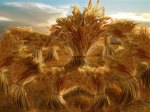
joseph-dreams of wheatAll told Joseph must have been an amazing person who understood his destiny and believed God was going to get him there even when he sold as a slave and put into prison.

Pictures from: http://www.freebibleimages.org/photos/joseph-dreams/