Tribes of Israel – Birth Order

Birth order is important and is mentioned many times in the Bible. The firstborn got a double portion of the inheritance but that double blessing was transferable. God seems to have fond affections for the “second born” son and several times they are put ahead of the firstborn. Ex.  Seth, Ephraim, Jacob/Israel, and of course Jesus*(see the answer to James) (see Timeline).

Leah

  • 1 Reuben*                                                                 
  • 2 Simeon
  • 3 Levi
  • 4 Judah

Bilhah

  • 5 Dan*
  • 6 Naphtali

Zilpah

  • 7 Gad*
  • 8 Asher

Leah

  • 9 Issachar
  • 10 Zebulun
  • 11 Dinah – the only daughter, see Genesis 34

Rachel

  • 12 Joseph*  – (a)Manassah*, (b)Ephraim but Jacob reversed the blessing and put Ephraim first
  • 13 Benjamin

Simeon and Levi lose their birth order rights in Genesis 34:30 and Reuben loses his in Genesis 35:22. Judah is now heir apparent until Genesis 37:3 where it seems that Jacob may be making Joseph (he was the firstborn of the favored wife) the leader of the family. Some experts believe the “coat of many colors” may have been a visible sign that Joseph was going to be given the “double portion blessing” and be made the family leader.  Not only did the brothers not like his dreams but when their father gave Joseph the “coat” that was just too much. So in Genesis 37 when they sell him to the Ishmaelites Judah is the ringleader (preserve his blessing) and Reuben is trying to rescue him (get back in favor with Jacob and hopefully he learned something).

The picture is Leah with Rachel from: http://www.google.com/imgres?imgurl=http://bibleencyclopedia.com/picturesjpeg/Leah_w_Rachel_67-63.jpg&imgrefurl=http://bibleencyclopedia.com/pictures/Genesis_29_Leah_with_Rachel.htm&h=614&w=400&sz=110&tbnid=Vci4cXEClxoKoM:&tbnh=99&tbnw=64&prev=/search%3Fq%3Dpictures%2Bof%2BLeah%2Band%2BRachel%26tbm%3Disch%26tbo%3Du&zoom=1&q=pictures+of+Leah+and+Rachel&usg=__KbmFiyhA-FIhWlDZFpBEJ8kzp40=&docid=d0RrbP5CPUreIM&hl=en&sa=X&ei=qUJyUNnONJKDqgGvwoG4Bw&sqi=2&ved=0CDIQ9QEwBQ&dur=673 

Moses’ Psalms

Psalm 90 is actually the only Psalm that has a sub-heading that identifies Moses as its writer (some Bibles do not include these) but it is fairly clear that his family was musical. Look at Exodus 15 even though Moses may not be credited with writing that song he did lead the Israelites in its singing and in verse 21 Miriam follows his lead and starts playing the tambourine and dancing. He also leads (recites) a song in Deuteronomy 32, so he seems to at the very least have been a songwriter.  Over the years as I have read Psalms 90 through 100, I have wondered why most of them have no subtitles and that Psalm 101 is clearly marked as being written by David? The exception is Psalm 92, which is identified as being for the Sabbath Day. (possible placement of Psalms)

Ok, now for an active imagination because there is no proof for this other than contextual clues, and some people may think that is a bit thin. Look at the job that Moses actually had to do; teach the children of Israel about God after they had been in a pagan land for 400 years. They were more knowledgeable about Egyptian gods than they were about Yahweh just because they were around those demon gods’ art and statues. He had approximately one million people who knew very little about God and had to be instructed in His ways. What better way to do that than through song; so now read these Psalms as Sunday School lessons and focus on themes. Also, think about the trials and problems the Israelites had in Exodus through Deuteronomy.

  • Psalm 90 – (think Exodus 15:26)
  • Psalm 91 – (think Exodus 17:15) to make God your fortress and He will protect you
  • Psalm 92 – (think Exodus 16:27)
  • Psalm 93 – (think Deuteronomy 5,6) shifting thinking from Egyptian gods
  • Psalm 94 – (think Exodus 10:29) a call for justice
  • Psalm 95 – (a lesson after Meribah and sending out the first spies) exhortation to praise God and not tempt Him
  • Psalm 96 – to praise God for His general judgments
  • Psalm 97 – the majesty of God’s kingdom
  • Psalm 98 – a general call to praise God
  • Psalm 99 – the mercifulness of God and His right to reign (some sources suggest that it may not have been the Samuel of 1 Samuel)
  • Psalm 100 – (think Exodus 40) giving praise to enter the new worship area

Psalm 111 is mentioned in Part 2. (See below.)

Thompson Chain-Reference Bible was a resource. NIV usually includes subtitles on Psalms.

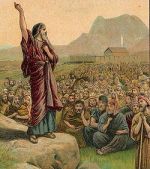
Moses picture: http://www.google.com/imgres?imgurl=http://upload.wikimedia.org/wikipedia/commons/thumb/d/db/Moses_Pleading_with_Israel_(crop).

Please see Part 2In Part 2, I focus on Moses’ Psalms or Songs outside of the Book of Psalms.

Psalm 80

I have been looking at the names that describe God so as I read Psalm 80 its three repeating verses caught my eye. The verses are #3,7 and 19; the verses add a name of God each time it repeats, and part of my study was to look at body parts and it talks about the face of God.

The three names that are added are:

1. God – Elohim means great or mighty one

2. Almighty – Saba focuses on power to conquer or means commander of the army (host)

3. Lord – Yahweh implies a personal covenant relationship with the true God

Different translations handle these verses differently so checking several will be a good study. (I used the NIV.) I did a definition study of the other words in the verse and a loose translation without the names would be:  Physical bring us back O (different names) establish favorable circumstances as a sign of favor so that we can be rescued from earthly enemies.

If you now read the verse adding the definitions for the names, it really adds a new depth to the verse.

I like how Asaph added another name as the Psalm proceeded. Now there are three other sets of names in Psalm 80 the first is “Shepherd of Israel” and then in verses 4 and 14 and these are combinations of Lord, God, and Almighty; if numerology interests you that is six times the names of God are used and a total of twelve individual uses.

Asaph starts the Psalm by calling on the Shepherd of Israel who led Joseph.  I like that title – Shepherd of Israel.  I read several ideas about why he would start off with Joseph and then mention Ephraim, Benjamin and Manasseh so know that you will find many ideas. So here is mine; Joseph is actually the “firstborn heir” which was an important position in a Hebrew family.  Benjamin was his brother by the same mother and Ephraim and Manasseh are his children; that would make them Rachel’s (the “loved wife”) children. Jacob was making Joseph the “ruler” of the family when the brothers got rid of him. One sign of this was the coat of many colors. He actually was the first-born son just not the first-born son, but Reuben lost the birthright of the first-born (Genesis 35:22).

Here are a few other “nuggets” that I found in doing this study.

  1. “Restore” carries the idea of return or repent; it is different from the New Testament “repent” or metanoia. Metanoia is a mental change while shoob or restore usually refers to a physical return.
  2. The word for face is paneh which comes from panah; it means to turn or look. Another word is paniym and it refers to the “face bread” or shewbread that was put into the Tabernacle.  They did not have a physical image of God, but they had the bread. I am not an etymologist, so I do not know if they are related but the Spanish word for bread is pan.
  3. I read in my Bible Glow app; that the psalms in Book 1 (#1-41) more often use Yahweh (the Lord) and Book 2 (#42-72) uses Elohim (God) more often, there is no apparent reason for this grouping.
  4. A little background – this is in the Third Book of Psalms and most of these are attributed to Asaph (means gather or collector). He was a Levite and part of King David’s praise team.

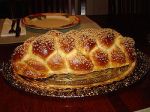
I used my Strong’s Concordance with Vines Dictionary as a reference book. pic of bread from http://en.wikipedia.org/wiki/Challah

TEST,TEST,TEST

Since school has just finished and I end the year giving all kinds of “test” when I read Psalm 66 I had to reopen the idea of being tested. This verse follows a section that refers to when Israel was in Egypt and came out of there.

Psalm 66

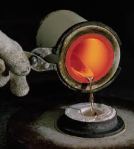
10 For You, God, tested us; You refined us like silver
11 You brought us into prison and laid burdens on our backs.

12 You let people ride over our heads; we went through fire and water,
but You brought us to a place of abundance.

Testing here is bahan (# 1043 Zondervan NIV Exhaustive Concordance, 2 Edition – all my definitions for this study will be taken from here), which means to try, probe or examine to learn the genuineness of an object like testing for the purity of the metal. And we think we get tested – prison, burdens, rode over (a sign of derision), fire and water. Some of you have endured these things but most of us are clueless about this level of testing. But look where it will bring you “a place of abundance.”
This passage led me to Deuteronomy and several passages where Moses is describing/reminding the children and grandchildren of the people who came out of Egypt what had happened for them.

Deuteronomy

4:34 Has any god ever tried to take for himself one nation out of another nation, by testings, by signs and wonders, by war, by a mighty hand and an outstretched arm, or by great and awesome deeds, like all the things the Lord your God did for you in Egypt before your very eyes?

Testings here is nasa (# 5814) (don’t you love Hebrew into English) and refers to proving character or faithfulness; if it is done toward God it implies lack of confidence in Him (a sin).

Signs ot #253 sign, mark or symbol that communicates a supernatural. NIV translators changed it from signs to miraculous signs over the years.

Wondersmopet #4603 wonder, sign, miracle, portent, symbol

Warmilhama #4878 fighting, battle, war and many other words like soldiers, warrior, etc.

Mighty handmighty- hazaq #2617 powerful, strong, hard, physical and internal strength, (negative) hardness of heart; hand –yad #3338 hand, arm, finger, figuratively control, power, strength, direction, care. It is added to other words for many meanings. If you exchange words it takes on many great meanings. It is the same phrase for the rest of the verses.

Outstretched armoutstretched –nata #5742 to spread out, be extended; arm – zeroa #2432 arm, forearm, shoulder, power, strength, force

Great and awesome deedsawesome deeds- mora #4616 fear, terror, respect, reverence, awesome deeds; great- gadol #1524 large, much, more, this can refer to physical size, quantity, degree, and social status

I think the testings were for Israel (the first three plagues) then the others were for Egypt and showed how serious God was about letting them go. The Lord was educating His people and showing them His concern and intent toward them. 

7:17 You may say to yourselves, “These nations are stronger than we are. How can we drive them out? ” 18 But do not be afraid of them; remember well what the Lord your God did to Pharaoh and to all Egypt. 19 You saw with your own eyes the great trials, the signs and wonders, the mighty hand and outstretched arm, with which the Lord your God brought you out. The Lord your God will do the same to all the peoples you now fear. 

Remember this is to the children of the original group who actually saw these things. God is willing to repeat these test and signs to get them into the land. Look at the teaching – recall a lesson learned and project to a new situation.

11:1 Love the Lord your God and keep his requirements, his decrees, his laws, and his commands always. Remember today that your children were not the ones who saw and experienced the discipline of the Lord your God: his majesty, his mighty hand, his outstretched arm; the signs he performed and the things he did in the heart of Egypt, both to Pharaoh king of Egypt and to his whole country… It was not your children who saw what he did for you in the wilderness until you arrived at this place, and what he did to Dathan and Abiram… But it was your own eyes that saw all these great things the Lord has done.

The reason for the testing is verse 1 so that they can take strength in what they saw and the previous lessons learned. But now it was their turn to teach this to their children.

27:7 Then we cried out to the Lord, the God of our ancestors, and the Lord heard our voice and saw our misery, toil and oppression. So the Lord brought us out of Egypt with a mighty hand and an outstretched arm, with great terror and with signs and wonders. He brought us to this place and gave us this land, a land flowing with milk and honey… 11 Then you and the Levites and the foreigners residing among you shall rejoice in all the good things the Lord your God has given to you and your household.

With the test came the promise in Psalm 66 and then a new lesson in vs.11. It is also a reteach time as all of these verses have been.

New International Version (NIV) Holy Bible, New International Version®, NIV® Copyright © 1973, 1978, 1984, 2011 by Biblica, Inc.® Used by permission. All rights reserved worldwide.

The images were found in Google Images.

Fights and Wars/Battles – Psalm 144

After writing about Attacks, Test, Storms and then revisiting Test and Storms I realized that I was not finished and that the attacks and storms part seemed lop-sided.  I guess when you are in them it seems one-sided and that you are always the one getting beat-up and there is little you can do about it.

We know that is not true but we still need to be reminded of the fact that part of the Christian life is battling against the works and deeds of Satan. Three verses that help me are:

1.  1 Samuel 30:6 But David found strength in the Lord his God. (NIV)

2.  Proverbs 21:30 + 31 The horse is made ready for the day of battle but victory rests with the Lord (see Lord). (NIV)

3. Psalms 144:1 Blessed be the Lord my strength, which teacheth my hands to war, and my fingers to fight. (KJV)

To just read one of David’s psalms is good but I like to put them into his story; read them in the context where they may have been written. (see The Writer)  I put Psalm 144 somewhere in 1 Samuel 21 & 22.  This is a very trying time for David (he is running from Saul, did not kill Doeg the Edomite, and is worried by the King of Gath) but he reminds himself and God that he has been trained to do battle.  He sees a big picture, which is hard when you are attacked, that God is his fortress and asks for help from God in verse 5 – 7.                     (see Storms Revisited)

The King James reads differently than the New International Version in that the words are war and fight and not war and battle.  Using my Strong’s Concordance I looked up these words.  War/battle is used over “three hundred times in the Old Testament, indicating how large a part military life was to an Israelite.”  And the word fight (used 149x) comes from a primary root word that means to feed or consume and the implication is to battle or destroy. There is a separation of the idea between battle, a single encounter, and war, a series of encounters. You can draw some interesting parallels from hands being matched to war/battle and fingers with fighting.  The hand is the larger/stronger part and yet the fingers are part of the hand.

Wars/battles can include storms, trials, and attacks and go on for a long time where battles are those single attacks or pesky trials that hit quick and are over.

But I have to remind myself (the three verses), we are to be attacking, trying, and storming the enemy’s work also.  God trains us for war, gives us tools and resources to confront evil and its work, and will even fight with/for us if the battle gets too big.