Out of Egypt – Testing God 10 Times

Not to confuse this testing with the promise in Malachi 3:10 these are the testings that the children of Jacob did to anger God. In Numbers 14:22 God has forgiven the people again but He has had enough, yet even here we see God’s mercy. Moses’ spies have returned and pushed the people into the 10th testing of God. He sentences them to 40 years of wandering in the desert until the adults have died off. His mercy is that He credits them for the two years they have already been in the wilderness. Deuteronomy 2:14 clarifies this, they were at Kadesh when the spies were sent out and after 38 years of wandering, they have returned to Kadesh to enter into the Promised Land. (see First Two Year’s Timeline) These “10 tests” are also shadows of things we should avoid in our Christian walk.

  1. Exodus 14:11 – Wanted to be left in Egypt – at the Red Sea
  2. Exodus 15:22 – Grumbled about no water – Marah
  3. Exodus 16:3 – Grumbling about food
  4. Exodus 17:2 – Again grumbling about no water – Massah/Meribah
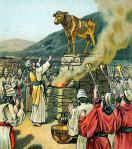
  5. Exodus 32:1 – Golden Calf – Mount Sinaiworshipping the calf
  6. Leviticus 10:1 – Nadab and Abihu – Mount Sinai
  7. Numbers 11: 1 – Complained about hardships – Taberah
  8. Numbers 11: 4 – Complained about the food – Kibroth Hattaavah
  9. Numbers 12: 1 – Miriam and Aaron talked against Moses’ marriage
  10.  Numbers 13 + 14 – The story of the spies – Kadesh Barnea

These were the 10 tests I found. There are other rebellions after the “10”, for example, Korah, Dathan, and Abiram in Numbers 16 rebel against Moses’ leadership; probably in reaction to going back into the wilderness. All of these testings took place in a two-year journey that should have taken about three weeks. I feel that part of the reason for the extended time was that the Lord had to train people who would trust in Him, establish His worship, establish a corporate identity and train an army who would/could fight. Remember they had been in Egypt for *430 years and had been reduced to slaves and indoctrinated into an Egyptian mindset.

The examples of what these “tests” represent/foreshadow will be matched to the numbers above. (I am sure there are other things that you can see in these tests. Please comment on what you see these tests represent.)

  1. This is “looking back” and not wanting to leave “Egypt.”
  2. Numbers 2 and 4 need to go together both are not trusting God for your needs but # 2 is a teaching that is a set-up for God “testing” them in #4.
  3. Believing and asking God for provisions
  4.  A test to see what they learned in 2 & 3.
  5. Making something else God.
  6. Doing things your way even when you know better; probably being drunk did not help.
  7. Not getting things right away, remember it was 2 years and no “milk and honey.”
  8. They got bored with God’s provision and wanted something else and listened to wrong influences.
  9. Talking against God’s leaders and racism to justify your actions.
  10.  Friends talking against God’s plan for your life.

Side Notes: (see Test, Attacks and Storms and Test, Test, Test)

  1. The number thirty-eight appears twice in connection with waiting and being put in a state of freedom. Deuteronomy 2:14 and the invalid in John 5:5
  2. The number forty deals with testing.
  3. The number 10 deals with Commands and Rulers (see Number 10)
  4. The Hebrew word “test” in Malachi 3:10 and 15 are the same words used in Psalms 81:7 when describing the waters of Meribah. It will depend on the translation you use.
  5. See Psalms 95:8, 106:32 for comments about Meribah.
  6. *Josephus in 2.15.2 states a different idea about the 430 years and splits it in half then there is a footnote confirming that as correct? I am looking into this idea, it is the only place I have ever seen this commented on. (see comment about Josephus)

http://clipart.christiansunite.com/1352029261/Old_Testament_Clipart/Old_Testament009.jpg
Moses’ Psalms

Psalm 90 is actually the only Psalm that has a sub-heading that identifies Moses as its writer (some Bibles do not include these) but it is fairly clear that his family was musical. Look at Exodus 15 even though Moses may not be credited with writing that song he did lead the Israelites in its singing and in verse 21 Miriam follows his lead and starts playing the tambourine and dancing. He also leads (recites) a song in Deuteronomy 32, so he seems to at the very least have been a songwriter.  Over the years as I have read Psalms 90 through 100, I have wondered why most of them have no subtitles and that Psalm 101 is clearly marked as being written by David? The exception is Psalm 92, which is identified as being for the Sabbath Day. (possible placement of Psalms)

Ok, now for an active imagination because there is no proof for this other than contextual clues, and some people may think that is a bit thin. Look at the job that Moses actually had to do; teach the children of Israel about God after they had been in a pagan land for 400 years. They were more knowledgeable about Egyptian gods than they were about Yahweh just because they were around those demon gods’ art and statues. He had approximately one million people who knew very little about God and had to be instructed in His ways. What better way to do that than through song; so now read these Psalms as Sunday School lessons and focus on themes. Also, think about the trials and problems the Israelites had in Exodus through Deuteronomy.

  • Psalm 90 – (think Exodus 15:26)
  • Psalm 91 – (think Exodus 17:15) to make God your fortress and He will protect you
  • Psalm 92 – (think Exodus 16:27)
  • Psalm 93 – (think Deuteronomy 5,6) shifting thinking from Egyptian gods
  • Psalm 94 – (think Exodus 10:29) a call for justice
  • Psalm 95 – (a lesson after Meribah and sending out the first spies) exhortation to praise God and not tempt Him
  • Psalm 96 – to praise God for His general judgments
  • Psalm 97 – the majesty of God’s kingdom
  • Psalm 98 – a general call to praise God
  • Psalm 99 – the mercifulness of God and His right to reign (some sources suggest that it may not have been the Samuel of 1 Samuel)
  • Psalm 100 – (think Exodus 40) giving praise to enter the new worship area

Psalm 111 is mentioned in Part 2. (See below.)

Thompson Chain-Reference Bible was a resource. NIV usually includes subtitles on Psalms.

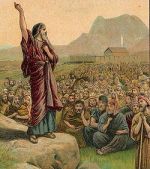
Moses picture: http://www.google.com/imgres?imgurl=http://upload.wikimedia.org/wikipedia/commons/thumb/d/db/Moses_Pleading_with_Israel_(crop).

Please see Part 2In Part 2, I focus on Moses’ Psalms or Songs outside of the Book of Psalms.

Amalekites: An enemy from Moses to Mordecai to_______! Part 1

We are not finished with Esau and his descendants and the trouble they are going to be to Jacob’s side of the family. Esau had Eliphaz, by Adah his first wife, who had a concubine named Timna who had Amalek (Gen. 36:12). She is attributed to Adah (a true wife in the genealogy) but is listed last. For Timna see 1 Chronicles 1:36-39.

The Amalekites are cursed, and the Israelites are to be fighting them from generation to generation because they attacked the Israel column (Exodus 17:8-15) as they headed to the Promised Land. Deuteronomy 25:17 – 19 is a serious statement to the Israelites about that incident; it is that commission that King Saul is trying to accomplish in I Samuel 14 and 15.

Josephus 2.1.2 assigns Amalek to the country of Idumea; this is where King Herod came from. Davis Dictionary of the Bible says the Idumeans had circumcision forced on them after being conquered by John Hyrcanus a Maccabean ruler. This is why the Jews hated Herod so much, he was not a Jew and very possibly an Edomite and he could have even been an Amalekite.

A side thought on this – there was always some kind of contention within Abraham’s family; Ishmael and Esau did not seem like contented brothers and uncles, but their genealogies made it into the Bible so that tells me that some communication did exist between parts of the family.  Since Moses is credited with writing Genesis and parts of Esau’s history was definitely happening while they were in Egypt there was communication.  Moses may have gotten some of the information while he was in Midian.

Other references to Esau/Edom/Amalek being destroyed or facing the judgment of God.

Jeremiah 2:

Ezekiel 35

Obadiah

Malachi 1:2-5

https://ificouldteachthebible.wordpress.com/2011/11/13/ishmael-and-es…and-foe-part-2