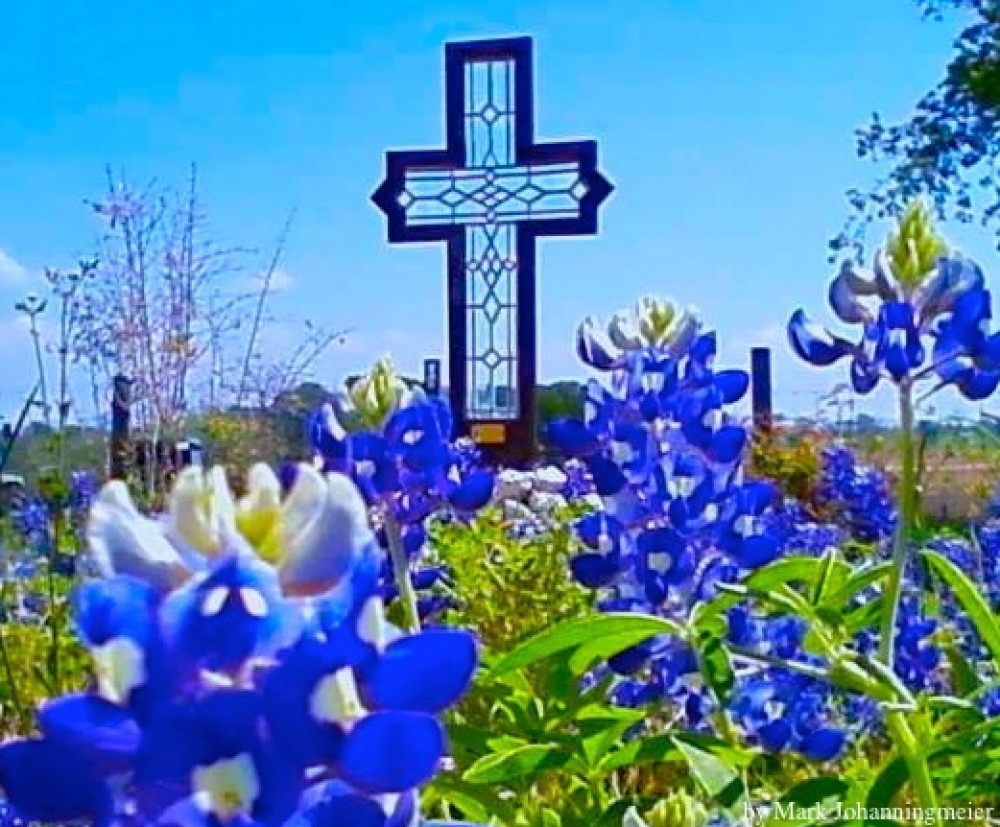
RESURRECTION

This post is about the resurrection of Jesus, it is an extension of Saturday of Holy Week- A Day of Rest and Born Again or Born from Above.

With His earthly life and “forty months” of ministry about to end, can you imagine all of the thoughts that swirled around Him? Jesus’ metamorphoo and the time spent with the Law (Moses) and the Prophets (Elijah) signals His ride into Jerusalem, so He can pay the Bride’s price for His Church. But the time between “Who is it you want?” (John 18:4) and “Woman, why are you crying?” (John 20:15 NIV) changed so much. Types and shadows were about to become bold clear light. The Prophet’s words were being fulfilled and rejoiced over in the Heavenlies. Our redemption from the sin that claimed us was gladly being paid. The Way back to the Father and His Garden was opened, if we choose that path.

Friday, Saturday, and Sunday could be Work, Rest, and Begin a New; okay, that activity could go on for a while:)

Resurrection or rise, arise, risen, and several other ideas are expressed with two Greek root words (for the most part). Anastasis G386 and egeiro G1453 are those root words, yes, they can have prefixes and other tenses.

ἀνάστασις | Free Online Greek Dictionary | billmounce.com

ἐγείρω | Free Online Greek Dictionary | billmounce.com

ἔγερσις | Free Online Greek Dictionary | billmounce.com

G386 – anastasis – Strong’s Greek Lexicon (kjv) (blueletterbible.org)

G1454 – egersis – Strong’s Greek Lexicon (kjv) (blueletterbible.org)

Old Testament

Hosea 6:2 After two days will he revive us: in the third day he will raise us up, and we shall live in his sight. (KJV) In Hebrew, the third day is Tuesday or Yom HaShelishi.

Yom ha-sh’lishi: The THIRD DAY – Hebrew Word Lessons

Examples of being raised from the dead.

  • 1 Kings 17:17-24 is where Elijah raised the widow’s son.
  • 2 Kings 4:29-37 is the telling of Elisha raising the Shunammite’s son.
  • 2 Kings 13:21 Elisha is dead and another dead man is thrown into his grave and touches his bones and was revived and stood up (he was resurrected). This event brings to mind the verse in Jude, where Satan is trying to take Moses’ body. Why did he want it? I am pretty sure it was not for a trophy. We have to know he was up to no good. A popular idea is that Satan wanted to make Israel stumble and sin by going into idol worship over the corpse. HOW ABOUT he took it because he feared it would act like Elisha’s bones and cause people to fear God? HOW ABOUT #2 Satan did not want it to be available for the transfiguration. Moses was there and with a “born from above body”.
  • In Hebrews 11:17,19 the faith of Abraham is relived when he sacrificed Issac. He knew God could/would raise him from the dead.
  • Martha knew Lazarus would rise in the resurrection on the last day, John 11:24. I do believe this was a Hebrew idea that Matthew writes about.
  • In the Sermons on the Two Mounts the Sadducees are baiting Jesus on a woman who had seven husbands. This must a been a point of discussion in their Torah studies. (Matthew 22:28) Jesus instructed them about physical state of being in Heaven.
  • John 5:29 may also be an Old idea with an upgrade. Good deeds people have a resurrection of life and bad deeds people have a resurrection of judgement.

New Testament

This is a spot check through the New Testament, there is a lot, but my focus will be Matthew, John, and 1 Corinthians.

Matthew’s contribution starts in Chapter 22 and goes to 27. There is an interesting shift in Matthew’s terms. Before Jesus’ physical resurrection (Chapter 22) he used anastasis G386 in Chapter 27 he used egersis G1454. I wonder if it is an Old-to-New shift in thinking. This is the only time G1454 is used in the Bible. Anastasis is used many more times in the New Testament.

Jesus knew what was to happen to Him in that Passover, He would be sacrificed like the lamb in Exodus. The thing that caught my attention for this post was His physical body. He had also been teaching about that as we will see in John. First, we should take a look at the revelation that Paul received on the topic.

1 Corinthians 15 is Paul’s class on the resurrection to the Church. Verse 35 starts his discussion on the body. Verses 42 to 46 describe what happened to Jesus, His natural body was put into the earth but a spiritual body came out (44). I termed this His born from above or born-again example. Yes, at the last trumpet, we who are living will get this new body and it will be quick (52).  

John’s purpose in writing his Gospel was to show Jesus as the Son of God. He highlighted the miracles Jesus did, for some reason only seven have got a lot of press. He did more in John’s Gospel and taught about some miraculous things that would occur. Here are some about His resurrection.

  • John 3:6 The Spirit gives birth to spirit.
  • 11:25 He tells Martha He is the resurrection and the life.
  • 12:24 Jesus gives a multi-level explanation of a seed producing a harvest. Unless He died, His harvest would not have happened.
  • 16:16 He tells the Disciples that He will die but that they would see Him again (palin, G3825).

These are posts I have done on the work of Jesus and His resurrection.

Saturday of Holy Week – A Day of Rest

For years I have thought and written about what Jesus did between the Cross and the stone being rolled away. Here are the verses I have used in the past in my post of Saturday, Easter 2015, Jesus Preached, and Dark to Light – Jesus in the Tomb.

  • Psalm 68:18
  • Matthew 27:62 – 66
  • Ephesians 4: 7-10
  • 1 Peter 3:19

I often limit my thinking and forget to look at the really big picture of what happened on this Passover. I have heard it and said it, and have written it, but today being still before God I saw His GREATEST act of love and mercy in a different light.

Jesus fulfilled the requirements of the Law and opened the curtain so we could go to the Father through Him. There were legal issues that had to be addressed as He got the Keys back. He set examples for us to follow so His Kingdom would come.

Jesus died because of (our) sin. He came out of that tomb a new creation and with new heavenly powers and abilities. Today, we might call that being born again.

The thought of the silence and stillness of that rock tomb added another dimension to what was going on. Jesus finished His work, just as God did in Genesis 1. So, the right thing to do was to REST. With respect to all of the other posts and the Scriptures I have used; Jesus was resting from His labor. I am so glad He finished the work and took my place, so I can be with Him in His place.

His Easter meetings: the women, the road to Emmaus, and walking through a closed door into a very private dinner party were to show He was victorious and had conquered Sin and Death. He took the next forty days to reteach and prepare His followers for their “personal trip” up “Mount Sinai” and their meeting with the Holy Spirit. His journey from victim to victor came with a day of rest in between them.

The Gift Came Twice

Father’s gift came wrapped in love.

He heard her heart, knew her warmth.

She used cloth for special lambs.

One seamless robe. The kingdom is near.

With grief Jo and Nick bound with stripes, cold, dark, silent.

Stone rolled away, Father’s gift came with power and light.

Last and First – Matthew 17 to 21

Matthew 17 to 21 is what I call the Forth Block of Kingdom Teaching, and we will focus on the “first to last, leaders to servants, greatest to the humble” teachings Jesus gave His disciples. These chapters start with the Transfiguration and go to Jesus delivering His first sermon from the Two Mounts. I have used mentions of John the Baptist to frame the blocks of teachings about the Kingdom. Yes, there are other thoughts and teachings in this period. Three standout examples are: Jesus was questioned twice on divorce, He uses children several times in His teachings, and foretells His death twice. If I extend the block into His Sermons on the Two Mounts (the fifth block), He tells two parables about weddings. Jesus’ changes in physical locations are also worth noting.

This Last to First series of studies has already challenged some long-held paradigms. That is never comfortable; it is necessary but not pleasant. There are many first/last ideas in these chapters. After playing the tour guide of Jesus’ travels I will focus on three related kingdom thoughts.

His Final Pilgrimage – I will not go into great detail here, as I have done some of that in other studies. Even His movements have a “least to great” lesson in them.

  • He is on the mount where He is transfigured and meets with Moses and Elijah. (John the Baptist is mentioned here.)
  • Capernaum, for the last time.  
  • Jesus leaves the land of Naphtali and Zebulun (Galilee). He “goes over” the Jordan and to the area across from Jericho.
  • If you check with the other Gospels, He does several trips to the west bank.
  • He begins His final trip to Jerusalem by crossing the Jordan and going to Jericho. He is busy here and possibly was there for several days.
  • He travels to the Mount of Olives where He sends for a donkey.
  • Jesus does a “victory ride” into Jerusalem and inspects the Temple. (John the Baptist is mentioned in His first of two sermons on Tuesday of Holy Week.)

I know that I have a tendency to single out a story or thought. It seems that the Holy Spirit has grouped several separate lessons together to highlight a theme. In this block, the timespan is probably several weeks and completely different locations. The audience however is the Twelve Disciples and the others in His camp.

Children – Chapter 18 opens with the disciples wanting to know who was going to be the greatest (megas) in the kingdom of heaven. There is no doubt, in my mind, that they were asking about an earthy kingdom. I believe that Jesus planted the seed for this question when He asked about the Temple tax. The Master Teacher did a show and tell by using a little (mikros) child to focus on being humble (tapeinoō). The test for this teaching unit came in 19:13-15. The disciples did not make an “A” so Jesus did a quick reteach.

The Father then supplied an object lesson of a rich young ruler who did not want to become humble. This “righteous” child of Abraham, this megas, knew something was missing. Jesus quizzed him on Commandments 5-9, and he was good. I always find it interesting that Commandments 1- 4 were not mentioned. (Exodus 20) You may form your own opinion on that. His title and money had not brought him peace and he doubted his salvation. The young man did not like Jesus’ answer, he wanted a spiritual answer and was told to do away with his earthy hinderance. (I have not forgotten the l. Earthy = dust.)

Put a Selah in-between 19:22 and 23. Ignore the French printer’s chapter break and look at 19:23 to 20:16 as one whole, new lesson.

Last/First – The Spirit and Matthew changed terms in this new teaching, but the thought stays true. The “camp of disciples” saw the megas’ first (prōtos) position, and they knew he had salvation, because! Jesus segways from the earthy kingdom and moves to the Heavenly one in 19:28. The word/phrase is “palingenesia” Strong G3824. (All of the Greek is from Mounce.) It means renewal, new birth, or regeneration.

Your heart and vision will determine how you view first (prōtos) and last (eschatos). Your starting position is important. There is an interesting switch in last/first from 19:30 to 20:16, see my first post in this series.

John’s Eema – I have no doubt that John and James’ mother was in the camp that left Capernaum. There is no reason not to think that she had heard all of the teachings and witnessed the miracles that were done by Jericho. Like the young ruler, she asks a kingdom question. Was she talking about the earthy one or the Heavenly one? Jesus’ answer is about the Heavenly one. It is not settled in my mind if the disciples realized that Jesus was talking about a different kingdom than what they thought was coming. In verse 25, He meets them where they are and talks about leaders (megas) and servants (diakonos). See Paul and Slaves. Mom’s question makes you think about the disciples’ question in Chapter 18.

Jesus has told His disciples several times that He is going to Jerusalem to die. Did that sink in before the Garden? The questions and indignant feelings make me want to say no. But they heard and eventually lived the teaching, may we be able to say that also.   

Recap

Before the Rich Man – In this series of teachings Jesus answers how to be the greatest or first in the kingdom. The lessons had a “least” action: finding lost sheep, forgiving someone, and helping little children come to Jesus. The last or least path is the way to go.

The Kingdom Teaching – Matthew 19:28 and 20:1 give this idea a heavenly setting. In between those verses, it is very heavenly. The parable in chapter 20 lends itself to the Earth. This really does need more study.

After the Teaching – John’s eema is an example of what not to be. Jesus’ ride into Jerusalem is an interesting lesson about the topic. Jesus rode into the city as a “great or first” and carried a cross out of the city as a “servant or last”. Then because of the shame-ridden cross, He became Lord and Master of all.

CROSSING JORDAN

Crossing Jordan has been a metaphor for dying and going to Heaven (the Promised Land). I have heard that metaphor stems from Joshua leading the Children from the east bank to the west bank of the Jordan River. Going across the Jordan was part of life in Israel and is mentioned many times from Judges to David. There were no bridges, it seems, and people waded across at fords or shallow spots.

There are Biblical characters that crossed the river in the same direction as Joshua at key times in Israel’s history. I am looking at their stories in this post. I will start with someone who went contrary to the metaphor and had his way back blocked with a flaming sword and cherubim.

Adam and Eve – They started in Paradise and were sent to the East (Genesis 3:24). I believe there was a Garden with five rivers, and two very important trees, and Adam was responsible for tending it. God has always shown an interest in this region. Terah was sent there but he did not go, Abram did. Melchizedek, the priest of the Most High God was in the area. I said that because it makes more sense to think the Garden was here because this place means something to God. Before the objections start, I live in America, and we have recycled names pinned on many cities, rivers, and regions so renaming four rivers is a high possibility. I can see Noah’s grandchildren using things he told them just to honor him. My God has mysteries that He has not shared, but the world changed after Adam and Eve ate the fruit and Noah’s Flood.

If the land of Canaan (Noah’s grandson by Ham, Genesis 9:18-24) was part of the Garden; Adam would have traveled over where the Jordan was or would be. East is an important direction in Genesis 2 and 3.

Jacob and Family – When Jacob ran from Esau, he was by himself. Genesis 28:10 says he left Beersheba to go to Haran. He stopped at Luz (Bethel) and spent the night. That is the end of his route until he is with the “eastern people” in Haran. I believe from Luz (28:18) he had three routes he may have taken: 1. The road along the seashore, 2. The highway through the mountains that went above Lake Galilee, and 3. to cross the Jordan and go through the Bashan/Gilead. I would have taken the coast road, but in Genesis 32:10 Jacob says he crossed the Jordan with just his staff.

When Jacob ran from Laban, he had four wives, eleven sons, a daughter, and a lot of possessions. After the ordeal of Chapter 31, Jacob’s camp made it to Mahanaim. There he was met by a camp of angels (reminds you of Elisha). Sometime after meeting Esau Jacob’s camp(s) crossed the Jordan and went to Shechem. Jacob had returned to his land which was part of the promise to Abraham from God. It makes me wonder what route Abram took to get to Canaan.

Thoughts on Jacob – 1. He had many experiences with angels. 2. He is older than you might expect. I had to work backward from his death and consider every timestamp that was given during his life. I made mistakes in How Old Were These Guys. I did better in the Patriarch Timeline and the Tribes of Israel Timeline. 3. Angel of the Lord or Metatron means angel of countenance this is a theophany.

Joshua and Israel – The event that gave the name of this post is found in Joshua 3 and 4. God exalted Joshua in the people’s eyes because of this event (3:7). He also dried up the Jordan to show Israel and the world His power (4:24). We tend to focus on the human aspect of this day, but I believe it was much more important to the Father. He was bringing His children home.

This day was an end and the beginning for Joshua and Israel. With years of learning to trust God behind them, they were facing a new test of their faith. They now had to fight for the land promised to Abraham for his family. In the crossing of this Jordan, they left behind the Moabites and Midianites and now had to face the giants and walled cities that had intimidated their forefathers. When we cross the spiritual Jordan, our fighting is done. Metaphors are limited and this is a good example of that.

This is a good time to compare and contrast the passage out of Egypt and the entrance into Canaan. (Please, ignore Exodus through Joshua and look at the rest of the Scriptures.) Passing through the Red Sea has more references than going through the dried-up Jordan River. I found two – Psalms 114:5 and 74:15. (If you know of others, please share.) If you use that as an indicator, leaving Egypt (baptism) is more important than the crossing at the Jordan. I have used the crossing of the Jordan as a shadow of baptism, I will not do that anymore. Israel went through two walls of the sea; the Jordan was dry. Remember, the water was stopped about twenty miles above the crossing site, they were not flanked by walls of water. You could stretch that and say the Dead Sea was on one side and the water at Adam (man or red) was on the other side. (Some bullet points.)

  • Both Crossings had enemies just before going through.
  • The oldest people at the Jordan were Joshua and Caleb. The nineteen-year-olds were now fifty-seven. It seems that the men thirty-eight and younger were not circumcised.
  • Some of the people had seen both crossings.
  • The people took memorial stones from the Jordan. Solomon may have built a memorial on the eastern side of the Red Sea.
  • The Red Sea was after Passover. The Jordan was just before. They crossed on the day they were to choose the lamb for the meal, the tenth day of the first month. (That could be a preaching point.)
  • The direction of travel was different for the two crossings.

This crossing happened at Jericho/Gilgal. Gilgal was the first campsite where they were circumcised and celebrated Passover.

David, His Family, His Officials – David and those fleeing from Absalom left the west bank and traveled east to Mahanaim, 2 Samuel 17:22. (The same city Jacob named. It was also a refuge city.) David returned, east to west, in 2 Samuel 19 and proceeded to Jerusalem. Jesus would follow the same path in Matthew 20 + 21. Both had a mess to clean up when they reached Jerusalem.

This crossing occurred at the fords or shallow spot near Gilgal. Even the king’s return caused an uproar that had to be fixed.

ElishaElijah and Elisha crossed the Jordan near Jericho, going west to east. Elisha, a shadow of Jesus, returned east to west at the same spot. Both of these crossings were done on dry land with the waters dividing for the men. 2 Kings 2

This set of crossings involved the fewest people and the least amount of material goods. Elisha crossed back to the west with a well-used cloak and a double anointing. The entire scene is a shadow of John the Baptist (Elijah) diminishing before Jesus (Elisha) took center stage.

Jesus, His Disciples, His Camp – Jesus’ final pilgrimage to Passover started in Matthew 19:1, Mark 10, Luke 17:11, and John 10:40. (Matthew is my main reference.) He left Galilee crossing the Jordan and went to the area across from Jericho, where he taught and healed the people. If you compile all of the Gospels, it is clear He crossed back and forth several times before going to Jerusalem for Palm Sunday.    

I blame too many movies about Jesus for the idea that just twelve men followed Jesus as He preached about the Kingdom. Mark 15:41 talks about women in Galilee, Luke 24:9 speaks of others that were with the Eleven after the resurrection and Acts 1:21+22 mentions the requirements for taking Judas’ position, so there had to be more than just the Twelve.

This parade started big with His Camp at the Jordan and got larger. The only parade for Jesus that was bigger was the one in Heaven after He disappeared in the clouds when He ascended.

Thoughts – Crossing Jordan is a beautiful metaphor. I admit that my thoughts have changed as I have grown older. But for these crossings, work, warfare, and new experiences waited for those that crossed from east to west over the Jordan.