Zelophehad’s Daugthers

The story of Zelophehad’s daughters is a story of family, love for a father, and a lasting legacy.  With only fifty words they had their wish come true, their father’s name did not “disappear” just because he had no sons (Numbers 27:1-11).  Now, this did not happen without conditions (Numbers 36) and a little reminder to Joshua and the elders (Joshua 17:4), twelve more words.  Their story is recorded in three books of the Bible-Numbers, Joshua, and 1 Chronicles.  If you timeline this, Numbers 27 occurs and then the elders of Manasseh in Numbers 36 are worried about land that has not even been won yet but God agrees and sets conditions for inherited land and how it should be passed on if no son was born to a father.  After Numbers 27 + 36 Moses is called to go up the mountain, view the land and die so this may have been the last set of rules he sought God on.

The girls loved their father and he had brought them up to be obedient and independent.  They had a strong sense of justice and knew that just because there was no male descendant that they should not exclude them from their rights in the Promised Land.  So they looked to God and the authorities to do the right thing.

Zelophehad’s daughters were very conscious of politics in the camp and were aware that their father had made some wrong choices. So they start their petition for the inheritance with the fact that he died for his own sins, not Korah’s.  Korah wanted to be a priest (Numbers 16) and lead a rebellion against Moses and Aaron (see Jude 11).  The daughters were very aware that he was not a perfect man when they said he died for his own sins, which would have been grumbling, complaining, and wanting to go back to Egypt.

Names are important in the Bible and it is always interesting to see what the names of people mean.  (I know that sometimes I make too much of the meaning.)  I always assume that the name we see was the one given them at birth but it is always possible that it could have been changed as they grew or that they were nicknames.  With that said here are the meaning for the daughters’ names from my Strong’s/Vines Concordance for the KJV.

  • Mahlah – 4244 – weak one
  • Noah – 5270 – movement (not exactly the same of Noah of the Ark)
  • Hoglah – 2295 – partridge
  • Milcah – 4435 – queen
  • Tirzah – 8656 – delightsomeness

Zelophehad’s name is used 11x in KJV and 9x in the NIV.  In the Strong’s Concordance it is not given a meaning but in the NIV Concordance, it listed as – shadow of dread, terror or protection from dread.  He is also the son of Hepher (pit or shame).  Maybe the Dead Sea Scroll’s shed new light on the root words that made up his name.

As part of Manasseh, the girls received land on the west side of the Jordan not in Gilead that was for the shepherds of the family.

The last mention of them is in 1 Chronicles 7:15. Where again it is pointed out that God had done something special for Zelophehad and his daughters. The land was the inheritance and it was important but his daughters gave him the gift of being remembered because they were brave enough to stand up for their family name and their father.

Jeremiah 10 and 51

While reading on lightning in the Bible I noticed that Jeremiah 10: 12 – 16 and 51: 15– 19 are almost exactly the same.  Having the same theme run through a book or even several books is not unusual, after all, God can repeat Himself if He wants.  But if God repeats Himself it is usually to stress a point or confirm what was said, or in the case of the History Books – Samuel, Kings, and Chronicles two different people wrote for two different audiences. (See Kings and Samuel)  The repetition here seems to be for making the point of God’s power and authority to do the acts that were to follow.

In Jeremiah 10:12 -16, the passage is introduced by a statement that false gods did not make the heavens and earth, the NIV has a footnote that it is written in Aramaic.  (Probably for the people of/in Babylon or as a further study has found, it was a common language of the day.)  God is angry because of the idols His people are making and worshiping.  So after the passage, the destruction of Israel and Judah is foretold.  This apparently made people mad because Baruch son of Neriah, his scribe, notes that the people of Anathoth, his hometown, wanted to kill him.  Jeremiah is a member of the priestly class and Anathoth is a city that was set apart for the priest by Joshua and Moses; nothing like making your family mad, especially if they are church leaders.

In Jeremiah 51: 15 -19 the introduction to the verse is the prophesying that Babylon will be filled with men eager to destroy the place, and it is followed by the acts that will happen when the city is destroyed.  The end of this story is chapter 51:59 – 64 where Jeremiah asks Seraiah, Baruch’s brother, to pronounce complete and lasting ruin on Babylon. (Saddam Hussein tried/started rebuilding ancient Babylon before the Gulf War, it came to a stop.)  It is interesting that the last sentence is, “The words of Jeremiah end here.”

The final part of this study is found in Psalm 135: 7.  The passage about the lightning, rain, and wind is also here as it is found in Jeremiah.

He makes clouds rise from the ends of the earth; he sends lightning with the rain and brings out the wind from his storehouses.” (NIV)  In a previous post I compared Psalm 135 and 136 for similar content (see that post).  But the same themes in Jeremiah are here also:

  1. The Lord does what pleases Him. (vs. 6)
  2. The destruction of an enemy is told. (vs.8 – 11)
  3. Idols are worthless pieces of silver and gold. (vs. 15 – 18)
  4. Jacob and Israel are treasured possessions. (vs. 3 – 4)

I can still see David writing Psalm 135 but the prophetic nature of this Psalm now becomes even clearer.  Ok, maybe Jeremiah/Baruch did write it and threw in verses 19 – 21 just to aggravate his kinsmen.

Bible studies are fun, you start with lightning and end up comparing prophesy in Jeremiah.

Seven Miracles in John

From the Book of John, we Christians, have selected seven miracles to explain John 20:31. These are written that you may believe that Jesus is the Christ, the Son of God. (NIV) Why only seven are highlighted I do not know? Seven is the number of completeness and these are expounded more but John did mention other miracles than just these seven.  (There are two other posts listed below that show other miracles that are mentioned in John.) We also limit the “I am” statements Jesus makes.

John 14:12 gives us a promise from Jesus that we will do greater miracles than these that are shown. The word greater carries the component of more in number, not more fantastic. I chose to think “the more” comes from all of the Church performing miracles. The seven miracles highlighted here in John are amazing and worthy of being looked at and studied.

The seven traditional outstanding miracles that John wrote about to Healing_the_Sick021show the people of his day that Jesus was the Christ are:

  1. Turning water into wine in Cana (2:1-11)
  2. Healing an official’s son in Capernaum (4:46-54)
  3. Healing an invalid at the Pool of Bethesda in Jerusalem (5:1-18)
  4. Feeding the 5,000 near the Sea of Galilee (6:5-14)
  5. Walking on the water of the Sea of Galilee (6:16-21)
  6. Healing a blind man in Jerusalem (9:1-7)
  7. Raising dead Lazarus in Bethany (11:1-45)

I found this and thought it was good.

Gary Shogren says: “I have no idea who made this up, but I’ve used it for years.”:

THE SIGN

T – turning water into wine
H – healing the nobleman’s son
E – elevating the lame man

S – supper for 5000
I – interim on the sea [walking on water]
G – giving sight to the blind
N – notification of Lazarus to “come forth”

http://www.journeyintotheson.com/grand-central-station/the-seven-signs-of-johns-gospel/

In the NIV the words “miracles” and “miraculous signs” are used twenty-four times with two of these being Jesus asking people why they would not believe (John 12:37 and 15:24).  John 2:18 and 6:30 are people asking Jesus to show them signs so they can believe.  Jesus comments in 4:48 that Jews will never believe unless they see signs and wonders, this sounds just like Paul in 1 Corinthians 1:22 when he says,” Jews demand miraculous signs and Greeks look for wisdom.”

SIGNS FOR THE JEWS For years I have heard that these seven miracles were signs that the Jewish people believed the Messiah would do when he came to deliver them.  I have looked for why these particular miracles and where they originated but have not been able to find them.  What I did learn was that the ancient Hebrews, as well as modern Jews, are looking for a leader who would be a military and civic leader. See Vines Dictionary under the word for semeion which is number 4592 in the Greek Dictionary in Strong’s Concordance and this website http://www.jewfaq.org/mashiach.htm . (Note, the website does not believe Jesus is the Messiah and they tell why!) (Kurt Cameron and his guest on TBN in September 2013 said that other major world religions all wanted a part of Jesus, that may be but I do not think that Judaism is one of them.)  Since the Jews were (are) looking for a military and civic leader I guess they thought that the Messiah would “one-up” the leaders that they have had and be a combination of Moses, Elijah, and Elisha, and probably several others.  Since I could not find where they got the “list” of miracles I started my own:

  1. Turning water into wine in Cana (2:1-11) Moses had water from a rock (the water/wine came from “rock” vessels) and changed bad water to good.  Jesus changed the water to wine.
  2. Healing an official’s son in Capernaum (4:46-54) Elijah and Elisha both healed a son, they had to touch the boy, Jesus did it at a distance.
  3. Healing an invalid at the Pool of Bethesda in Jerusalem (5:1-18) Elisha healed the captain with the seven dips in the Jordan (See #6), and the people left Egypt all healed to face forty (38) years of wandering. 
  4. Feeding the 5,000 near the Sea of Galilee (6:5-14) Moses and manna. Elisha feeding the one hundred (2 Kings4:42). 
  5. Walking on the water of the Sea of Galilee (6:16-21) Moses divided the waters why not walk on them.
  6. Healing a blind man in Jerusalem (9:1-7) (I got nothing.) Second thought, maybe the man said it in John 9:32 “Nobody has ever heard.” Jesus did something no other leader had ever done. A third thought, Elisha told Naaman to go wash in the Jordan, that is the second recorded case of leprosy being healed. A fourth thought, this has strong elements of the creative process of Man in Genesis.
  7. Raising dead Lazarus in Bethany (11:1-45) Elisha’s bones raised a dead man. Jesus called him out of the grave.

I remember someone saying that the seven miracles in John were more oral tradition than written fact, but it was fun thinking about where they may have started. Well, if you have/know where the seven signs or miracles of Jesus being the Messiah started, please let me know.

It is not considered one of the seven, but Jesus had a habit of hiding Himself!  So, I call it a Plus One.

In one of the comments, the greatest miracle was given in the form of a prophecy. Please see Seven Miracles of Jesus +1, +1, +++++ 

Jesus refers to Himself as the I am in John, giving more proof of who He is.

For other thoughts on miracles please see Miracles and Storms

I also used this blog as a reference:  http://considerjesus.wordpress.com/2008/10/01/seven-signs-in-the-gospel-of-john/ in writing my blog.  The artwork is from  http://clipart.christiansunite.com/Pictures_of_Jesus_Clipart/Healing_the_Sick_Clipart/

Lo Debar – Another Look

Lo Debar, I have a feeling that it has become a symbol of hope and that God can turn things around in as long as it takes to ask a question.  Lo Debar holds the love of a true friendship and the strength of a promise kept but also has a darker side of greed, fear, and poor communication.  The characters in this story have strong messages to teach us if we will listen. (see A Place Called Lo Debar)

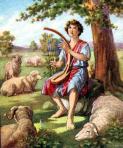
David’s life before he killed the giant sets the stage for Lo Debar.  The time he spent in the wilderness keeping sheep and singing praise to God allowed him to have a realDavid052 friendship.  C. S. Lewis in Membership said, ”We live, in fact, in a world starved for solitude, silence, and privacy; and therefore starved for meditation and true friendship.”  David had those so when Jonathan decided that they should be friends David was ready.  David means “loving” and Jonathan means “Jehovah-given.
The question of why did David even have to ask if Jonathan had a son puzzled me until I added ages and years together.  The last time David saw David007Jonathan alive was in 1 Samuel 23:16, while David is hiding at Horesh in the Desert of Ziph and Mephibosheth (probably), was not born yet.  There was also the oath he gave to Saul in 1 Samuel 24: 22 not to kill off his family when he became king.  So the question in 2 Samuel 9:1 is valid because he would not have known about Mephibosheth.  But the lack of communication by Jonathan to the family about the covenant of friendship and the oath that Saul had with David caused a little five-year-old boy to be crippled as panic set in and the royal household flees in fear. (It seemed to be common practice to kill off everyone including servants of a royal family back in that age so I am sure the fear was real.)  The poor communication or fear carried to other parts of the family because David had to find Ziba, a servant, instead of his wife, Michal, the aunt of Jonathan’s child, to tell him Mephibosheth existed and was alive.

I am not fussing at Jonathan because he was in a really bad spot.  His crazy father wanted to kill his covenant friend and the family servants had already proven they could not be trusted, so speaking about David was probably not a good idea.  But it would appear that he had a plan for his family in case something happened to him.  I don’t think it was an accident that Mephibosheth was “found” living at Makir son of Ammiel’s house.  Jonathan and possibly Saul must have trusted his man and his family to hide and protect the royal grandchild and eventually find a wife for Mephibosheth.  Remember he also brought supplies to David as he ran from Absalom.

In studying Jonathan I found something that I have no idea what it means but it was interesting. As I said Jonathan means “Jehovah-given” and there are two forms of it used in the Bible they are number 3083 and 3129 in the Strong’s Concordance.  3083 is used when it deals with Jonathan and David plus two times in 1 Samuel 14: 6+8 where he was relying on God for direction to attack the Philistines.  3129 is used when it deals with Jonathan and his father Saul.

God has a sense of humor and likes to hide things in scripture like Makir son of Ammiel: Makir means “salesman or brought” and Ammiel means “people of God.” The Makir meaning shines out in the Absalom story because he brought a lot of goods to David almost as if he were a salesman.  But he must have been important in Lo Debar because he hid Mephibosheth for at least twelve years, paid for his care, and picked his wife and no one turned them over to David. ( see Why Hide a Grandson There)

Ziba, Saul’s chief servant, is the dark side of this tale and may have worked for the family but with friends like him who needs enemies.  You have to wonder if Ziba, which means, “stationed” is the servant with Saul in 1 Samuel 9?  I took the “stationed” or “to be stationed” as he was the one assigned to Saul by God.  He seems to have done fairly well for himself because he had 15 sons and 20 servants, which was a sign of wealth.  I believe he was protecting his interest in telling David where Mephibosheth was living, he could have been hoping that David would kill Mephibosheth and the land of Saul would legally become his.  So in 2 Samuel 16:1-4 when he was lying about Mephibosheth’s actions he was still trying to get the land and get rid of Mephibosheth.  David seems to have seen this in 2 Samuel 19:24 when he orders the land split between them.

Saul, which means “asked”, is also part of this story.  A lot of adjectives could be assigned to him because he is the poster boy for good going bad but the one that I settled on was selfish. His “self” pops up throughout his whole story and finally leads to a crippled child hiding in fear from the man who would be his best friend.

Mephibosheth, which means “dispeller of shame”, I am sure has been the center of many sermons and he should be because it is a beautiful story.  Think about how he got to Lo Debar.  The news comes that his father is dead; his nurse (not his mother) drops him breaking both feet as he is rushed many miles from home and left with someone he barely knows.  He has no family, apparently, the only one who knows where he is, is a servant who wants his inheritance and all this five-year-old boy has to go on is stories and rumors about his father and grandfather.  Then one day a military David060unit takes him from the only house he remembers and brings him to the man he has been told to fear for at least twelve years.  Once there he finds out he is rich and will eat at the king’s table for the rest of his life.  Yeah, he should have a few sermons preached about him.

Did you notice that David did not answer Mephibosheth’s question of “why should you take notice of me?” Mephibosheth would have seen the end of David’s years and all of the trouble with his kids but he also would have seen the Temple built and Israel become a world power.  You would take for granted that Solomon just continued David’s covenant of friendship and he ate at the king’s table for life.

The great thing that I found in finishing his story is that Mephibosheth’s tale did not end with him.  In 1 Chronicles 8:34 – 40 and in 9:35 – 44 they list his family for several generations and record them as being warriors, so they fought for the kings of Judah for many years.  This is for a grandchild of a disposed of a king who would have normally been killed; friendship is a great thing. In Chronicles, he is listed as Merib-Baal, which is a tribute to Gideon who also has connections to the Lo Debar/Manasseh area.

These final two connections are questionable so study them for yourself and you decide.  Esther in Esther 2:5 is listed as being from the Tribe of Benjamin descended from Kish.  There are two Kish’s in the tribe of Benjamin but none of the names line up with Mephibosheth.  The other possible family member is Zimri who was king of Israel for seven days.  There is a Zimri listed in Mephibosheth’s family line that would have been alive about that time but there is less proof for that than for Esther so let your imaginations go wild with the possibilities.

This “other” look at Lo Debar, Mephibosheth, David, and Jonathan has been a great study I hope you have enjoyed it.

The artwork is from http://clipart.christiansunite.com/1379673661/Bible_Characters_Clipart/David_Clipart 

Noah and Moses

Trivia question!  What do Noah and Moses have in common?

A tebah, it is pronounced tay-baw.  It means, “box” and it is # 8392 in the Hebrew and Aramaic Dictionary in the Strong’s Concordance. The King James translates this word into ark.  Noah and Moses are the only two people in the Bible to have a tebah.

Moses’ mother, Jochebed (Exodus 6:20), used slime, you gotta love King James, Moses036(chemar, #2564 – bitumen) in Exodus 2:3 to coat his ark (tebah.)  Chemar is used in two other scriptures: Genesis 11:3 (Tower of Babel) and Genesis 14:10 (Valley of Sodom).  Jochebed also used pitch (zepheth, #2203 – asphalt because it softens or liquifies in the sun).  The other two uses of zepheth are in Isaiah 34:9 where it foretells that Edom’s streams will be burning zepheth.

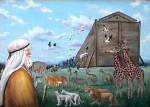
Noah had pitch (kopher, # 3724) to coat his ark, both inside and out (Genesis 6:14).  Noah's arkThis is the only place where kopher is used as that type of covering; the majority of its translations are our word ransom.  In Exodus 30:12 every Israelite in the census who “crosses over” is to redeem himself with a “half-shekel” or about 6 grams of money (It does not say if it was gold, silver, or copper.)  It was collected to service the Tent of Meeting.  In Isaiah 43:3 it is also used as the word ransom but here the “Savior of Israel” says He gave Egypt as your kopher.

I know what you are about to say, “What about the ark of the covenant?”  It is aron and it also means box and is translated ark, chest, and coffin (#727 in Strong’s).  ark of the covenantThe origin of this word carries the idea of “gathering.” Joseph was buried in an aron (Genesis 50:26) and Jehoiada the High Priest with Joash (2 Kings 12:9) made an aron to collect money to rebuild the Temple.

Final Thoughts:

  • I am sure that Noah and Moses’ tebah were rather plain and very functional whereas the aron’s were very fancy and well decorated.
  • It is a beautiful picture that Noah’s ark was coated in redemption, inside and out.
  • I am not sure what to think about the fact that the coating on Moses’ basket is associated with a sinful place (Sodom), judgment (Edom), and a structure built to glorify man over God (Babel).

The clipart is from http://clipart.christiansunite.com