Jeremiah – 6 + 8

In Jeremiah 6:12 – 15 and 8:10 – 12 are two identical thoughts/statements.  Actually, the body of those verses is the same with just the first verse in both carrying the same thought with different wording.  Psalm 14 and 53 are also similar sets of verses, so things being repeated in the Bible are not unusual.  When you find “repeats” it is a good idea to give them some extra attention.

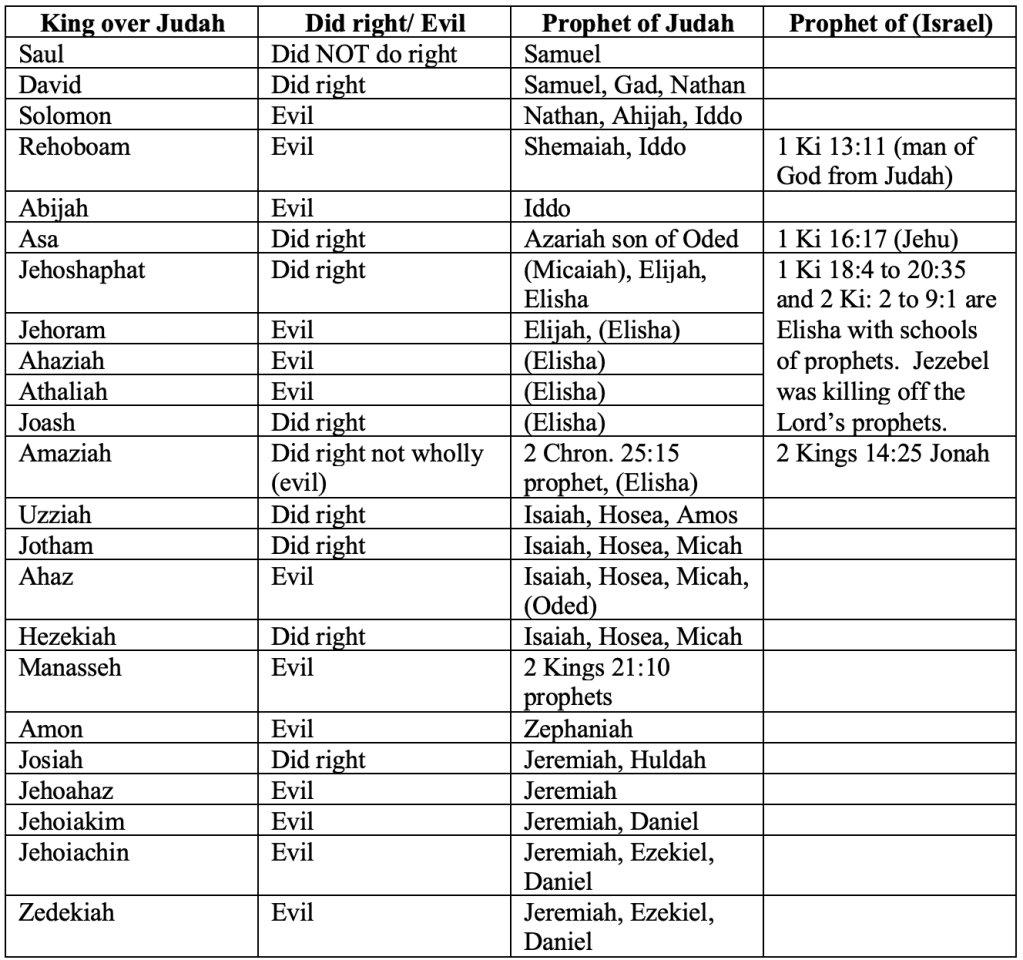
Jeremiah, the book, is a collection of prophecies, history, and “family” problems that are recorded by Baruch son of Neriah (36:4 and chapter 45).  Jeremiah’s ministry covers about forty years (1:2+3), Josiah had eighteen more years, and the other two kings had eleven-year reigns.  (There will be other studies on topics of Jeremiah’s life and ministry.)

We will start with a summary of those two sets of verses and then look at some of the topics before, in-between, and behind 8:12.  In this block of prophecies are many “says the Lord” with a few variations off of this idea.  Since we like to read things in a linear timeline within “books of the Bible” it is really hard for us to deal with the concept that not all of these may have been said one right after the other.  We know Baruch wrote more than one copy of this text.  The “history” with in the book does seem to go fairly linear but chapters 46 through 51 could have been “pieced together” by Jeremiah/Baruch for better reading.  It seems that Chapters 6 – 9 may have come over a longer period of time than what we would except.  Plus 6:27 – 30 seems disconnected within the chapter. (That is a section on metals, the people, and Jeremiah.  See What Type of Metal Are You.)  I would have put it there because of Jeremiah’s statement that starts this group of prophecies – Jeremiah does not know who he will speak this message too (6:10+11).  However, in keeping with the restating of the same thought, 9:7 does refer to refining and testing.  NOTE. I do think that the similar verse in chapters 6 and 8 was spoken at different times and these utterances may have been years apart.

I will work from 6:12 – 15 as this is really the section that caught my attention.  Verse twelve (actually the thought starts in 11b) promises that land, houses, and wives will be taken away and given to someone else. This promise is focused on prophets and priests (v 13).  I need to remind myself that Jeremiah is of the priestly family and he is a prophet.  He is speaking to family, which is why the priest and prophets come against him so hard.  A reference for prophets is 28:1 and for the priest, it is 5:30 + 31.  

Some of the standout thoughts are that these “men of God” dress the “wound” of the people and proclaim “peace, peace” while they are lying and looking out for themselves.  The fact that the wound is singular in both sections brings me to think at unfaithfulness is the problem, with the priest excusing bad conduct, in all of its forms, as not a real problem.  The people can see that judgment is coming but they are being told that it will not affect them because they such “good people” and are “okay”.  

Other areas that will be worked with are below.

  • Verse 6:16 is one statement that caught my attention in reading this section.  It is part of the message that John the Baptist spoke as he prepared the way for Jesus. 
  • Chapter 7: 1- 29 calls out the regular people for their unfaithfulness and unwillingness to follow God.  Verse 23 is the Lord restating His commands and expectations.  This will be a separate post, but these commands were given to the family of Israel starting in Genesis and restated in Exodus, Leviticus, Numbers, and Deuteronomy. 
  • 7:30 to 8:3 talks about Topheth.  This valley had a long ugly history that possibly started with Solomon and his unfaithfulness to God as he honored his many wives over the Lord.

THOUGHTS: I will extend this series and cover other topics in Jeremiah.  Jeremiah, Ezekiel, and Daniel are contemporaries but are writing from three different viewpoints.

Tree of Knowledge – The Tree They Could Eat

The other tree, the one they could eat, that is specifically mentioned in Genesis is the Tree of Life.  I have always thought in interesting that Adam and Eve were not forbidden to eat of the Tree of Life!  So, of course, the serpent did not tempt them on that one.  If we skip to the end of the Bible we find out that the Tree produces twelve crops and the leaves are for healing the nations. 

Some comparing and contrasting is in order here.  In Genesis the Tree of Life is mentioned three times, in Revelations it is referenced four times (but three thoughts), in Proverbs, it is mentioned four times, and has a possible reference in Ezekiel 47: 12.  A look at its physical location is also important.

Genesis: 2:9 – the tree’s physical location, at the center of Adam and Eve’s world (the Garden).  It is connected with a river that waters the whole earth. 

            3:22 – the command to not eat of the Tree of Life and live forever.

            3:24 – the way “back” was blocked/guarded. 

Thoughts – 1. Would eternal life have been passed on to their children?  2. It would have been horrible to live on and see all of the sins they allowed into the world.

Revelations: 2:7 – “overcomers” get to eat of the Tree.

22:2 – Its location by the River of Life on the main street in the City.  This location and river are in Ezekiel 47:12 and Zechariah 14:8. This also mentions the leaves being for healing, as does Ezekiel.

22:14 – repeats who may eat of the Tree.  Overcomers and those who “washed their robes” may be similar ideas.  This stands in contrast to Genesis 3:22 where the ability to eat of the tree is blocked.

22:19 – This is a way to be blocked from eating the fruit or leaves.  If you use the KJV the Tree is not in this verse it is a book. I do not have a great reason why it is a book, except that “paper” is from trees.  The KJV is the only translation I found that uses “book”.

Thoughts – 22:2 mentions twelve crops.  Some translations use twelve fruits.  The Vulgate has twelve fruits of the Spirit instead of nine.  My best feeling on this is it shows God’s continuous provision.  Artists, in some renditions, will also put twelve trees along the river.  I will wait to see it for myself. 

Proverbs: 3:18 – Wisdom is a tree of life.  Jews will use this to represent the Torah.

11:30 – the fruit or things the righteous do are a tree of life.   

13:12 – longings fulfilled are a tree of life.  

15:4 – a soothing tongue is a tree of life.  

Thoughts – I am viewing these four as “Leaves” on the tree of life.  

Tree of Knowledge – The I’s

In Genesis 2 God has planted a garden for man to enjoy.  The center of His garden has two special trees – life and knowledge.  The tree of life is referenced too again in Proverbs 11 and in Revelations 22.  The tree of knowledge, apparently, has references in Proverbs but English translators don’t expand on the metaphor.  To be fair this study is going to cover more than just this tree, I will be looking at several concepts and ideas in Chapter 1, 2, 3, and probably 4.  To clear away a possible problem let me stress that the tree is the KNOWLEDGE of good and evil.  This tree is NOT good and evil.  

Since the Garden is where mankind started I saw the grace and love of your God and Father starting in Genesis 1:29 + 30.  This is a simple thought but this post focus will be on the word “I”.  God says it four times and Adam adds five more by verse twelve, which is where the conversation spreads out, and God’s tone changes.

God’s uses of the word “I” are in 1:29,30; 2:18; and 3:11.  They flow this way – I give, I give, I will make, and I commanded.  The command actually comes in 2:16 but “I” is not used at that time.  So, the first thing God does is to give Adam and the beast plants with seeds and every green plant for food. God commands against the eating of just one tree and then turns His attention again to man and his need for companionship.  

Some Thoughts1. The disobedience of Adam changed the plants as food, as some plants are not suitable for our consumption now.  2. Chapter 2:4 is actually another story of creation that Moses compiled when he wrote Genesis.  Chapter1:1, 4:1, and 5:1 are also separate stories that were possibly oral traditions that he wrote down at the prompting of the Holy Spirit.  3. Notice the only command Adam is given is to not eat from the tree of the knowledge of good and evil.  Adam was not given instructions about the tree of life.  

All four of God’s “I’s” are directed for Adam’s good, not his harm.  Well, why did God even put that tree in the garden!  Since I try not to judge God, this is my thought.  God has always wanted people to willingly follow Him.  The tree was a simple thing and Adam failed.  Jesus is the only human to not fail the Father, which is why we need to be found in Him.

Adam’s five “I’s” are the result of nibbling on knowledge.  His response to God is one of “shame and blame” and mankind has lived with that since then.  Adam’s shame “I’s” are – I heard, I was afraid, I was naked, and I hid.  The confession of “I ate” comes after he blames God for supplying the woman which he was singing about in 2:23 + 24.

Adam’s “I’s” are about himself while God’s “I’s” are about doing good for man.

Some More Thoughts1. Most translations quote Adam as saying the poem/song of 2:23 and leave verse 24 as an included explanation.  That would mean Moses or someone else added to the text later.  It just sounds better to extend the quote to include verse 24 and make it a prophecy about his children. 2. I am confident that Adam and Eve were intelligent and that they talked with God about things.  I have always wondered how they would have had a contextual understanding of the word “die” since they had never seen death!  That may have been part of the knowledge that Eve was so eager to get when she chose to eat the fruit.

Well, enough for the intro more will come later on the tree of the knowledge of good and evil.

Tychicus – The Dear Brother

Who Is Tychicus?  He is a friend/disciple of Paul the Apostle.  His name means fortunate (#5190 Strong’s).  In the NIV his name is mentioned five times – Acts 20:4, Ephesians 6:21, Colossians 4:7, 2 Timothy 4:12, and Titus 3:12.  He was from the province of Asia (Turkey).

What We Know He Did

  1. In Acts, he is accompanying Paul to Troas/to Jerusalem.  Gene Edwards has the men in this group as trainees being readied for ministry as Paul spends twenty-seven months in Ephesus.  
  2. In the Books of Ephesians and Colossians, he is a messenger for Paul.  He is praised by Paul as being a dear brother, a faithful servant/minister, and a fellow servant in the Lord.
  3. In the Books of Ephesians and Colossians, he is also serving Paul by informing the Churches with accurate information about Paul’s ministry.
  4. 2 Timothy has Tychicus again going to Ephesus because Paul sent him there for some reason.  I am guessing that this verse is why the book we identify as going to the Ephesus got that name. (My NIV has a footnote that says early copies of that letter did not have a destination point in verse one.)
  5. Paul in his letter to Titus names Tychicus as a possible replacement for Titus on the Isle of Crete. 

Some Good Guesses About Tychicus

In Acts 19 Paul arrives in Ephesus and stays twenty-seven months.  Since Tychicus is part of the group that leaves with Paul as he heads to Jerusalem, it would be safe to say that he was with Paul during some extraordinary times.  He may have even been part of the twelve men who were baptized with the Holy Spirit.  Tychicus would have seen Eutychus raise from the dead.  He may have gotten the Ephesian elders to go to the beach for Paul’s farewell.  And he would have heard the prophecies about Paul being mistreated in Jerusalem.  If I may continue, he may have helped with Paul’s needs while he was imprisoned in Caesarea.

Tychicus did not accompany Paul to Rome in Acts 27.  It is possible that the “Book of Ephesians” was sent at this time so Tychicus may have been on a journey of his own.  I do think he eventually was with Paul in Rome and worked for/with him there.

Why Question the Book of Ephesians?

It was the question of who Ephesians was written too that started this study of Tychicus.  Ephesians 1:15 makes little sense because Paul started the church there.  This verse sounds like Colossians 1:9 and Paul says he never met the Church at Colosse.  Ephesians 3:2 is another verse that makes little sense because the Church at Ephesus would have known this mystery that was given to Paul. 

At the end of the day, it really does not matter who it was written too.  I like the Book of Ephesians!  But throw in what happened to Paul’s letter to the Laodiceans (Colossians 4:16) and the mystery that covers Hebrews, it makes for some good “think time”.  

Reflection – Tychicus is an example of the “good ground” receiving “the seed” and producing a crop of which we have benefited from.  He may have gone on to pastor several churches in Asia, but we really do not know.  He was a help to Paul and the Church of his time.

Pentecost – The Offerings of the Feast


Pentecost, one of the three feasts that were mandated for Israel in Exodus 23 and 34.  The first time was during the conversation God had with Moses on Mount Sinai before Moses broke the Tablets of the Law.  Chapter 34 is the same order after Moses had to write the Law.  Pentecost was the party at the end of the grain harvest.  First Fruits was the beginning of the barley harvest that starts with Passover.  Pentecost is the end of the wheat harvest.  (Read the Book of Ruth also see Ruth Continued)  God had planned for parties to take place in the Land, while the people were still in the desert.

In the first two commands about Pentecost, Father God does not go into a lot of detail.  The particulars of the Feast are written in other Books of the Bible. In Leviticus 23: 15 – 22 very specific orders are given to the priest for the offerings.  The orders include four parts that make up the whole package. I am not going into detail on the components. 1. The Wave Offering 2. The Burnt Offering 3. The Sin Offering 4. The Fellowship Offering.  More on this later. Numbers 28: 26 – 31 has a slightly different take on the offerings for Pentecost.  I can see this list being for the people to make sure they have enough materials for the priest to do their job and offer the correct sacrifice.  Deuteronomy 16: 9 – 12 seems to be a reminder to the people to give according to how they have been blessed and that they are to have fun before the Lord.

The Four Parts of Leviticus 23 – It is important to remember that part of this feast commemoratives when God gave the Law in Exodus 19.  It seems that the story really goes to Chapter 32 and ends with the Levites putting to death 3,000 partyers and the destruction of the gold calf.  (Joseph Prince points out that 3,000 joined the Church on the day of Pentecost in Jerusalem.)  Please allow me to do some extending of the parts of the sacrifice that was taking place in the Temple.

Pumpkin seed and Wheat

  • The Wave Offering – God’s waving created the sound of the rushing wind.
  • The Burnt Offering – The tongues of fire “burned” the disciples in the Upper Room.
  • The Sin Offering – Peter’s sermon introduced Jesus as the “sin offering” that had been paid.
  • The Fellowship Offering – In Acts 2:42 begins the fellowship part of the sacrifice that still should be going on.                The pic is from http://www.freedigitalphotos.net/images/pumpkin-seed-and-wheatdried-cereal-seeds-photo-p182054