
Judges 9:11 But the fig tree said unto them, Should I forsake my sweetness, and my good fruit, and go to be promoted over the trees? (KJV)
Judges 9:11 is part of a parable, proverb, or fable (it depends on who you read) told by a son of Gideon. The story is a prophecy/curse over the people of Shechem for killing his brothers. The drama in Judges 9 is an extension of Gideon’s life. Not everything he did was right or righteous. Yes, he had faith to free and judge Israel, for that he is mentioned in Hebrews 11.
Gideon
Judges 9 is part of Gideon’s legacy. We are taught about his faith for the fleeces and the three-hundred lights and horns; these are what we remember. The gold statue with forty years of its adoration and the seventy sons do not make Sunday School lesson plans. The ugly soap opera drama in Chapter 9 is one huge showcase of fallen humanity and really hits at how far from God Israel was at that time. Yes, the Mercy Seat was just a few miles south in Shiloh.
Gideon is descendent from Manasseh, Jospeh’s oldest son. As a tribe they had the most land because they got portions on both sides of the Jordan. We are not sure where Ophrah, his hometown, was, but he called for help from the tribes of the north that were west of the Jordan.
His initial excuses in Judges 6 had the ringing of Moses when he was first called. He claimed to be the weakest and the least, but was he? No matter how he started by the end of his life he had many wives and seventy sons and a lot of gold. When Chapter 9 ends, he had one living heir, who was in hiding.
This is not the Manasseh in 2 Kings 21. This “most wicked” king was the son of Hezekiah, one of the best kings of Israel. (Interesting name associations. Genesis 41:51)
Abimelech
He was a violent, greedy man. Please, do not blame it on his mother’s status as a concubine. Half of Jacob’s sons came from concubines. https://jewishencyclopedia.com/articles/4585-concubinage There is no indication that Jether or any of his brothers caused a problem.
In 9:2 he claims something that is a little unusual, he identifies with his mother’s family while using his father’s legacy. Similarly, King Saul and Jonathan’s connection to Gilead and Lo Debar are probably from his grandmother’s family roots in that area (Judges 21). The mothers of Israel were and are important.
The word Abimelech is more of a title than a name, not bad for the son of a concubine. Abimelech | The amazing name Abimelech: meaning and etymology
Shechem
The town and its surrounding mountains are a foundation stone in the history of Israel. It starts with the sordid tale of the raping of the virgin daughter of Israel. It continues to the Blessings and Curses in Joshua. In the New Testament we find Jesus talking to the woman at its well and John and Peter praying for the people to receive the Holy Spirit in the same region. Shechem is a Hebrew word that means “shoulder” or “the seat of a person’s interests”1 2.
Back to Judges 9:11
You know it is fun looking at something that happened several thousand years ago and talking about it with absolute certainty. Imagine the millions of times this account has been read and studied; now we have on-line Bible commentaries to tell us everything. Before you read the fruits of my studies, stop and think about Jotham for a minute. Now, this is the Jotham in Judges; the other Jotham is a grandson of David and in the family-line of Jesus.
Jotham’s name means Yahweh is perfect.
Abimelech had sacrificed his brothers on one stone. Apparently, he did not count well because he missed one. It is not mentioned, but I cannot imagine that just the brothers were killed. Townspeople and family members almost certainly died as well or were taken as slaves. Coups back then aimed at cleaning house with no one left to claim or complain. Jotham went from “riding high” to “hiding in a hole”. So, to brave it up and tell a story, then pronounce a curse against two towns speaks volumes about this young man.
Location, location, location is important here, well at least symbolically. Jotham climbs up Mt. Gerizim where his ancestors stood in the time of Joshua to pronounce the blessings from Deuteronomy 28. He was speaking to people (Manasseh) who were not on his mount; they probably were on the mount of the curses or in the valley surrounding a “great tree” (9:6).
Etz or plants that have a woody stem now takes center stage. I see our perfect God reusing four etz in this story that are mentioned (my opinion) when Adam and Eve betrayed God. There were other trees in Israel and the surrounding nations that could have been used: oaks, cedars, palms, pomegranates are just a few. The olive, fig, and grape all have edible fruit (or products) that were/are important in the daily lives of the people. Thorns, like grapes, have a “woody” stem, but its main product and fame was an unproductive growth that was great for burning and hurting. The olive, fig, and grape knew they would have to give up something to rule, and they felt that it was not worth it. The thorn did not have to give up anything.
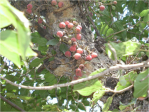
In 9:11 the fig did not want to give up its good fruit that was so sweet. Fig may be smug, but it was not wrong; none of the trees were. The natural importance of figs and the other etz make them ripe to be used in spiritual lessons. The fig is associated with religious works because of its debut in the Garden to hide the shame of sin from the eyes of God. Figs are mentioned several times in Numbers and Deuteronomy; the people use them for complaining and God uses them as part of the promise in the new land. Matthew has Jesus referring to them in the Sermon on the Mount and then using them twice in connection to the Sermons on Two Mounts. The last reference to figs is in Revelations when the sixth seal is broken, and they fall off of the tree because of fierce winds. My suggestion – STUDY. I saw and learned things in this study that I had not seen before.
Well, it is time to check my inner Sadducee, step over my Pharisee limitations, and quell my Zealot tendencies and rethink fig. The fig was good (tov) like everything God made in the Garden. It became the second tree (etz) that Adam and Eve tainted. They worked it into a covering to shield them from a righteous God. (Not the work they were made to do.) The Father made a sacrifice and gave them new “skins”. Many references with fig have a negative side, especially if you want to be grumpy, but the fig tree helped Zacchaeus to see Jesus. I will keep the thought of the fig and its tree representing works and remember there are religious works and works of righteousness.
Does Jotham’s parable have more than one layer? I am sure it does. Abimelech and the townspeople probably thought about it and asked questions for several years. Then reality and its truth grew thorns, stuck them, and blossomed into open hostility. Think about what groups or thoughts the four etz may represent.
These are some references that may help you study.
- Olives the oil honors gods and men; oil Strong’s Hebrew: 1880. דָּ֫שֶׁן (deshen) — fatness, ashes of fat, honor Strong’s Hebrew: 3513. כָּבַד (kabad or kabed) — to be heavy, weighty, or burdensome give up oil not fruit
- Figs good and sweet; sweetness Strong’s Hebrew: 4987. מֹ֫תֶק (motheq) — sweetness, good Strong’s Hebrew: 2896. טוֹב (towb) — beautiful, fruit Strong’s Hebrew: 8570. תְּנוּבָה (tenubah) — fruit, produce
- Grapes cheer gods and men; new wine Strong’s Hebrew: 8492. תִּירוֹשׁ (tirosh) — must, fresh or new wine, rejoice Strong’s Hebrew: 8055. שָׂמַח (samach) — rejoice, be glad
- Thorn – get low (humble yourself) and come under my shade Strong’s Hebrew: 6738. צֵל (tsel) — a shadow
Do not leave these out of your quiet time reading, they may be appealing.
Strong’s Hebrew: 5128. נ֫וּעַ (nua) — to quiver, wave, waver, tremble, totter
Strong’s Hebrew: 6086. עֵץ (ets) — tree, trees, wood
When I branched out from Judges 9:11 I found these and thought they were interesting.
Forbidden fruit – Wikipedia This one is wild and has many “different” ideas.
Judges is history. In the accounts are natural and supernatural deeds and lessons, some have been okayed for Sunday School and others would require too much explaining. Four Judges are mentioned by name in Hebrews 11 and not all of those are children’s stories. It is very easy to pick and pull at them, like Chapter 9, and miss the real hero in the Book – Father God. He had a plan and a purpose, but His people had other ideas. Take your focus off of the Judges and find what God did in them and through them to carry Israel. Father wanted a righteous relationship with them just as He wants one with us now.
 Mark's Bible Study
