Passover to Pentecost – Hezekiah’s Passover

Passover to Pentecost – Hezekiah’s Passover     Week 5 Day 3

A very large crowd of people assembled in Jerusalem to celebrate the Feast of Unleavened Bread in the second month. 2 Chronicles 30:13 (NIV)

     Hezekiah was reviving the worship of God in Israel.  The Temple was still there and so were the priest; they just were not being used according to God’s Word.  The priests were not ready to do their job at the first month Passover, which was to slaughter the lamb and sprinkle the blood.  Another reason was “all” of the people were not together.  This is why it was decided to use the second Passover date.  Hezekiah used this delay to invite the rest of Israel to join Judah in Jerusalem.

To put this story in the “big picture” of Passover we need to look at Chapter 29.  Hezekiah had just reopened the Temple, and the priest had to clean it out.  This started on the first day of the first month and was not finished until the sixteenth of the month; they had cleaned all the way through the “first Passover.”  This cleaning is the “removing of the yeast” that would have taken place normally before Passover.

It is recorded that members from five tribes joined Judah and Benjamin in Jerusalem.  There were aliens with them so the crowd may have been very large.  Hezekiah had to pray for these people because they had not “purified” themselves and was facing problems.  The pray acknowledged the goodness of God and prayed for mercy on those who were seeking God.  The “purification” may have been yeast or circumcision.  God heard the prayer and healed them.

God showed up and showed out as the people were so overwhelmed with His presence that they finished the first week and wanted to stay for a second week.  This led the people to destroy sacred stones, Asherah poles, high places, and altars that were in the country.
http://clipart.christiansunite.com

Passover to Pentecost – The Second Passover

Passover to Pentecost – The Second Passover    Week 5 Day 2

They are to celebrate it on the fourteenth day of the second month at twilight. Numbers 9: 11 (NIV)

Numbers 9 verse one through fourteen is about the second time Passover was celebrated.  But a family was denied the opportunity to partake in Passover because of a death in the family.  So Father God gave a second chance to celebrate and sacrifice the Lord’s Passover.  The rules are the same as the first month’s regulations and there is a warning about not taking part in the first one if you can.

This “second chance” idea is part of Israel’s history, and I will put some other stories in that may have happened at this time.

Passover to Pentecost – The Book of Ruth

Passover to Pentecost – The Book of Ruth    Week 5 Day 1

Tonight he will be winnowing barley on the threshing floor. Ruth 3: 2 (NIV)

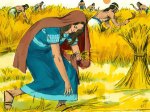
The verse puts much of the story of Ruth in the Counting of the Omer time period.  This story has “Exodus” qualities so let’s add to it and make this a Passover to Pentecost tale.  What if 1:11 was just before Passover; we could view Naomi saying good-bye to her daughter-in-law’s as removing the yeast from her home.  Since Ruth left with Naomi she is a “treasure from Egypt.”  Boaz making sure she had extra grain and food in chapter two can compare to the manna the Lord supplied Israel.  With a little creative counting we can put the birth of Obed the next year at the time of Passover.

Even without my embellishments this important story is a personal exodus tale for Naomi.  She returned to the Land of Milk and Honey and was blessed for it.  The rest of the world was blessed through Ruth as she became part of the “root of Jesse.”

The reading and studying of Ruth is a tradition for the Jewish people during this time of year.

http://www.freebibleimages.org

Passover to Pentecost – The Churches of Revelation

Passover to Pentecost – The Churches of Revelation       Week 4 Day 7

The seven stars are the angels of the seven churches, and the seven lampstands are the seven churches. Revelations 1:20 (NIV)

There have been volumes written on and about these seven churches.  In keeping with the idea that Jesus trained the disciples to pass on information to the next generation, they will allow us to see this in action.  I will view the “angels or messengers” as the pastor of that local body of believers.

Ephesus – This leader was a hard worker who had been through a lot; he had protected the sheep, and was still doing the work of the church.  This pastor had received high praise of his performance, but he was about to lose his church.  It seems that in all of his “doings” he was losing his love of Jesus.

Smyrna – This pastor has had a tough time on earth, but has stored up treasures in Heaven.  The forecast for the church is one of persecution and possibly death.

Pergamun – This pastor has personally had trying times and has kept his faith.  Yet his church has some serious problems.  There are two very serious attacks on the teachings of Jesus in this church, the teaching of Balaam and Nicolaitanism.  (Balaam is explained, the other seems to be an area of uncertainty.)  The pastor is given a choice, tend to these problems and the people behind them or Jesus would personally fight against them.

Thyatria – This pastor has been a real shepherd to his flock.  He (they) are doing the work of the kingdom.  He has served faithfully, but has allowed Jezebel into the church.  For some reason it feels like a case of “sloppy agape.”  There are things that should be “divided out” of the church.  Jezebel may have come in sounding “right” but prophet’s words need to be judged according to the Word of God.

Sardis – This pastor is in trouble.  He has known the truth, but has put things other than the gospel of Jesus first in the church.  There are church members who have not lost sight of Jesus and are okay.  The rest are in for trouble.

Philadelphia – This pastor and church are doing right and progressing well.  I think Revelations 3: 11 speaks to them: I am coming soon.  Hold on to what you have, so that no one will take your crown (NIV).

Laodicea – This pastor and church are opposites of Smyrna, they have a lot of possessions and are well-off.  Jesus still loves them and tells them to reconsider the fact that they think they are doing well, they need to repent!

The reason to study a subject is to learn/change your mind on the topic.  For me changing the focus from just the church to the pastor/leader of the church changed that material for me.  The leader is important and needs to guard the “gate.”  Some have said that the churches represent “church ages”, others the types of churches you will find in the body.  For sure they were seven physical churches that Jesus loved and wanted the best for them and the pastor.

Passover to Pentecost – Divisions

Passover to Pentecost – Divisions       Week 4 Day 6

For since there is jealousy and quarreling among you, are you not worldly? 1Corinthians 3: 3 (NIV)

This trend is one you wish was not there, but it is.  In Numbers 12 (possibly in the fifty days after the second Passover) Miriam and Aaron oppose Moses.  It spilled over from a family matter to a religious one and God put a stop to it.  It maybe that Miriam did not like Zipporah (or another wife), or that she was pushing the intent of Leviticus 21, priest marrying from priestly families.  It does not matter because it seems she wanted more say in the leadership of the camp.

Numbers 16 is the story of Korah, Dathan, and Abiram and their story of wanting more authority.  It is interesting that these people never thought of just leaving!   It makes you wonder what else they had their eyes on.

Being the leader is hard work, having people disagree with you is not fun, but how you handle the problem requires maturity.  The entire third chapter of 1 Corinthians is given to what could have blown into a doctrinal war.  It is interesting that it seems it was the “lay people” creating this division and not the leaders.   They wanted the leader they liked the best to be the most important.  Paul’s view of different levels of the building of the church could seem to infer that not everyone will always have the right answer.  So when he refers back to you looking to Jesus as the final answer and not causing church splits that is a bold, non-worldly idea.