Going to Pay the Bride’s Price-Palm Sunday

Palm Sunday has been labeled many things, but paying the bride’s price may be new to you. I have connected this ride with David’s return after running from Absolom, so seeing this as a king riding into his domain is easy to grasp. Zachariah 9: 9-13 is just one of the verses that foretell this ride. I would like to add this as another thing from Hebrew tradition that Jesus was fulfilling. Hebrew wedding traditions are sprinkled throughout the Bible but never listed, see The Ten Virgins post.

The Father picks the bride for His Son and the Bride’s Price is agreed upon. The Groom then goes to the home of His future wife and pays the price. This looked more like a parade than a busy deal and it was a very festive occasion. The Groom then leaves and returns to His Father and waits. The Groom’s Father decides when His Son returns and receives His Bride so the marriage feast may begin. (Does any of this sound familiar?)

While the Son/Groom is waiting to return for His wife He is busy. Future accommodations must be made ready. There are presents to be sent to the future Bride (Pentecost) and she must make herself beautiful and always be ready for the Groom’s return. Cleaning the house was important, like removing the yeast during Passover, Jesus cleaned the Temple and put an end to the unproductive fig tree.

Gold and jewels are mentioned as part of the adornment, sounds like Heaven to me. No one but the Father of the Groom knows when He is going to return to claim His wife. Before the return, a wedding feast must be prepared, and guests have to be invited.

To lend some stories and parables to back my thought up, I will use the Book of Matthew. Chapter 19 has Jesus leaving Galilee and going to the east bank of the Jordan River. There He is questioned about marriage and divorce. This was laying the groundwork for the disciples. Tuesday of Holy Week finds Jesus, first on the Temple Mount being challenged again about marriage and divorce by the leaders of Jerusalem. Chapter 22 is a parable about a wedding feast. As He is leaving to go to the second mount, the Mount of Olives, He prophesies about the Temple and its destruction. While on the Mount of Olives, He gives a second parable about marriage and being ready for the Groom’s return. Tuesday was a busy day for Jesus.

The price Jesus paid for His Bride was His righteous, sinless life and His shed blood. Only those two things would allow Jesus to walk into Hell on Saturday and claim the keys to unlock us from the legal hold of Satan over our lives. The “Second Adam” carried His blood to the heavenly Mercy Seat and sprinkled it to fulfill the demands of the Frist Covenant.

May the grace of Jesus, the love of the Father, and the fellowship of the Spirit be with you as you go into the fields and make disciples and bring glory to God. So, this Palm Sunday, think of the price Jesus paid to include you as the Bride for His marriage feast.

Bible 911 Zechariah

This installment of Bible 911 is from Zechariah and is a word of hope. It is part of the foretelling of Jesus’ Easter/Passover mission starting with His Palm Sunday ride into Jerusalem (verses 9-13). I will start with the focus verse and then fit it all into Easter. Have your Bibles handy as I will put down a lot of verses you may want to look up. I use the NIV, so that may help in your quest.

9:11

Blood of the covenant – If you search in a Bible app the best thing you will find in the Old Testament is Exodus 24:8. The setting is Mount Sinai and Moses is finally offering the sacrifice that Pharaoh would not let them, go do. Before the blood of this covenant was sprinkled on the people, Moses read to them the Book of the Covenant. I will go back in time from this offering and give other blood sacrifices and covenants that are types and precursors to this one and that look ahead to Jesus on the Cross.

God made a covenant with blood in Genesis 15:18 with Abram, which was binding to all of his unborn children. In this story, a burning torch and smoking firepot passed through the slain animals. This is very much like the Children passing through the Red Sea after killing the Passover lamb and on their way to Mount Sinai.

We need to travel back to Genesis 4 and the first spilling of blood by a man. Hebrews 12:4 brings up the blood of Able in connection with the new covenant and sprinkled blood. (Remember he had made a proper sacrifice to the Lord.)

We need to step further back and point out what must have been an animal sacrifice, even though the terms we are looking for are not present. Genesis 3:21 has hides of animals being used to cloth, Adam and Eve. I believe that these animals were sheep. (They are not identified.) If they were Adam and Eve were clothed in a lamb because of their sin. This may be the blood and sacrifice of the covenant. (We have hints of things going on “before the foundations of the world” (KJV) but that would be another post.)

New Testament verses for you to look up-Matthew 26:28 (Mark 14:24), 1 Corinthians 11:25, Hebrews 9:20, 10:29, 13:20. these are references to Jesus, blood, and the covenant which is the point of His death on the cross.

Waterless Pit – The other part of Zechariah 9:11 is the waterless pit or cistern (CJB). It has also been translated as a dungeon. I like cistern the best, it brings to mind where Joseph and Jeremiah were thrown when they were imprisoned. It was a common thing in Israel to dig holes and store water in them. They are in other stories in the Bible. we are set free of our pits when we accept and walk in the grace of Jesus. the love of the Father, and fellowship with the Spirit.  

Before going to the Easter connection, there is one more thing I found. This is not in Zechariah. It concerns salt and its connection to the covenant and sacrifice. This is my “think about” assignment for this post, why is salt referenced with these two things?

The King Rides In

There are many God-given types and shadows and metaphors in the Bible. It seems that their importance has been pointed out to me quite a bit lately. So, when I thought about Zechariah 9:9 and how this relates to our Easter/Passover stories it made me reflect on these gems throughout the Bible. God really is a God who likes to hide things so we can search them out. The triumphant ride into Jerusalem and all of the events of this week have been shadowed starting in Genesis and laid out for us in every book of the First Covenant.  

Zechariah 9:9 is one of several stories about kings returning to save and restore peace to the Daughter of Zion and Jerusalem.

  • 2 Samuel 19 has the account of David returning to Jerusalem after the defeat of Absalom. Even though the country was in chaos, I have to believe that there was still a parade that started on the Mount of Olives. This is the same path that Jesus followed as He left the Jordan River.
  • Revelations 7:9+10, 6:2, and 19:11 also tell of Jesus’ second return to Jerusalem to claim His Bride and how that time will look. It is an interesting “comparison and contrast” to Zechariah. He will be on a war horse, not a colt.
  • These two were leaders but not kings. Joshua followed a similar route after Israel crossed the Jordan. Elisha also traveled this path as he went back to Mount Carmel (possibly looking for Elijah). It is a retracing of Elijah’s trip to the Jordan River before he was taken by the fiery chariot.

Verse 10 reflects the promise in Exodus 24 about peace and the territory that would belong to Israel. This area was probably realized under David and Solomon. Ephraim and Jerusalem represent the North and South Kingdoms but also speak of the blessings given by Jacob in Genesis. Judah was made the family leader and Joseph got the firstborn son’s blessing.

Verse 12 tells the “prisoners of hope” that there is a double restoration coming. I have always seen Noah as the first prisoner of hope when he was in the ark.

Verse 13 makes reference to Greece as an enemy. To put this in some context, Zechariah was alive in the time of Darius (this could be the last book of the Old Testament written). He did attack Greece and lost. It could also speak of the time of the Maccabees. We could even extend that to Paul’s “conquering Greece” with the Gospel.  

I hope you have learned something new from my Bible 911 of Zechariah, remember the assignment on salt.

The Poles of the Ark and the Philistines

1 Samuel 4 through 6 tells the story of the Philistines capturing the Ark of the Covenant. For them to even put it on a cart they had to use the poles that were part of the Ark. In my other post, I explain why I think those poles represent the Holy Spirit. God allowing His Ark to be captured has always puzzled me and my study of the Poles really stirred a lot of questions. (Please read 1 Samuel 4-6 as I am not trying to tell the whole story.)

The first time the Ark was moved in this story. The army of Israel had been beaten by the Philistines. The elders decided to bring the Ark into the battle. Yes, Joshua marched it around Jericho, but God had told him to do it. I am not sure God liked being used as a good luck charm; it is bad luck to be superstitious. The idea may sound like a good one, but God had not told them to take His Ark into battle. Since Eli had sent Hophni and Phinehas with the Ark let us assume that Levities of the Kohath clan moved it on their shoulders and that the cover was over it.

Points to think about.

  1. This seems to be God’s plan to rid Israel of Eli and his sons.
  2. The High Priesthood changed hands that day because Eli’s grandsons were too young for service.
  3. Samuel was a prophet not a priest, he was not a son of Aaron. I have never found an adoption cause for being a Levitical priest.
  4. There were other Sons of Aaron who served. We see both families during David’s reign. As the number of men grew certain tasks were chosen by lot. Remember Zechariah, John’s father.
  5. Shiloh was still important, but the Ark did not return there.

The Ark was moved by the Philistines. Israel lost; the battle, two corrupt priests, and God. The Philistines had God and they were not going to give Him back; it took seven months and a lot of misery for them to change their minds. Two cities were hit hard by a plague and the third city did not want the Ark. See my post on rats for a possible tumor that may have cause agony.

From the battle field to Dagon’s temple and to other cities the Philistines probably used a cart, any cart. But someone still had to pick it up and take it off that cart. They had to use the Poles, that was the only part of the Ark that non-priest could touch and they were not Kohaths. (Hold this thought.)

What happened to the three layers of covers for the Ark when it was being moved? The covers are never mentioned. You would think that they were over it in Israel. Had some of the rules gone by the wayside? (It seems that Samuel slept close to the Ark. That should not have been allowed. David and his team did not know how to move it.) I cannot imagine the Philistines not wanting to take a look at the God they had captured. So, between no cover and touching the Poles, no wonder the Philistines started dying. If Israel had disrespected the Ark by not having it covered that may be another reason they lost the battle.

Numbers 4 tells of God’s concern for the Kohaths and what Aaron and sons had to do to protect them. We know that Uzzah disrespected the Ark by touching it when the ox stumbled-2 Samuel 6:6 and 1 Chronicles 13:9. So, why did God not “break out” against every Philistine that touched the Ark? How about one big teachable moment for two nations. I think this psalm says it well – Psalm 74:22 Arise, O God, plead thine own cause: remember how the foolish man reproacheth thee daily. (KJV) Plead could be replaced with defend, and reproacheth could be talks about. The Philistines still attacked Israel, but I am sure they wanted nothing to do with God or the Ark. Israel had to learn to take the promises of God with them into battle and not a good luck charm. Jesus, Peter, and Paul experienced God rising against those who disrespected God’s cause-the soldiers fell down, Ananias and Sapphira died, and Elymas was blinded for a time.

From the Philistines to Jerusalem – Chapter 5 was a bad time for the Philistines, by #6 they were thinking that the God of Israel was very powerful. Not wanting to accept that they constructed a test and a peace offering. I knew the “new cart” was a sign of respect, but it makes more sense if they had been moving it on any cart they had or carrying it by the Poles. The cows added a level beyond their natural world, those cows would not have been contented walking away from the calves. The leaders were happy and they could get back to making the Israelites miserable as long as they left their God out of it.

The sad story is that the Levities had to learn a hard lesson about respecting their God and the rules that applied to them and their life. Beth Shemesh was a Levite town, they should have known better than to look in the Ark of God. Why did they do it? Maybe they thought that the Philistines had gotten away with peeking, or Shiloh had farther-reaching fingers than we thought, (Eli had not taken care of business and things happened.) or they just had to check that nothing was taken. Seventy men died, that may have been the majority of men in that town.    

Kiriath Jearim was called, they were a town of priests. Even though priests are from the clan of Kohath, I am not sure they should carry the Ark. But if it was covered and the Poles were on their shoulders it had to be better than a cart.    

Towns with all Levities and all priest was part of the agreement with God for being chosen to serve the Tabernacle and the Ark. So, to extend that idea Eleazar was a priest and he now had Eli’s job. (Eleazar was a “priestly” name.) It seems the Ark stayed there a long time-twenty-plus years before Saul became king, all of Saul’s reign, and however long David let it stay in Kiriath Jearim/Baalah of Judah. (Just because-No, I do not think the Ark sat outside on a hill.)

Just because their story is not told, where did the Table and the Lampstand go? Were they left in Shiloh or moved away? David got bread from the Table at Nob, but there was no mention of the Ark in that story. You hope the articles of the Tent were united in Solomon’s Temple.

In 2 Samuel 6 David is on a mission to bring the Presence of God to him in Jerusalem. It seems that the knowledge of the proper way of moving the Ark was lost or ignored. Instead of using the Poles and having Levities carry the Ark, David copies the Philistines and puts them on a cart. Someone died. You have to know there were committee meetings and scroll searches but David finally got it right and he moved the Ark to Jerusalem. Again, there is no mention of the rest of the Tabernacle. It seems that David moved the sacrifices away from the Ark. (So many questions and few answers, sorry.)

My purpose was to explore why the Philistines could move the Ark. Another question soon appeared. What happened to Israel and the Ark?

Israel – These are just some musings.

  • Your thoughts and plans may not be God’s plans and desires. The elders had a “thought’ but they did not ask God or the High Priest.
  • The Book of Judges ended with a dark tale of doing what you think is right. This is an extension of that.
  • The Father holds His children to a higher standard than the Philistines. We should not act like them.
  • You can follow rules and not have your heart right with God. The Levities had forgotten the rules.
  • I believe there was a remnant, a “seven thousand” who still wanted God.

Philistines

  • God will use whom he needs to for His plan to work. Their “victory” did not mean they were right.
  • Their pride brought their downfall. Would you have given back the Ark after the second time Dagon fell?
  • They treated Jehovah as they did their idols. God did not strike them dead immediately, like Uzzah, but rats, plague, and panic came and did their jobs.
  • The Philistines touched the Poles (the Holy Spirit) and disrespected the Ark of the Covenant of God. He took His vengeance.

Wow. My study spread out into areas I did not expect. Israel proved herself from the beginning to the end of this tale. Then it took twenty years for Samuel to spark a renewal. The Philistines were being Philistines, they hated God’s children before, during, and after touching the Poles of the Ark, the Father gave them a chance and they did not take it.
The Ark – Mercy Seat

The Ark of the Covenant, which represents God, was made of three parts: the Mercy Seat, the Ark or Box, and the Poles. I have seen the Mercy Seat is a type of the Father, the Ark or Box being Jesus, and the Poles representing the Holy Spirit. These echo 2 Corinthians 13:14 – The grace of the Lord Jesus Christ, and the love of God, and the communion of the Holy Ghost, be with you all. Amen. (KJV)

Christians, our triune God is still a mystery. Yes, He has given us His Spirit and His Word but there are still things about Him we do not know. Isaiah 45:15 says that He is a God who hides Himself. Jesus gave us hope of knowing Him when He said, “if you have seen Me you have seen the Father”. I do wish that the writer of Hebrews 9:5 would have taken the time to explain the Mercy Seat. With all of that said I will share some things that are plain to see and some that we do not know about the Mercy Seat that I think represents the Father.

Moses got to see the real Ark and Tabernacle while he was in Heaven. The instructions he wrote for the Ark’s construction and purpose are in Exodus 25:10-23. The iconic Mercy Seat or Atonement Cover starts with verse 17. The sixth side of the Ark of the Testimony or Mercy Seat was two and a half cubits long by a cubit and a half wide. It sat within the crown that was made around the Box or Ark, which would have kept it from sliding off. It had two Cherubim as part of the top whose wings spread out over the Cover and those wings touched. God promised Moses that He would meet with him there. Not much or just enough information? The artwork through the ages has kept the basics but added embellishments to suit the artist and the times. As I said a mystery.

My Questions

  • How much gold was used for the base and the angels?
  • How thick was the base?
  • How tall and wide were the angels?
  • Were the wings horizontal or vertical to the base? (More on that idea later.)
  • How high were the wings off of the base?
  • How wide were the wings and how much did they touch?

This is where God would meet with Moses. What if, one set of wings were vertical and the other set were horizontal, they would form a seat or chair. Given the size of the lid and guessing with the angels, it would be a good size seating area with a low back.

Purpose

It is easy to get lost on what we don’t know, but the purpose of the Mercy Seat is a major topic.

1. Between the Cherubim and above the rest of the Ark is where God wanted to meet with Moses, His man of the hour.

2. Leviticus 16:2 shows another ceremony, that speaks about what did Jesus after His ascension into Heaven. This is where the Priest would sprinkle the blood on the Day of Atonement.

3. As the Cover for the Ark, it covered or hid the Tablets of the Law. They were the first things put inside the Ark and they were the only things that remained at the last mention of any contents. A pot of manna and Aaron’s rod were also put in there, but they seem to have disappeared. That is a mystery.

The Father “covered” these three items as they were “held” by Jesus. My original question of this study was-did they represent reminders of rebellion or did God show Himself as a giver of good things in the middle of our problems. Personally, I have not decided on that problem as I can see both in our great God.   

No, I have not covered all of the types and shadows of the Ark. I thought the Mercy Seat of the Ark would be the last post in this series, but I was given several other ideas.

The Cross

This study about the Cross started simply enough, I mean it is a central object in my faith, so of course I knew all about it. Types and shadows and many illustrations from sermons should qualify me as knowledgeable. Well, I was not as good as I thought. I will focus on the wooden implement and not the religious and doctrinal aspects of the cross.

This needs to be said. Jesus was betrayed and condemned by the religious leaders of His day (the Sanhedrin). The political rulers punished Jesus with a beating and allowed Him to be mocked. He was then sentenced to death by hanging on the cross (Rome did this to non-Romains). He had to carry His cross out of the city and be nailed to it and hung on it. He did this for me.

Old Testament Examples

  • Genesis 40:19 – Pharoah was going to kill his servant and hang him on a pole.
  • Joshua 8:29 – The king of Ai was put on a tree and left until the end of the day. He was removed because of Deuteronomy 21:23. A person hung on a tree was under a curse and had to be buried so as not to defile the land.
  • Ezra 6:11 – This is King Darius agreeing with King Cyrus about pulling a beam from the house of anyone that changes the decree to build the Temple of God and have them impaled on it.
  • Esther 5:14 – A hanging tree is a good rendering of gallows. I believe the seventy-five-foot height was more about making a statement than torturing or killing the man.

I have read that these hangings and impaling were for public display of the body after they had been killed and not for the actual killing as the Romains did to Jesus.

A Lot of Words

Atzei, etz, nace, bad, xylon, and stauros are Hebrew and Greek words that deal with wooden things in the Bible.

Genesis 22:6 is the wood (atzei) for the sacrifice being carried by Isaac to Mount Moriah. This word is related to etz, #H6086 in the Strong’s. Etz is a tree or wood and is first used for the trees in the Garden and is the main word for a tree or wood in the Scriptures. The picture of Isaac is a type of Jesus carrying the Cross to the place of sacrifice.

Exodus 15:25 is Hashem showing Moses a “piece of etz” to throw into a pool to make it drinkable. Yes, there are many legends about that etz, none of which can be confirmed in Scripture. I will agree it is a picture of Jesus. I have heard good sermons describing it as a type of the Cross, so I will leave this one up to you. Be a Berean and study this one out.

Exodus 25:14 is part of the instructions for building the Ark and the Tabernacle. The two poles that were part of the Ark and used to carry it are called staves (KJV) or poles. The word here is bad #H905 and it refers to a “branch of a tree”. Since they are part of the Ark, I do not think they represent the Cross, but the Holy Spirit.   

Numbers 21:9 definitely is a picture of Jesus on the Cross. This is the story of the brass serpent on a pole. The word nace #H5251 is frequently used for a military standard or banner, or a flag or sail. The idea of a standard really would be a picture of a crosspiece on the Cross.

In the New Testament, the word for cross is stauros. (Please see the websites listed below.) From historical sources, it is described as a pole with no crosspiece of any kind. Wow, that would mess up a lot of great sermons.

Yes, I started looking for early Christian art that depicted the Passion. There really is not that much early art that shows a cross (1st to 3rd century). The Restless Pilgrim post is graffiti that is mocking someone that worshipped Jesus, but it does show a human figure on a cross with a crosspiece and a footrest. The other picture was a royal seal of Emperor Constantine. He had a traditional Christian cross on it (It was in a movie about Rome) and it was made in the late 300’s before his death. I have also heard that when the early Christians “lifted holy hands” they were making themselves into the shape of the Cross.

Paul in Galatians

Galatians 3:13 restates Deuteronomy 21:23 which says if you are hung on a tree/pole (xylon) you are cursed. But in 6:14 he will only boast in the cross (stauros) of our Lord Jesus Christ. Like the Tree in the Garden, it carried a good and a bad message.

My thoughts-I believe the Romains took torture to a whole new level with their use of the cross. So, it does not really matter if Jesus’ hands were straight up or splayed out on a crosspiece, they made sure it was horrible. (I do think there was a crosspiece.)

Could a Greek word (stauros) have been “recycled” for a Romain device? Americans do it all the time. That would have allowed for the upright to stay in the ground and the condemned just to carry the crosspiece.

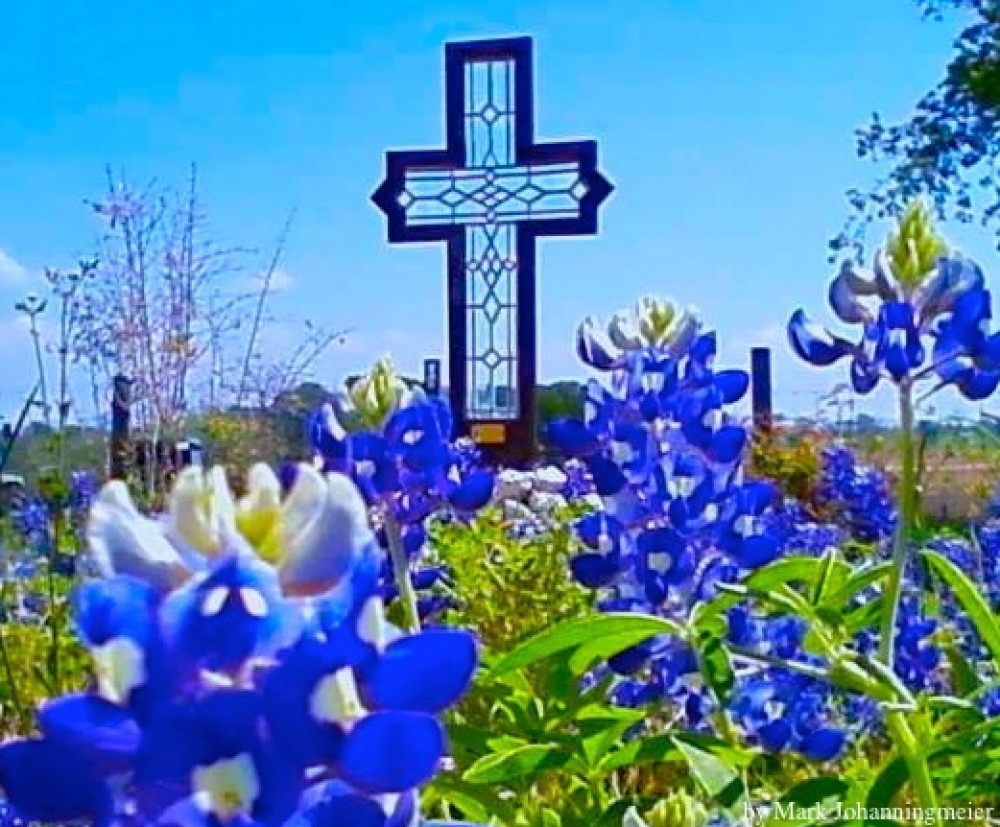
That Romain cross, like a tree, was planted in the ground and held Jesus between Heaven and Earth. He was nailed to that wood, and it became my Tree of Life. The Cross held the most important piece of fruit to ever hang from a tree; make sure you are found in Him.

What’s the earliest depiction of the crucifixion? – Restless Pilgrim

Stauros – Wikipedia

σταυρός | billmounce.com