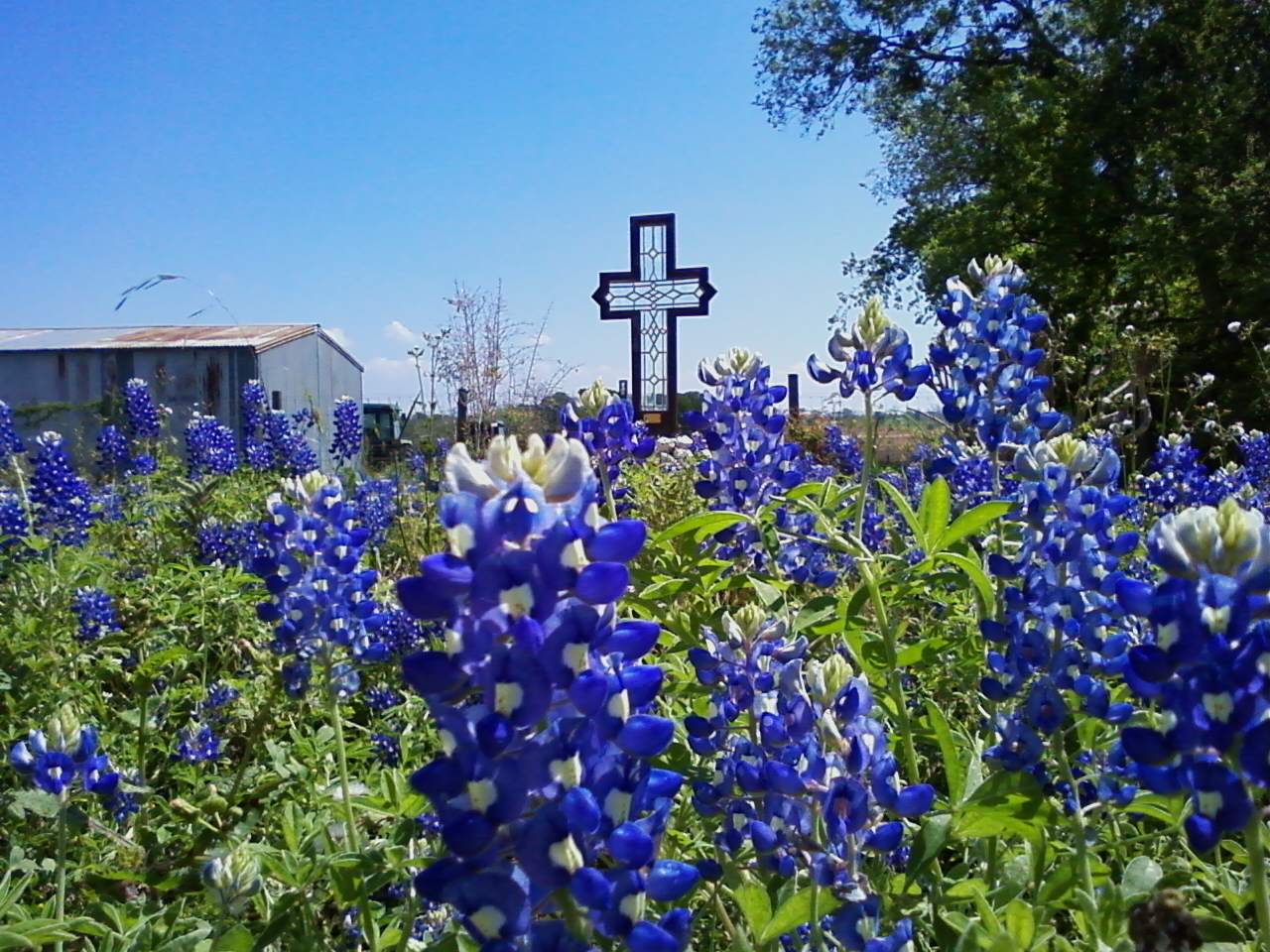
He Is Risen
Reply

Dear friends, let us love one another, for love comes from God. Everyone who loves has been born of God and knows God. This is a beautiful statement just as it is but if we do a search in the concordance and replace a few words it deepens the message of love just a bit.
Dear friends, let us actively love (agape) one another, for active love comes from the one true God (theos). Everyone who loves activity has been born of the one true God and knows the one true God.
On a side note John uses the word born more than any other New Testament writer.
Any look at the word love needs to go to John 21:15; this is where Jesus is asking Peter if he loves Him. The first two times Jesus ask about Peter’s love he uses the word agape and Peter answers with the word phileo. Phileo means affection or very high regard and though it is related to agape it does not have as deep a meaning.
After writing about Attacks, Test, Storms and then revisiting Test and Storms I realized that I was not finished and that the attacks and storms part seemed lop-sided. I guess when you are in them it seems one-sided and that you are always the one getting beat-up and there is little you can do about it.
We know that is not true but we still need to be reminded of the fact that part of the Christian life is battling against the works and deeds of Satan. Three verses that help me are:
1. 1 Samuel 30:6 But David found strength in the Lord his God. (NIV)
2. Proverbs 21:30 + 31 The horse is made ready for the day of battle but victory rests with the Lord (see Lord). (NIV)
3. Psalms 144:1 Blessed be the Lord my strength, which teacheth my hands to war, and my fingers to fight. (KJV)
To just read one of David’s psalms is good but I like to put them into his story; read them in the context where they may have been written. (see The Writer) I put Psalm 144 somewhere in 1 Samuel 21 & 22. This is a very trying time for David (he is running from Saul, did not kill Doeg the Edomite, and is worried by the King of Gath) but he reminds himself and God that he has been trained to do battle. He sees a big picture, which is hard when you are attacked, that God is his fortress and asks for help from God in verse 5 – 7. (see Storms Revisited)
The King James reads differently than the New International Version in that the words are war and fight and not war and battle. Using my Strong’s Concordance I looked up these words. War/battle is used over “three hundred times in the Old Testament, indicating how large a part military life was to an Israelite.” And the word fight (used 149x) comes from a primary root word that means to feed or consume and the implication is to battle or destroy. There is a separation of the idea between battle, a single encounter, and war, a series of encounters. You can draw some interesting parallels from hands being matched to war/battle and fingers with fighting. The hand is the larger/stronger part and yet the fingers are part of the hand.
Wars/battles can include storms, trials, and attacks and go on for a long time where battles are those single attacks or pesky trials that hit quick and are over.
But I have to remind myself (the three verses), we are to be attacking, trying, and storming the enemy’s work also. God trains us for war, gives us tools and resources to confront evil and its work, and will even fight with/for us if the battle gets too big.
I once heard someone say that David was a yo-yo when he wrote Psalms because one psalm he was up and one psalm he was down. I was just starting to write and I recognized how silly that statement was because David did not write them all at one time and that he was writing these as a response to the times he was living in and what he was experiencing. To read David’s psalms are to read his struggles and victories of his life, his cries for help and his shouts of praise. Songwriters don’t always write just happy songs or just sad ones. And if you study psalms many of them may have been written for specific reasons (scholars have classified them as to content).
A study of psalms would be incomplete without a reading of Samuel, Kings and Chronicles. So I started to place the Psalms in 1 & 2 Samuel and 1 Chronicles (see Joined) where I thought they might have been written. Some of the psalms give you clues in the titles; some translations and Bibles don’t always include those. For the other ones I tried to place myself in the moment or look for other clues. I know the Chronological Bible does something similar but I have never really looked at their placement because I wanted this to be from a writer’s point of view not a timeline one.
I am sure that if you look at the list you may put some in a different location. That is fine as these are just my guesses as to where I would have written them. But I would challenge you to check mine out and then do your own list; the only rule to guide this would be that you must have a reason for its placement.
I am not finished with this yet because some are hard to place but by the end of the year I may have another list to post. You will need to click on the link that is part of WordPress.com as it is saved in there as a media file. My original copy is a word document and should be put into a table or in EXCEL but that will be a while in coming.
Have fun and I want to hear your feedback as you place the Psalms where you think they should go!
Click here to see my list. psalm position
In my Bible study for 2012 (see Bible Study) I said I was going to join 2 Samuel and 1 Chronicles. Well here is part of that work. The letters and numbers in italics are from Chronicles. In my document they are in blue and italics. I am not really finished, as I want to place the psalms that David wrote in this document (well where I think they go). I used the New International Version, the reference is at the end of the page. This entire document is about 70 pages long, I have also done Kings and Chronicles but in another translation. In that one I included some work from the prophets.
The best explanation I have for the books being so similar is that they were both taken from another document, like the book of Jasher. Some scholars credit these books as having been written by Ezra and Baruch, Jeremiah’s scribe.
1 Again the anger of the LORD burned against Israel, 1 Satan rose up and he incited David against them, saying, “Go and take a census of Israel and Judah.”
2 2 So David the king said to Joab and the army commanders of the troops with him, “Go throughout the tribes of Israel from Dan to Beersheba and enroll the fighting men, Then report back to me so that I may know how many there are.”
3 3 But Joab replied to the king, “May the LORD your God multiply the troops a hundred times over are they not all my lord’s subjects, and may the eyes of my lord the king see it. But why does my lord the king want to do such a thing?” Why should he bring guilt on Israel?”
4 The king’s word, however, overruled Joab and the army commanders; so they (Joab) left the presence of the king and went throughout Israel to enroll the fighting men of Israel and then came back to Jerusalem.
5 4After crossing the Jordan, they camped near Aroer, south of the town in the gorge, and then went through Gad and on to Jazer. 6 They went to Gilead and the region of Tahtim Hodshi, and on to Dan Jaan and around toward Sidon. 7 Then they went toward the fortress of Tyre and all the towns of the Hivites and Canaanites. Finally, they went on to Beersheba in the Negev of Judah.
8 After they had gone through the entire land, they came back to Jerusalem at the end of nine months and twenty days.
9 5Joab reported the number of the fighting men to David the king: In all Israel there were eight hundred thousand(one million one hundred thousand) able-bodied men who could handle a sword, and in Judah five hundred thousand(including four hundred and seventy thousand).
6 But Joab did not include Levi and Benjamin in the numbering, because the king’s command was repulsive to him. 7 This command was also evil in the sight of God; so he punished Israel.
10 8David was conscience-stricken after he had counted the fighting men, and he said to the LORD, “I have sinned greatly in what I have done. Now, LORD, I beg you, take away the guilt of your servant. I have done a very foolish thing.”
11 9Before David got up the next morning, the word of the LORD had come to Gad the prophet, David’s seer:12 10 “Go and tell David, ‘This is what the LORD says: I am giving you three options. Choose one of them for me to carry out against you.’
13 11 So Gad went to David and said to him, “This is what the LORD says: ‘Take your choice: 12Shall there come on you three years of famine in your land? Or three months of fleeing from (being swept away) before your enemies while they pursue you with their swords overtaking you? Or three days of plague (the sword of the LORD) in your land with the angel of the LORD ravaging every part of Israel? Now then, think it over and decide how I should answer the one who sent me.”
14 13David said to Gad, “I am in deep distress. Let us(me) fall into the hands of the LORD, for his mercy is very great; but do not let me fall into human hands.”
15 14So the LORD sent a plague on Israel from that morning until the end of the time designated, and seventy thousand men of the people of Israel fell dead from Dan to Beersheba died.
16 15 And When the angel God sent stretched out his hand to destroy Jerusalem, but as the angel was doing so, the LORD saw it and relented concerning the disaster and said to the angel who was afflicting (destroying) the people, “Enough! Withdraw your hand.” The angel of the LORD was then standing at the threshing floor of Araunah the Jebusite.
17 16When David looked up and saw the angel of the LORD who was standing between heaven and earth, striking down the people with a drawn sword in his hand extended over Jerusalem. Then David and the elders, clothed in sackcloth, fell facedown, 17said to the LORD God, “Was it not I who ordered the fighting men to be counted? I have sinned; I, the shepherd, have done wrong. These are but sheep. What have they done? LORD my God, let your hand fall on me and my family, but do not let this plague remain on your people.”
If you would like a copy you will have to ask because it is about a 70 pages word document, it will have to be emailed.
New International Version (NIV) Copyright © 1973, 1978, 1984, 2011 by Biblica

