
Passover to Pentecost to Persecution – Ananias

Ananias – Jah has favored or covered.  I like to start studies by looking up the meanings of names of people and places.  Sometimes the name reflects what is happening in the story, this time it seems like a split decision on how well these three men fit the name.  Ananias is a variant of several Old Testament names.

Ananias the Liar Acts 5:1

Ananias and his wife Sapphira are only remembered for their creed and lying to the Holy Spirit.  The value of this passage is not that they dropped dead, but that attempting to deceive the Spirit will not get you where you want to go!  In the context of its position in the book, you have to wonder why it happened. Certainly, people have and are doing acts similar or worse today.

It is very easy for me to believe that Ananias was attempting to become a leader in the church.  It is easy to imagine that a lot of resources were starting to be available to the church as it grew in numbers.  Luke sandwiches this story with Barnabas (4:37), mighty miracles, a showdown with the religious government, and then talks about a new level of leaders that would control a great number of resources (6:1).

There are similarities between Ananias and Simon, the witch, in 8:9 – 25.  Simon was a threat to the work in Samaria because he saw the Baptism in the Spirit as a money maker.  If Simon could wield this gift people may be favorable to his needs and wants because once again, he would be someone of importance.

The mystery here is the final outcome is not mentioned with Simon as it was with Ananias.  Grace has to let me think Simon turned out okay!  Unlike Ananias, Luke mentions that he believed and was baptized (8:13), was astonished by real miracles, and asked for forgiveness (24).  I want to think Simon saw his mistake and was not willing to mock the Spirit once his error was pointed out to him.  It sounds like the Gospel at work to me.

Ananias of Damascus – Acts – Chapter 9 and 22:12

This man may be the most underrated person in the Bible.  Yes, I have heard sermons about him but this study opened my eyes to his great qualities!  In 9:12 Jesus sent him because He knew he would go.  Ananias had to overcome come his fears to lay hands on Saul/Paul.  It is reasonable to believe that he was also Paul’s first tutor and mentor in the Way.  Ananias was important enough that Paul shared this story with Luke.  In 22:12 Paul again talks about Ananias and praises him for his faith in Jesus and his faithfulness to the traditions he had grown up with.  This is the second time that Luke mentions him because Paul was bragging on him to a hostile crowd. This is what we know; now let us think of some possibilities.
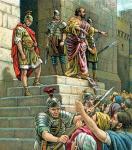
Ananias may have gone to Damascus because of the persecution after Stephen’s death.  But it is possible that he just lived there. Damascus is close to Galilee, so it is possible that he heard Jesus speak around the lake.  It is also possible that he was among the 3000 on the day of Pentecost.  He may have been a leader of the Way in Damascus.  At the very least people knew him and trusted him (Paul would have only been accepted because of someone like him).

Ananias the High Priest – Acts Chapter 23 – 26

As honorable as Ananias of Damascus was this one is not!  As a member of the High Priest family, it is very probable that he was present for the death of Jesus, Pentecost, the trials of the Apostles, and the stoning of Stephen and the persecution of the Way!  Control is the issue I see as the problem the Sadducees had with Jesus and His followers.  They had a good moneymaker in the Temple, and they did not want anyone to disturb their income.

Among his questionable acts: ordering Paul struck, and agreeing to the killing of Paul (at least twice). He played loose and fast with the rules and it is probable that he could justify everything he did under some rule in the Law.

http://clipart.christiansunite.com/Bible_Characters_Clipart/Paul_the_Apostle_Clipart/index2.shtml
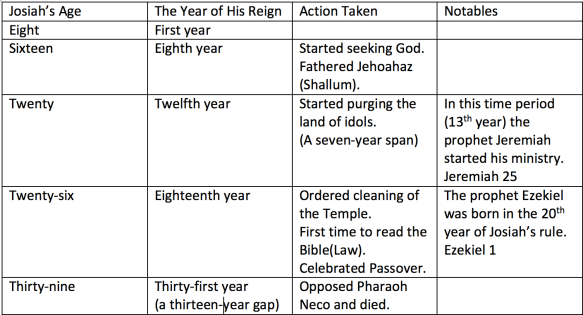
Josiah’s Prophets

The fruit of a righteous king was prophets and young people who stood for God at a time when not standing for Him would have been comfortable.  Female, male, young, old, with hateful countrymen, or with pagan kings these voices for God carried a common theme and spoke of things in the future.  They stayed true and spoke when it was not easy.

  • Huldah is the wife of the wardrobe keeper (Temple garments for the priest). That would make them both Levites.  She was sought out after Josiah was read the Law and he realized just how much his father and grandfather had sinned.  Her word in 2 Chronicles 34: 22 – 28 is good for Josiah, but God has no intention of letting up on Judah.  She tells of the destruction to come, the theme found in all of these prophets of God.
  • Jeremiah to me is special. He endured four evil kings, his own family doing him harm, the people rejecting his words from God, seeing the prophesies fulfilled, and finally to die in Egypt where he did not want to be.  As a young man, God gave him a huge task, to test His people (6: 27 – 30).  Parts of Jeremiah are out of order, but I would think that his work during Josiah’s reign is from chapter 1 to 9/10.
  • Zephaniah – Chapter 1:1 clearly states the time of his ministry; 3:18 may indicate that he was serving before and during the eighteenth year of Josiah (it refers to “sorrows for the feast”). He may have influenced both Jeremiah and Ezekiel, but the Lord definitely spoke the same words through him that He spoke through Jeremiah and Ezekiel.
  • Ezekiel is best known for the visions he received about the new Temple and the new Jerusalem. Chapter 1:1 gives his age and verse two timestamps him starting his ministry in Jehoiachin’s fifth year of exile.  His location is north of the city of Babylon by the Kebar River/Canal.
  • Daniel started his role of prophet in Babylon during the reign of Jehoiakim, but he would have been influenced by Josiah and the feast during the thirteen years the Passover was observed. Being a royal he may have also known Jeremiah and had that influence as well. It could be possible that he met Ezekiel, but it is doubtful. Daniel’s locations are south of the one for Ezekiel.  Babylon, Susa, Ulai Canal, and the Tigris River are some of the locations mentioned in the Book of Daniel; it is noteworthy that two of his visions came when he was beside a river.  This custom survived into Paul’s time as seen in Acts 16: 13 when he found Lydia in Philippi.
  • Uriah (Jeremiah 26: 20 – 23) Actually, he is mentioned with King Jehoiakim but let’s put the start of his ministry during the time of Josiah. (The reasoning here is time, Jehoiakim was king for eleven years, so he should have been older than that!) He prophesied against Jerusalem and was hunted down and killed by Jehoiakim. This passage does give a look at Jehoiakim and some of his poor conduct.
  • There are several false prophets listed in Jeremiah, but like Uriah, we don’t know when they started. They are mentioned in the time period of Zedekiah. Both Jeremiah, Ezekiel, and Zephaniah have sections about false prophets: Jeremiah 23: 33, Ezekiel 13, Zephaniah 3: 4.

The Chronological Bible puts Habakkuk during Josiah’s reign.  That is as good as any place but he could have been with Isaiah and Micah.

Josiah By His Numbers

I like 2 Chronicles 34 + 35 for Josiah’s life story, 2 Kings 22 is the other reference about his life.  They are basically the same but they were written for different audiences.

I have done several posts about numbers, so I will refer to them.  The numbers do highlight the prophetic nature of Josiah’s life.

Josiah’s Children

Josiah’s heirs are the last kings of Israel before the Exile. They are integral parts of the story that lead to the judgment of Jerusalem and then its rebuilding. They are mentioned in several books including 2 Kings, 1 + 2 Chronicles, Jeremiah, and time stamps put them in Daniel, Esther, and Ezekiel. There is an interesting 3 months/11-year cycle that is mentioned (twice) with these men concerning their times as rulers.

Johanan/Jehoahaz – When Josiah died the people made Jehoahaz king. He lasted three months when Pharaoh Neco came in and took him to Egypt where he died. 1 Chronicles 3:15 states he was Josiah’s firstborn. 

Eliakim/ Jehoiakim – Pharaoh was in charge of Israel, again! In reality, Israel was once again “slaves” of Egypt.  Neco showed his power by removing the king of “the people” and putting in one of his choosing.  In another show of power, Neco changes the king’s name. Eliakim (God establishes) was changed to Jehoiakim (Yahweh lifts up or establishes). He rules 11 years.

Jehoiachin/Shallum – Jehoiachin means “Yahweh supports” and it shows.  His rule started when he was eighteen and it lasted three months.  He was taken to Babylon and stayed in prison until he was fifty-five years old. This fulfills Jeremiah 22:11. The reason he is so important, he is the grandfather of Zerubbabel. Kings and Chronicles don’t give much about him, so read Jeremiah 22:24 – 30.  Then temper this with Haggai 2:23.

A signet ring lost and then restored.  Jeremiah 23 then talks about The Branch and this theme is repeated in Zechariah 3:8 (which is in the time frame of Haggai).  Jeremiah 24 completes the Lord’s thoughts about him and the other exiles.  If you only read Jeremiah 22 it is easy to get the impression that God “hates” Jehoiachin; actually, God did him a favor by bringing them out of Jerusalem. 

Zedekiah/Mattaniah  – Jeremiah tells Zedekiah’s story, he is mention frequently starting in the 21st chapter until the end of the book. (be careful there are other Zedekiah’s mentioned) He is the embodiment of the spiritual attitude of Judah at that time; at times he is seeking God, sometimes protecting Jeremiah, and then ready to give him to up to be abused.

His reign as king mirrors his spiritual life.  He accepts Babylon, he rejects Babylon and tries to come under Egypt; he just makes bad decisions.  So, he lasted eleven years and came to a bad end.  He had to watch his family die, and then his eyes were blinded.

Shallum | The amazing name Shallum: meaning and etymology

The family stories/trees are in 2 Kings; 2 Chronicles 36; 1 Chronicles 3:15-16; Jeremiah 22:11-30, 24:1-10, 25:1-3, 52:1-11 and 31-34; and Matthew 1:11-12.  

2 Kings 23 – 25

  1. Jehoahaz 23 yrs. old, ruled 3 months the people put him as ruler went to Egypt and did not return;
  2. Jehoiakim/Eliakim 25 yrs old, ruled 11 yrs;
  3. Jehoiachin son of Jehoiakim 18 yrs old, ruled three months, went to Babylon with his mother, lived out his life there (Jer. 52, 2 Kgs. 25:27);
  4. Mattaniah/Zedekiah he was Jehoiachin uncle (Josiah’s son) he was 21 yrs old and ruled 11 years. Do the math he was 9/10 yrs old when Josiah died or Jehoiakim was 4 when he birthed him.

2 Chronicles 36 These are changes from 2 Kings

  1. Jehoahaz/Joahaz;
  2. Jehoiakim;
  3. Jehoiachin – NIV footnote, some manuscripts have eight yrs old;
  4. Zedekiah – NIV footnote Hebrew may indicate brother.

1 Chronicles 3:15-16

1599 Geneva Bible – 15 And of the sons of Josiah, the [a]eldest was [b]Johanan, the second Jehoiakim, the third Zedekiah, and the fourth Shallum.

16 And the sons of Jehoiakim were Jeconiah his son, and Zedekiah his son.

  1. 1 Chronicles 3:15 So called because he was preferred to the dignity royal before his brother Jehoiakim which was the elder.
  2. 1 Chronicles 3:15 Or, Jehoahaz, 2 Kings 23:30.


NIV 1 Chronicles 3:16 Hebrew Jeconiah, a variant of Jehoiachin; also in verse 17

These are from BibleGateway, which is a big help.

Baruch, Jeremiah’s scribe, is the traditional writer/compiler/editor of the Books of Kings. Ezra the priest/scribe is noted for the same thing with the Books of Chronicles. They did not make it easy for our western minds and sense of order. I have heard rigid rules about the oldest male child/first-born, and who gets listed first in a family tree. Yet there are examples where those things are changed. Josiah’s heirs (children) seem to be an example of not fitting into “the norm”.

Jeremiah 21:1 – 22:9 Is against Zedekiah.

Jeremiah 22:10-30 – Verse 10 seems to be an introduction and 11 is about Shallum who will never return or see Jerusalem again; if this is Jehoiachin he was “just” exiled. Is 11-17 an introduction to Jehoiakim in verse 18, he had 11 years to build his palace? (Cedar probably came from Lebanon. David and Solomon had a “Palace of Lebanon” cedar.) Verse 24 talks about Jehoiachin who went to Babylon with his mother and never came back, but his heirs became governors in Judah. Mary’s line is through Nathan another son of Bathsheba, fulfilling the promise to David. The text goes to the prophecy about Jesus, the righteous Branch, Jeremiah 23.

Jeremiah 24:1-10 – Jehoiachin (he ruled three months) and the exiles are the good basket of figs and Zedekiah and those in Jerusalem are the bad figs.

Jeremiah 25:1-3 is a timestamp with Jehoiakim as a reference point for twenty-three years. Remember he ruled 11 years.

Jeremiah 52:1-11 Zedekiah died in Babylon at 31 years of age; he ruled 11 years.

Jeremiah 52:31-34 Jehoiachin is released from prison and lives a “good” life under Evil-Merodach.

Matthew 1:11-12 11 And Josias begat Jechonias and his brethren, about the time they were carried away to Babylon:

12 And after they were brought to Babylon, Jechonias begat Salathiel (KJV). Jechonias is Jehoiachin.

Age order seems to be: Eliakim/ Jehoiakim, Johanan/Jehoahaz, Jehoiachin/Shallum, Zedekiah/Mattaniah 

In my opinion the order of importance is the reverse of 1 Chronicles 3: Jehoiachin/Shallum, Zedekiah/Mattaniah, Eliakim/ Jehoiakim, Johanan/Jehoahaz 

Answer to RZ

Thanks for the question. If you reread the post, you will see I changed it. (So, to the other readers RZ statement may be strange, but it was a great question.) I did account for all four names and in doing so I realized I goofed. In Jeremiah I saw a footnote (NIV) and they identified Jehoahaz and Shallum as being the same person. That should be challenged, it makes more sense that the prophecy refers to Jehoiachin who goes on to produce offspring to continue the royal line of Solomon. Jeremiah 52 talks about his release. 1 Chronicles 3:16 (NIV) has the term successors. Another note that is hard for me at times is the Hebrew word for male family member, it can be translated brother or uncle.

Thanks for the catch and I hope I fixed it.

Mark    

Josiah’s Generation

King Josiah was the last righteous king of Judah before the fall of Jerusalem.  He was an important historical figure because of his devotion to God, and I think he sets several examples for this generation that we better pay attention too.  A look at the kings (his father and grandfathers) that came before him will be a good introduction to him.  The second post will be his heirs and the major ministry he fostered as the king.

HezekiahHezekiah was a great king who is associated with the prophet Isaiah.  He saw and did many great things: rid the country of idols, cleansed the Temple, celebrated Passover, was saved from a dangerous enemy, and was healed of a serious disease.  2 Chronicles 32: 31 records that these great things were used to test his heart; he did not do well!  At age forty-two he had a son, Manasseh, who became king at the age of twelve.

Manasseh – Manasseh was the worst!  After thinking about his “sins” they must have included the wholesale sacrificing of infants.  2 Kings 24 states that the “Lord was not willing to forgive” his transgressions.  (2 Kings and 2 Chronicles have slightly different stories; they were written by different people for different audiences, but probably from the same written records.).

2 Chronicles 33:12 has the story of extreme distress on the part of Manasseh and how he sought God for forgiveness and restoration.  God did restore him to Jerusalem and his kingship.  I see this as a testament to God’s faithfulness and mercy (to David).  It might be easy to blur lines and concepts here on how God deals with things, but I see a God who is treating a person with a level of kindness while still not accepting the evil done in his life.

Even with Manasseh forsaking God and leading the people into sin, he had learned and remembered the example of his father, Hezekiah.  It is a shame that it took a physical hook in the nose to get his attention.

Amon – This guy did not get the “memo” at all!  It is probable that Amon saw the events of his father’s captivity and restoration and just ignored the lesson.  Amon was twenty-two when he started ruling; he was born to Manasseh when he was forty-five years old so you would think he would have learned something.

There was a disturbing shift here that is seen with the rest of the kings before the fall of Jerusalem.  The kings started ruling early in life and had children very young.  Amon fathered Josiah at sixteen.  Yes, I know the factors were different then but still these children were “growing up” very early.

It is possible that Josiah knew the “reformed Manasseh” and possibly learned the lesson that Amon choose to ignore.