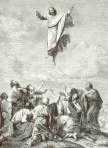
Restorations With The Resurrection

The Resurrection was a powerful time when Jesus announced to all Creation that He had taken back what was rightfully His.  As I said in Post #4 those contacts were not accidents and in this post, I will focus on the restorations that occurred in the first glorious hours and then during the rest of the time leading to Pentecost.  Jesus as the Master Healer knew what His followers had just been through, some of them had faired better in their testing than others so Jesus very carefully touched those lives at the point of need.  And that is the first important point, Jesus went to His followers and healed hurts from a traumatic event.  He did not go to the masses of people who had ushered Him into town on a donkey or the ones who marveled at His teaching in the Temple or even to Simon the Leper His dinner host.  He went to specific people in a specific order to manifest the needs in their lives for healing.  After reading and rereading the chapters on the Resurrection I realized that not only did He mean to heal them but that they represented future believers and the needs we would have.

Mary Magdalene

Mary Magdalene is the stunned believer whose paradigm of the world is shattered and is now going on natural instinct and feelings.  She was doing her best and was determined to take care of a body that had risen and no longer needed her help.  In fact, she did not even recognize Jesus at first.  But Jesus called her BY NAME to revive her flame and have her go to others to awaken them from their hurts.

John (the beloved)

John’s tender heart and love for Jesus was crushed as he accepted the responsibility for Mary, Jesus’ mother, and watched his hope die during the darkness of the cross.  He had stopped believing, the words of the women seemed nonsense but he ran to the tomb hoping with each step for a miracle.  The silent emptiness of a tomb was that miracle, it was what he needed to believe but his timidity required someone else to lead the way into his healing.

Peter

Peter, the (little) rock, the professor of the divinity of Jesus, the one who followed Jesus to trial and faced his own trial and failed as he denied his relationship with Him.  He had chosen to separate himself from Jesus, but he knew his lie was a lie and he was desperate to find Jesus again.  He ran at the hope of finding Jesus but was left wondering by an empty grave.  Even though Luke and Paul both mention that Jesus met with Peter alone it is not recorded what was said or what happened (Luke 24:34 and 1 Corinthians 15:5). This is as it should be because some things are not to be made public.  But Peter’s fall was so great that it took ridicule from the disciples (implied in Luke) and three more meetings before Peter could answer Jesus’ three questions and accept his calling again to “tend the sheep.”

Cleopus

Cleopus and the other unnamed disciple who identified as part of the group and had associated with them during the hours of the darkest crisis were now going the wrong way.  (Emmaus is the wrong direction from Galilee.)  He was not up to take Judas’ position or one of the “Seven Deacons” but he was around to tell Luke about his story when Luke was doing his research.  This story even made the add-on text at the end of Mark.  Possibly his wife (Mary wife of Clopas) was at the tomb (John 19:25) with the other women.  I guess my point is Jesus took the time to personally talk to him and give him the academic explanation to cure his slow heart.

The Ten

Hiding in a locked room celebrating a Jewish feast we find the handpicked instruments that Jesus was to use to change the world.  I can count but Thomas was not there the first night that Jesus appeared and Judas, if he were alive, would not have been welcomed.  How many were actually there? It could have been twelve or it could have been 120 we do not know.  So I am going to handle this set of people differently.

This group of Eleven had run from Jesus, just three nights before, leaving Him with an angry mob.  Their plans of kingdoms and positions of authority had changed with a Roman cross.  Fear had kept all but two from going to the tomb when their trusted sisters were proclaiming a risen Jesus.  Mary Magdalene and Peter were ignored when they claimed personal visitation.  Still, Jesus’ first words to them were “Peace be with you.”  His fallen leaders needed peace and a good rebuke for their lack of faith so that is what they got but they also were given the assurance that He was alive and not a ghost.  They touched Jesus and ate with Him.  More importantly, He breathed on them the Holy Spirit and a way to have peace – to forgive sins of those that had just offended them.

The other group is the faithful men and women who had walked with and taken care of Jesus.  Maybe some were from the seventy-two He had sent out!  But now it was a whole group of people that had confused frightened leaders and were leaning to old religious customs and not on Jesus.  He had come to give the whole group PEACE.

Thomas

Thomas the future apostle to India was not at Jesus’ first visitation.  He, in true form of the other disciples, refused to believe words that sounded like nonsense.  I hope he was with his family for the beginning of the Feast of Unleavened Bread but the fact is that he had left the group during a time when you might have expected everyone to be together.  So Jesus shows Himself again (during the meal to end the Feast) proclaims “Peace” and sets about to restore a prodigal son and chosen leader.  It must be noted here that they still have not left for Galilee.

The Seven in the Boat

John in his Gospel points out that this was the third time that Jesus had shown Himself to His disciples.  The good news is that at least they were in Galilee.  The seven were Simon Peter, Thomas, Nathanael from Cana, James, John, and two other disciples.  For editorial sake only let us name the “other two” as Joseph and Matthias the men who were selected to take Judas’ place.  Some literature suggests that Peter was not just fishing that day but he was going to make it his profession again.  Not only is the cast of characters important but so is the fact they caught nothing.

It seems that the only one who really recognized Jesus was John.  Peter had not and the others were afraid to ask who He was when they reached the shore.  He met their physical needs by having breakfast ready for them and even though the three questions were addressed to Peter, I will guess all of them were trying to answer those questions.  Jesus will give additional support when it is needed and apparently these guys had to have more quality time with the Lord.

The 500

Paul in 1 Corinthians 15: 6 is the only writer to mention this meeting.  Matthew may refer to it in his gospel but there were probably many unrecorded meetings.  Who could these five hundred have been?  How many had been part of the seventy-two missionaries Jesus had sent out?  Had they been part of the 9000 men who had been fed on those two special days?  Had they followed Him through Nain when He raised the dead son?  This list could go on for a while but several Gospels make the point that people still doubted when they saw Jesus during these forty days of the Resurrection.  Even in this doubt Jesus met with them, fed them, and taught on His Kingdom.

How many of these people joined the Apostles in the Upper Room for prayer and so were counted in the 120 on the day of Pentecost no one records that.  Were the other 380 in the crowd when Peter preached the first post-Jesus sermon?  We do know that people professed to have been there because Paul says most of them were still alive when he wrote to the Corinthians.  So His presence must have healed the doubt and strengthened their lives.

James

This should be His half-brother James, the author of the epistle and the head of the Jerusalem Church.  Jesus knew he had a job to do but the only mention of Jesus’ brothers was of them mocking Him about Passover or being with Mary trying to retrieve her “crazy” son.  Imagine having Jesus as an older brother!  What must the family thought when He turned water into wine and started having crowds of people following after Him to be healed.  This private conversion did the work because in those ten days from the Ascension to Pentecost Mary His mother and His brothers are listed as those present in the upper room constantly praying.  So for those living in the shadows of family members Jesus wants to meet you in the Resurrection and give you a job to do.

The Parable of the Sower and Jude

The Parable of the Sower is a favored parable  because of Jesus

The Sower

The Sower

explaining it.  You don’t have to worry about various meanings because Jesus tells the disciples exactly what He wanted them/us to know and see in it.  He clearly states that the Word will land on four types of people.  As I said in Job’s Friends that the majority of the seed lands in the field and those people will produce a good crop.  The Word also lands on other people and it does grow in two of the three of them it just does not produce a good crop.

In the Book of Jude, the half-brother of Jesus takes time to warn the people to beware of men/leaders who are there for their own benefit and are hurting people.  Jude names Cain, Balaam, and Korah as the types and shadows of these men.

Cain, the first-born child, is the type of the natural man who is jealous and angry and is willing to kill the spiritual.  He is the “pathway” where the Seed could not grow.  Think about what he had thought; he could talk with and hear God.  It may have been that he saw God, yet it did no good because as it says in 1 John 3: 11 – 12, “ His actions were evil and he belonged to the evil one.”  This happened because he refused to master sin (Genesis 4:7).  So the “way of Cain” is to kill the spiritual so you do not have to face your actions.

Balaam, a mystic in Numbers 22, is an example of the “rocky ground.”  He called God Lord (see Lord My God) and seemed to want to do His will but he had no root even though people recognized the Abrahamic covenant working in him.  His error was that he used his knowledge of the spiritual to make a financial profit.  He counseled Moab to have Israel sin sexually so that they would not be holy and out from the covering of the Lord’s blessing.

Korah, a Levite in Numbers 16, is the soil with the “weeds.”  This area is on the edges of the field and it is possible for it to produce fruit but it has problems that mess up its full potential.  (see Seeds)  His rebellion was against God’s earthly authority and thinking he could do someone else’s job and that God would bless him.  Part of his family did go on to serve as musicians so good did come from the family.

Luke 8:1–15, Mark 4:1-20, Matthew 13:2-23

The picture is from http://www.freebibleimages.org/illustrations/parable-weeds/ 

Reflections on Job – His Friends

Job’s friends as compared to the soils in the Parable of the Sower

The comparison I saw was Job’s friends would be the people that would come from contact with the Word in the Parable of the Sower.  Job’s friends were not with out knowledge of God and His ways, just as the people in the parable may not have left the church and have some understanding of God.  Both of these groups miss the truth of God and would/did generously sprinkle in a good sounding philosophy.

Eliphaz (means God of gold,Strong’s 463 ) represents those that fell along the path and the devil takes away the word from their hearts so they may not believe and be saved. The verse that portrays Eliphaz is Job 4:12 and 15 + 16 – “A word was secretly brought to me” and “a spirit glided past me … but I could not tell what it was.” These are the people who missed God but still had an experience that was supernatural.  They know something exist but total surrender to Jesus will never take place because they are happy with the “higher” experience they have had.

Bildad (meaning of name unknown) represents those that fell on the rock and had no root so in the time of testing they fall away. The verse that portrays Bildad is Job 18:2 – When will you end these speeches?  Be sensible and then we can talk.  “Bildads” actually start to grow in God but hit a place where going deeper is just not possible for them.  They know the “language” but will always go to a natural solution with God as a cover instead of Jesus as the solution doing what naturally has to be done.

Zopher (means departing,Strong’s 6691) represents those that fell among the thorns and were choked by life’s worries, riches and pleasures and do not mature.  The verses that portray Zopher are Job 11: 6 and 20:3; 11:6 says, “For true wisdom has two sides” and 20:3 says, “I hear a rebuke that dishonors me and my understanding inspires me to reply.”  “Zophers” may be the hardest to detect because they are always in church or at Bible Study but they become easily offended an can drift between opinions very easily.  Who knows, if they could/would leave the weeds they would be ok.

Elihu (means God of him,Strong’s 453) represents those that fell on good soil and have a noble and good heart so they hear, retain, persevere, and produce a crop. The verse that portrays Elihu is Job 37: 23 The Almighty is beyond our reach and exalted in Wheatpower; in his justice and great righteousness, he does not oppress.  Now “Elihus” are not always perfect and sometimes a little rough around the edges but they will grow and produce a good crop.  A point that is easily missed is that these are the majority of the people in the Church not the other three.

See Job, Luke 8:1–15, Mark 4:1-20, Matthew 13:2-23 all verses are from the NIV.

the Picture is from http://all-free-download.com/free-photos/hd_picture_5_of_the_wheat_fields_under_the_sun_166083_download.html

Lo Debar – Another Look

Lo Debar, I have a feeling that it has become a symbol of hope and that God can turn things around in as long as it takes to ask a question.  Lo Debar holds the love of a true friendship and the strength of a promise kept but also has a darker side of greed, fear, and poor communication.  The characters in this story have strong messages to teach us if we will listen. (see A Place Called Lo Debar)

David’s life before he killed the giant sets the stage for Lo Debar.  The time he spent in the wilderness keeping sheep and singing praise to God allowed him to have a realDavid052 friendship.  C. S. Lewis in Membership said, ”We live, in fact, in a world starved for solitude, silence, and privacy; and therefore starved for meditation and true friendship.”  David had those so when Jonathan decided that they should be friends David was ready.  David means “loving” and Jonathan means “Jehovah-given.
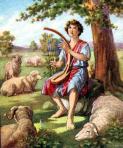
The question of why did David even have to ask if Jonathan had a son puzzled me until I added ages and years together.  The last time David saw David007Jonathan alive was in 1 Samuel 23:16, while David is hiding at Horesh in the Desert of Ziph and Mephibosheth (probably), was not born yet.  There was also the oath he gave to Saul in 1 Samuel 24: 22 not to kill off his family when he became king.  So the question in 2 Samuel 9:1 is valid because he would not have known about Mephibosheth.  But the lack of communication by Jonathan to the family about the covenant of friendship and the oath that Saul had with David caused a little five-year-old boy to be crippled as panic set in and the royal household flees in fear. (It seemed to be common practice to kill off everyone including servants of a royal family back in that age so I am sure the fear was real.)  The poor communication or fear carried to other parts of the family because David had to find Ziba, a servant, instead of his wife, Michal, the aunt of Jonathan’s child, to tell him Mephibosheth existed and was alive.

I am not fussing at Jonathan because he was in a really bad spot.  His crazy father wanted to kill his covenant friend and the family servants had already proven they could not be trusted, so speaking about David was probably not a good idea.  But it would appear that he had a plan for his family in case something happened to him.  I don’t think it was an accident that Mephibosheth was “found” living at Makir son of Ammiel’s house.  Jonathan and possibly Saul must have trusted his man and his family to hide and protect the royal grandchild and eventually find a wife for Mephibosheth.  Remember he also brought supplies to David as he ran from Absalom.

In studying Jonathan I found something that I have no idea what it means but it was interesting. As I said Jonathan means “Jehovah-given” and there are two forms of it used in the Bible they are number 3083 and 3129 in the Strong’s Concordance.  3083 is used when it deals with Jonathan and David plus two times in 1 Samuel 14: 6+8 where he was relying on God for direction to attack the Philistines.  3129 is used when it deals with Jonathan and his father Saul.

God has a sense of humor and likes to hide things in scripture like Makir son of Ammiel: Makir means “salesman or brought” and Ammiel means “people of God.” The Makir meaning shines out in the Absalom story because he brought a lot of goods to David almost as if he were a salesman.  But he must have been important in Lo Debar because he hid Mephibosheth for at least twelve years, paid for his care, and picked his wife and no one turned them over to David. ( see Why Hide a Grandson There)

Ziba, Saul’s chief servant, is the dark side of this tale and may have worked for the family but with friends like him who needs enemies.  You have to wonder if Ziba, which means, “stationed” is the servant with Saul in 1 Samuel 9?  I took the “stationed” or “to be stationed” as he was the one assigned to Saul by God.  He seems to have done fairly well for himself because he had 15 sons and 20 servants, which was a sign of wealth.  I believe he was protecting his interest in telling David where Mephibosheth was living, he could have been hoping that David would kill Mephibosheth and the land of Saul would legally become his.  So in 2 Samuel 16:1-4 when he was lying about Mephibosheth’s actions he was still trying to get the land and get rid of Mephibosheth.  David seems to have seen this in 2 Samuel 19:24 when he orders the land split between them.

Saul, which means “asked”, is also part of this story.  A lot of adjectives could be assigned to him because he is the poster boy for good going bad but the one that I settled on was selfish. His “self” pops up throughout his whole story and finally leads to a crippled child hiding in fear from the man who would be his best friend.

Mephibosheth, which means “dispeller of shame”, I am sure has been the center of many sermons and he should be because it is a beautiful story.  Think about how he got to Lo Debar.  The news comes that his father is dead; his nurse (not his mother) drops him breaking both feet as he is rushed many miles from home and left with someone he barely knows.  He has no family, apparently, the only one who knows where he is, is a servant who wants his inheritance and all this five-year-old boy has to go on is stories and rumors about his father and grandfather.  Then one day a military David060unit takes him from the only house he remembers and brings him to the man he has been told to fear for at least twelve years.  Once there he finds out he is rich and will eat at the king’s table for the rest of his life.  Yeah, he should have a few sermons preached about him.

Did you notice that David did not answer Mephibosheth’s question of “why should you take notice of me?” Mephibosheth would have seen the end of David’s years and all of the trouble with his kids but he also would have seen the Temple built and Israel become a world power.  You would take for granted that Solomon just continued David’s covenant of friendship and he ate at the king’s table for life.

The great thing that I found in finishing his story is that Mephibosheth’s tale did not end with him.  In 1 Chronicles 8:34 – 40 and in 9:35 – 44 they list his family for several generations and record them as being warriors, so they fought for the kings of Judah for many years.  This is for a grandchild of a disposed of a king who would have normally been killed; friendship is a great thing. In Chronicles, he is listed as Merib-Baal, which is a tribute to Gideon who also has connections to the Lo Debar/Manasseh area.

These final two connections are questionable so study them for yourself and you decide.  Esther in Esther 2:5 is listed as being from the Tribe of Benjamin descended from Kish.  There are two Kish’s in the tribe of Benjamin but none of the names line up with Mephibosheth.  The other possible family member is Zimri who was king of Israel for seven days.  There is a Zimri listed in Mephibosheth’s family line that would have been alive about that time but there is less proof for that than for Esther so let your imaginations go wild with the possibilities.

This “other” look at Lo Debar, Mephibosheth, David, and Jonathan has been a great study I hope you have enjoyed it.

The artwork is from http://clipart.christiansunite.com/1379673661/Bible_Characters_Clipart/David_Clipart 

Noah and Moses

Trivia question!  What do Noah and Moses have in common?

A tebah, it is pronounced tay-baw.  It means, “box” and it is # 8392 in the Hebrew and Aramaic Dictionary in the Strong’s Concordance. The King James translates this word into ark.  Noah and Moses are the only two people in the Bible to have a tebah.

Moses’ mother, Jochebed (Exodus 6:20), used slime, you gotta love King James, Moses036(chemar, #2564 – bitumen) in Exodus 2:3 to coat his ark (tebah.)  Chemar is used in two other scriptures: Genesis 11:3 (Tower of Babel) and Genesis 14:10 (Valley of Sodom).  Jochebed also used pitch (zepheth, #2203 – asphalt because it softens or liquifies in the sun).  The other two uses of zepheth are in Isaiah 34:9 where it foretells that Edom’s streams will be burning zepheth.

Noah had pitch (kopher, # 3724) to coat his ark, both inside and out (Genesis 6:14).  Noah's arkThis is the only place where kopher is used as that type of covering; the majority of its translations are our word ransom.  In Exodus 30:12 every Israelite in the census who “crosses over” is to redeem himself with a “half-shekel” or about 6 grams of money (It does not say if it was gold, silver, or copper.)  It was collected to service the Tent of Meeting.  In Isaiah 43:3 it is also used as the word ransom but here the “Savior of Israel” says He gave Egypt as your kopher.

I know what you are about to say, “What about the ark of the covenant?”  It is aron and it also means box and is translated ark, chest, and coffin (#727 in Strong’s).  ark of the covenantThe origin of this word carries the idea of “gathering.” Joseph was buried in an aron (Genesis 50:26) and Jehoiada the High Priest with Joash (2 Kings 12:9) made an aron to collect money to rebuild the Temple.

Final Thoughts:

  • I am sure that Noah and Moses’ tebah were rather plain and very functional whereas the aron’s were very fancy and well decorated.
  • It is a beautiful picture that Noah’s ark was coated in redemption, inside and out.
  • I am not sure what to think about the fact that the coating on Moses’ basket is associated with a sinful place (Sodom), judgment (Edom), and a structure built to glorify man over God (Babel).

The clipart is from http://clipart.christiansunite.com