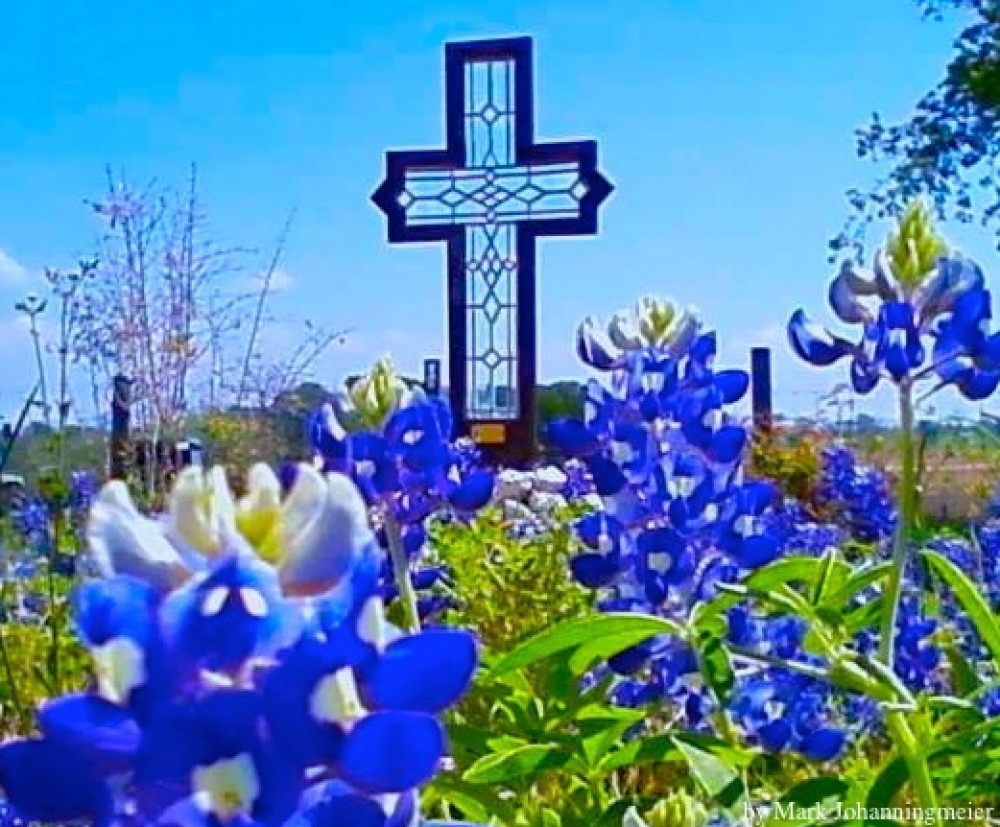
Thorns – Easter 2019


Thorns, thistles, briers, nettles, and brambles are some of the names and plant parts that have pointy things that cause discomfort.  What do these have to do with Easter?  Okay, I will get to the point of this post.  These were part of the curse found in Genesis 3: 17 – 19 for Adam because he ate the forbidden fruit.  Matthew, Mark, and John add thorns as part of the misery that the Romans gave Jesus at the time of His crucifixion.  I will attempt to bring these events together in this brief study of thorns.

Hebrews 6: 8 beautifully brings together the spiritual and physical aspects of thorns by being part of the “basic teachings” and blessings mentioned in the chapter.  It mentions them being a curse, worthless, and getting burned. This verse fits well with the parables when Jesus used them to show the “deceitfulness of wealth and the worries that choke the good seed”. (Matthew 13: 22) Most of the references to thorns are about them causing problems and having to be beaten down and burned.  In a land where wood was precious, thorns were not, so they would be used for fuel to cook with.

Foreshadowing verses for the crown of thorns and what will happen to them are in Isaiah and Ezekiel. In Ezekiel 2: 6, which is his call to ministry, God tells him that he will be surrounded by thorns, thistles, and scorpions.  This is a good picture of Jesus’ arrest, trial, and crucifixion.

Isaiah 27:4 speaks to the redemptive work of Jesus with the plea that He guards His vineyard to protect it. He would prefer people to make peace with Him but if not, He will burn them up.  Isaiah 10: 17 speaks of the “day” (judgment) when the Light of the world will burn the thorns and thistles.

Mark 15:17, John 19:2, and Matthew 27: 29 mention the crown of thorns.  Matthew is the most detailed and talks about the thorns being twisted and then being beaten onto Jesus’ head.  So why the thorns?  They are part of the curse that Jesus was dying to end. Most of the references for redemption are about people/Israel.  He will make a new heaven and a new earth but Jesus came to break the curse.  Creation groaned waiting for Him, trees of the field will clap their hands for Him, and He will bring rest to the Land, even the rocks can cry out for Him. Isaiah 35: 1 and Jeremiah 50: 34 are verses that mention good things about the Land.  

Thorns also represent worries and cares that bother our minds.  He took those on His “mind” to the cross.  And just as thorns were beaten to prepare them for burning, so the crown was beaten into His head.      

Remember, with the beatings, nails, cross, and His blood the crown of thorns also carry important symbolism.

Below are two good websites about thorns and thistles.

https://godasagardener.com/2017/06/05/the-first-thistle/

https://godasagardener.com/2016/06/27/parable-trashy-thorns/

God’s Heart

Popular songs and persuasive preachers have created a buzzword (phrase) – God’s heart.

I love the songs and can appreciate the preachers for trying to direct us into doing the right thing. When I did a word search on Bible Gateway the results were confusing.  There was no listing for “God’s heart”, I tried several translations and still found nothing!  The simple reason for this is there are none, that phrase is not there!  My Strong’s Concordance did come through under the Hebrew word #3820 Lebwhich is translated heart. There were two listing – Genesis 6:6 and Jeremiah 32:41. In Matthew 11: 5 I found Jesus stating that Hisheart was gentle and humble and we learn from Him.  That, is it (all I could find) for direct references to God’s heart.  A very closely related word is soul and there are references to God’s soul.  Frequently the words are used together for added emphases.   I will look at soul in another post.  

Feelings, will, intellect, center of everything, and inner most organare the ideas that leband lebab(Strong’s #3820, 3824) convey.  So, based on the Hebrew ideas, God has a heart that we understand.  Certainly, Matthew 11: 5 says Jesus’ heartis gentle and humble and we need to learn from Him.  Let’s look at Genesis 6: 5 + 6, it is in the story of Noah.  Verse five refers to man’s heart – it thought of only evil.  Verse six refers to God’s heart – it was filled with pain because of us!  Okay, that is a little rough.  The story in Jeremiah 32 does not start out any better, God is about to hand Jerusalem over to the Babylonians (vs. 26) because of their evil behavior.  But by the time He gets to verse 40 His tone has changed and He is promising to replant the people in Jerusalem and do good for them.

RECAP– God has a heart, humanity has caused it pain, because of our evil.  He has offered to do us good and He wants us to learn from Him!

FURTHER STUDY:  Can you find another reference to God’s heart!  What is the context you see now in the term “Heart of God”?

Light and Dark – Reflections

In the series that started with Light and Dark – A Pattern to Explore we studied the idea that God may start with darkness and then reveal light. There is much written in the Bible on the topic of light and dark, I will do several more studies on specific books. At times it is clear that God is purposely hiding Himself from people for a reason. (I did crossover from darkness to hiding oneself.)  Then there are times when He uses darkness, not in anger but to get His children to seek Him out in the darkness.  The old saying “every cloud has a silver lining” holds true here – God is there right behind the darkness waiting for you. 

Deuteronomy 32: 20, Jeremiah 33: 5, and Micah 3:4 are references to times when God hides Himself because the people have sinned.  On the other side of that thought is Ezekiel 39: 29 when He says he will no longer hide Himself from those people.  Psalmist also used/complained/realized that God hides Himself – 10: 1; 13: 1; 27: 9; 102: 2; 104: 29 are just a few examples that I found using Bible Gateways’ search engine on “Hide”.

Psalm 97: 2 brings together clouds and thick darkness with the foundation of His throne and righteousness and justice.  I am going to slip back in the idea that God wants us to seek Him.  This leads me to another “dark to light” idea that Jesus did many times in Scripture – He would tell people to not talk about what He did for them.  This does not cover Jesus telling demons to be quiet and to not speak – He did not need their acknowledgments.  In part, I believe this was to maintain a layer of “darkness” about Himself so that others would seek Him out.

TAKE AWAY – No matter how dark it is, seek Him.  Maybe all you can do is raise your hands and say the name of JESUS!

Light and Dark – Jesus in the Tomb

There are several dark to light elements in this story that will be discussed.  Jesus was sealed in a cave in the evening (Mark 15: 42).  On Passover, the women rested but were out while it was dark the next day (John 20:1).  The sun was rising on the first day of the week as they found the empty tomb. I wanted to leave off “of the week” because it was the first day of a new era for mankind.  The light of grace had rolled away an earthly barrier and had come out to start things anew!

It really is not right to say Jesus stayed in a dark tomb for three days.  Saturday of Holy Week is often overlooked in its importance. Jesus did not come out, He went “down” to retrieve the keys that no longer could stay in Hell.  Death had a job to do on the first Passover but Jesus had ended the old, so ownership of the keys was restored to Him.  (Please click on Jesus Preached– it is a poem.  These link with Saturday and Holy Week for previous studies.) The references are Matthew 27: 67, Revelations 1:18, Ephesians 4:8, and 1 Peter 3:19, 4:6. 

Another darkness that became light was the cloud on the minds of all of the followers of Jesus. The dark cloud that had covered the understanding of all the followers of Jesus was replaced with the light of understanding the Scriptures.  This dawn took most of the first day, as the women saw Him first, then Peter, the disciples on the road to Emmaus, and finally the remaining Apostles.  The darkness that started at the cross was replaced with the light of a risen Jesus!

Three– Jesus predicted the three days in the tomb by using Jonah’s stay in the great fish.

End and Start – The First Adam had given up a lot when he ate the fruit in the Garden.  The Second Adam (Jesus) reclaimed the keys to death and Hades.  

Jesus in the darkness coming into the light had been played out many times before.  All of them pointed to this moment.  Creation, the first Passover, God filling the Temple all gave us pictures of what was to come!  He now came from the tomb to start a new picture – Jesus returning for His Bride.  

The next fifty days speak to many things.  Jesus stayed with the disciples for forty days (showing Himself to many).  Then a ten-day period where the disciples prepared themselves and sought the coming of the Spirit.  

The Spirit arriving on Pentecost shares things with Israel meeting God on the Mountain.  A notable part is missing – the darkness.  The Spirit arrives with fire (light) and the sound of a mighty wind.  (Think about the Second Coming of Jesus.)  The Church/Bride has her birthday, and Jews and Gentiles become one new creation.

FURTHER THOUGHT – Reflect on the Book of Revelations by comparing it with the Book of Acts and the time of the Church under the Caesars.

http://www.freebibleimages.org/illustrations/gnpi-101-jesus-resurrection/

Light and Dark – Jesus on the Cross

Matthew 27: 45, Mark 15: 33, Luke 22: 53 + 23: 44, John 19: 28 – 31(NIV)

From the sixth to the ninth hour there was darkness over the land!  Matthew, Mark, and Luke record this event (see references above).  John does not mention this part of the scene at the cross but adds other details that help to form the picture. (There is a difference in John on the “hours”. Probably due to Jewish vs. Roman timekeeping practices. It is a shame great minds have to pick the minor things and ignore the important.)

Let’s shift back to the first Passover to offer an explanation for the darkness.  The lambs were to be killed at twilight.  The “sixth to the ninth hour” was the timeframe for the killing of the lambs in Jesus’s day, that should have been three to six p.m. modern time, so it needed to be dark.  John adds the phrase “the day of Preparation” for the Passover.  I have heard many powerful sermons that included the “darkness” but, today, I will go with this more practical explanation.

Okay, going a little dramatic.  Could this darkness be felt, like the darkness in the ninth plague?  Can you imagine the panic even if it was just as dark as a moonless night!  But to toy with my own question, I have to wonder who “sent” the darkness?  God or Satan?  In Luke 22: 53 Jesus tells the mob that “darkness” is reigning!  This is the only place that I could find like that in the Bible.  So, was it dark to complete the picture from Exodus, or because the Father was mourning, or because Satan truly was clueless to the fact he was losing and that was his poor attempt at domination, or was it to prepare for the light?  How do you read it?

Now to the Light!  (This is not in the Bible, but I hope it happened this way!  It would look good in a movie.)  Jesus had said several of His “last words” in the dark.  John said He knew “all things were completed” when He asked for a drink.  Then He said, “It is Finished” and gave up His spirit.  When Jesus said it is finished, I can see a beam of light punching through the darkness as He bowed His head.  At first, the light was just on Jesus.  Then it started to spread out from Him until it covered the land that had been in darkness.  That light shook the ground, when it spread over tombs it reversed death, and when it hit the Temple one really thick curtain tore in two pieces and light up an empty room. Oh well, nothing that dramatic is recorded but at that time of year, there should have been several more hours of daylight.

Three– There are several (probably more):

  1. From the first Passover – three sides of the door painted with blood.  Foretells the cross.
  2. Three hours of darkness as the Lamb was dying.
  3. Three men on crosses – the thieves could represent the sheep and goats at the Judgment; the arrogant thief = Law and the repentant thief = Grace, Jesus is in the middle of all of these.
  4. Three groups of on-lookers
  5. Passersby– People hurrying to get to Jerusalem for the Feast; Priest who came just to torment and mock Jesus.  They saw but learned nothing.
  6. Soldiers– They had to be there.  The centurion, at least, learned that Jesus was the Son of God.  You have to wonder if his name was Cornelius?  They probably learned the most, simply because they knew the least.
  7. The Women and John– They choose to be there.  Grief, horror, and questions filled their minds overwhelming their understanding of what was happening.  Who could not be affected by the moment?  They knew Jesus had told them, but they did not comprehend in the trial.  Did they learn?  I am sure they did, but this took time to process.  The effects of the lesson developed over the next fifty days. It prepared them for Pentecost.

End and Start –The Law ended/was fulfilled and Grace took center stage. No matter what I thought to write it always came back to that thought. FURTHER THOUGHT –  Our redemption from sin is finished because Jesus paid the price on the cross! In our lives, there are “things” that we need to offer to God so that we can follow Jesus more completely. We refer to this as crucifying them! Sometimes we freely offer them, and sometimes God starts the process, in both cases, we have to let the things die. What is one thing you were in the “dark” about as it died and what was the “light” as the result?