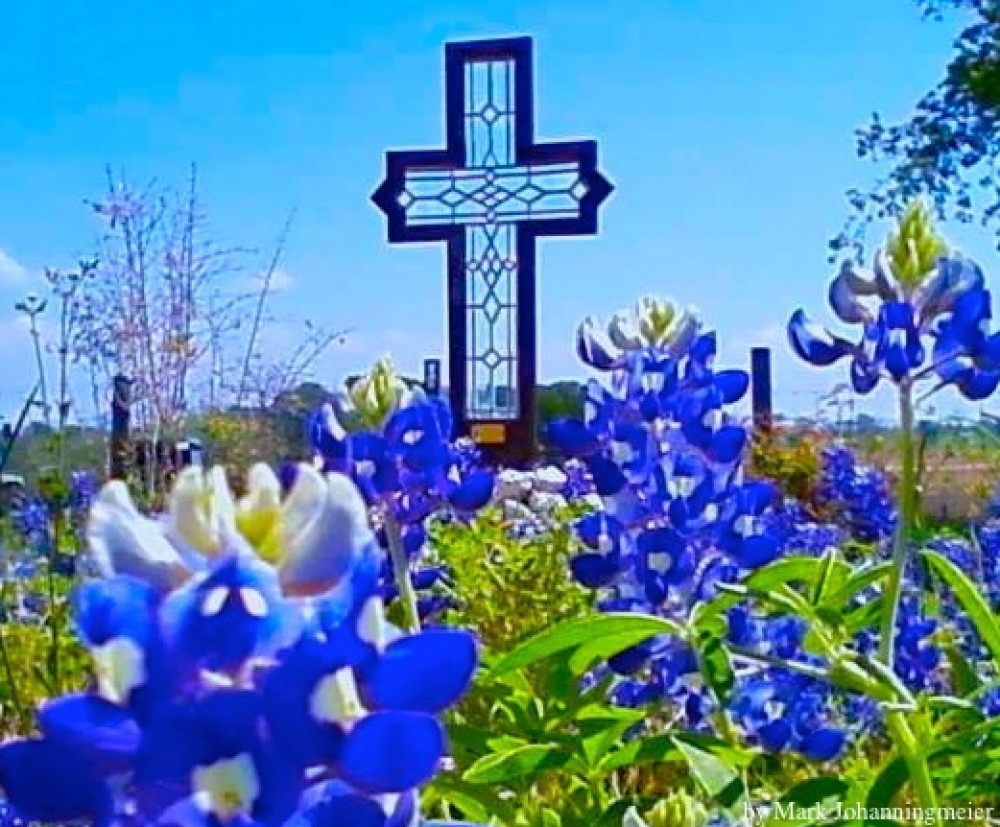
And it came to pass at the end of forty days and forty nights, that the Lord gave me the two tables of stone, even the tables of the covenant. Deuteronomy 9:11 (KJV)
Deuteronomy 9:11 is the “second telling” of God giving the stone tablets to Moses, the first telling is in Exodus 19 – 34. I spent a lot of time in Exodus and noticed some things for the first time.
- To me it seems like Exodus may have been a running journal. In about 100 days Moses had two forty-day visits with God in person. He had to deal with ex-slaves acting and partying like their Egyptian overlords and a brother who dropped the ball. Add 3,000 dead revelers and that was a serious time for the shepherd from the back side of Midian. No wonder God wrote down the Law. (Contrast that to the 3,000 added to the Church on the Day of Pentecost.)
- I counted five trips up and down the mountain from Exodus 19 to 32.
- It seemed like he was adding laws to go with his activities and meetings with God. For just a narrative of Moses’ time at Horeb read Exodus 19, 20:18-22, 23:20-23, 24, 31:18, and 32-34. The laws, commands, and instructions that are in between those passages, read that as what he wrote in the “Book of the Covenant Law”.
- The Father wrote on tablets of stone (twice) and the second copy went into the Chest of the Ark; Moses wrote a book that was to testify against the people if they did wrong. It made me think that the leadership could use that book as a reference guide.
- I do not remember anyone preaching on the names of God and using El Kanna (Exodus 34:14) as part of the sermon. I read enough to know that Kanna needs more study.
Timeframes
The visitation to Mount Horeb is associated with Pentecost because of the amount of elapsed time after Passover. They spent two years by Horeb building the Ark and Tabernacle, and training as an army.
Moses is 120 years old at the time of writing Deuteronomy.
I believe it has been about two years from the burning bush to the giving of the Tablets. That is based on the yearly cycle (Nile River) that appears with the plagues and Moses’ personal travel times.
Moses has been leading Israel for forty years. He spent forty years in service to Pharaoh, and forty years hiding from Pharaoh.
Stone Tablets
Please be aware that this section has information, metaphors, and some “what ifs” in it, proceed carefully. This first bit that I am going to throw out is from the Strong’s Concordance and are the major words for rocks and stones. You need to do the research as this is not a heavy rendering of that information.
- H 6697 – tsur Rock, it is used in Exodus 17 for the one water came out of, Exodus 33 for where God hid Moses, and Deuteronomy 32 for God in Moses’ song.
- H 5553 – cela Rock, is used in Numbers 20 for the rock that Moses struck twice to get water from.
- H 68 – eben Stone, is used in Deuteronomy 9:11 and Exodus 17 to 34. It refers to the act of building and the materials used.
- H 7275 ragam Stone, is in Leviticus many times and is the object men throw while stoning someone.
- H 5619 caqal Stone, in Deuteronomy is the “weighty” object used to throw at people.
- H 2022 Har or mountain/mount
- G 3037 lithos – stone
I have another study of Stone, Rock, and Cornerstone in my Sermons on Two Mounts series.
God used His finger for the stone tablets on top of the mountain, but Moses had to use a hammer and chisel for his tablets in the valley. (A Muse Moment is in order here.) The Jewish legends concerning these tablets are interesting, it would be a good study.
What type of rock was used to make the stone tablets? Since the location of Horeb is still a mystery, I have no idea of the exact type of rock used. The Red Sea and the Gulf of Acaba are very active with fault lines and volcanic regions. That being said, there are numerous rock formations in the Sinai and the “land of Midian”. The major ones are granite, limestone, sandstone, and shale, this is from various websites that did not give great information on the topic; an exact location is needed. I am sure the power in the finger of my Living God was no match for even the hardest of rocks.
Why rock to write His laws on? (From the Chosen Season 1.) Rock would be pure and would not be stained, plus it would last forever and is a natural material. I think He used granite so we would not take His Laws for granted. Clay, wood, or papyrus might have worked but they would have required more than one step to prepare them to be written on.
What If and Metaphors
A metaphor is in 2 Corinthians 3:3 where the Spirit wants to write on the tablets of our hearts instead of stone. Jeremiah 31:33, and Hebrews 8:10 and 10:16 also talk about the Lord writing the law on our hearts. It makes me wonder what those two tablets were actually shaped like. Proverbs 3 and 7 direct us to write His commands and teachings with love and faithfulness on the tablets of our hearts.
What if there were two types of stone for the different sets of tablets? I would expect the first set, from on top of the mountain to be a hard rock. The set Moses made came from the valley and may have been a softer rock. God’s power would allow His finger to write on either. He did rewrite the commands on the set Moses brought up to Him. Your musings from before will come into play for this thought also. God’s work and Laws are eternal, but like Adam and Eve, Moses broke them. What are your thoughts about Moses’ replacement tablets?
Like the First
Deuteronomy 10:1 At that time the Lord said unto me, Hew thee two tables of stone like unto the first, and come up unto me into the mount, and make thee an ark of wood. (KJV)
This is not the set of tablets I started this post with, but it is the set that went into the Ark of the Covenant. Bible Hub is where I found “like the first”, it is H 7223 in the Strong’s Concordance. So, is it the shape, physical dimensions, or type of rock he was to make like the first set? It could be all three, but I still think the rock was different. The reason for my thinking is that this second set represents Jesus, man-made with God’s writing all over Him. Where these tablets were put is also a thing that represents Jesus to me, the Chest of the Ark of the Covenant. The Poles of the Ark are the Holy Spirit, and the Mercy Seat is Father God.
Is the ark in 10:1 the Ark of the Covenant? I mean where is the gold, the cherubim that form the Seat, and the Poles? Something I am learning about Moses, read the whole story and not just a chapter or single verse. Doing several posts on Moses at the same time has shown me that tidbits of information are spread out through several books and many chapters. Yes, that ark is the Ark of the Covenant. Now, the focus is on the wood and not the gold, another Muse Moment is upon us.
Forty
For Moses to get to Deuteronomy 9:11 he had to go through 9:9 and then 9:18 to be given the second set of tablets. I have been told that forty ALWAYS represents trials and tests. Why would being in the presence of our Living God and surrounded by His glory be a test or trial? I thought that is how we defined Heaven. I am sure that Moses was humbled, but was he even conscious of time or physical needs? (Remember, he was glowing when he came down.) I would bet he found out it was forty days after he came down.
I view things from a human perspective first, unfortunately. Forty days without food would be very hard and taxing. Moses did not do that; he did not drink water either. Please refer to the survival rule of three. Not only did he live without bread and water, but he climbed off of that mountain by himself carrying stone tablets. Jesus had angels minister to Him after His forty-day fast to begin His time of ministry.
In Deuteronomy 8: 2 and 16 Moses talks about the forty years as a time to humble and test the Children. To continue the thought, He did that to show us what was in our hearts and that it would go well for us. There is more to the number forty if we can look at it through the eyes of God. The idea of a test in our culture usually has a negative context because of failing them. God wants us to pass all of them and we have His grace to help us do that even if it takes more than once.
Rule of threes (survival) – Wikipedia
If you want an independent study, look into all of the forties in the Bible, and give the phrase “bread/food and water” a look in your favorite Bible study tool.
Extra Thoughts
As the case has been lately, this Bible study focusing on Deuteronomy 9:11 has produced a lot of extra thoughts.
- Moses as a “new believer” went from shepherding a flock of sheep to a whole nation in under two years.
- Both sides of the Tablets were written on – Exodus 32:15.
- Tablets of the Covenant Law vs. Book of the Covenant Law.
- 10 Commandments vs. 613 Laws.
- Metaphorical Bible stories of God’s A plan vs. the B Plan. Start in the Garden and go from there.
- Ignoring Hollywood, just how big were those tablets? I am leaning more toward the size of a human heart.
- Remember Jesus’ trip to hell. He preached to the people who came before the Law was given to Moses.
 Mark's Bible Study
Pingback: Metamorphoō | Mark's Bible Study